Railway modernisation key to Nigeria’s economic future, says Shettima
By Kunle Sanni –
Vice President Kashim Shettima has said Nigeria must revive and modernise its railway services to sustain its position as Africa’s leading logistics hub.
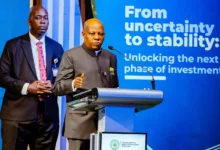
Speaking in Abuja on Monday while declaring open the 2nd International Railway Conference, Shettima emphasised that linking Nigerian cities through rail and road infrastructure remains a priority under President Bola Tinubu’s administration.
“The challenge ahead of us is to lead this race as the logistics hub of Africa by reviving and revitalising our railway services,” the Vice President said. “We must prepare for the adoption of modern railway infrastructure as the anchor of West Africa’s economy and home to the continent’s largest population.”


Shettima highlighted ongoing projects such as the Kano–Maradi line, the Lagos–Kano corridor, and the Port Harcourt–Maiduguri railway, noting that they are designed to ease pressure on the country’s road network and encourage private sector participation. He added that railways offer safer, cheaper, and more environmentally friendly alternatives to road transport.
“Our aspiration is for a nation where industries can move products to markets, and raw materials can be transported seamlessly to factories,” he added.
The Vice President also called for stronger collaboration among stakeholders to ensure the timely delivery and sustainability of railway infrastructure projects.
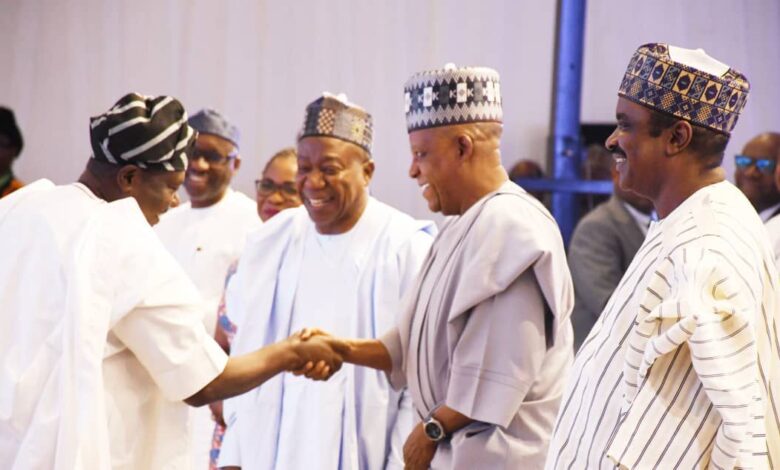
Other top government officials at the conference included the Secretary to the Government of the Federation, Senator George Akume; Minister of Transportation, Senator Said Ahmed Alkali; and Minister of State for Petroleum Resources (Gas), Ekperikpe Ekpo.
Traditional rulers such as the Obi of Onitsha, Nnaemeka Achebe, and the Ooni of Ife, Adeyeye Ogunwusi, were also in attendance.
Organised by the Federal Ministry of Transportation in partnership with De-Sadel Nigeria Limited and the Abuja Chamber of Commerce and Industry, the conference brought together industry leaders, experts, and policymakers to discuss strategies for boosting investment in Nigeria’s railway sector.