Russia is losing in Ukraine. Xi has noticed — Trump should too
During talks last week with President Donald Trump in Beijing, Chinese President Xi Jinping reportedly remarked that Vladimir Putin might one day regret invading Ukraine.
The new trends on the battlefield suggest he’s right. That offers a new chance for Trump’s diplomacy to end the war—but with a different approach than what he’s tried before.
Putin had hoped that 2026 would be the year his forces — enabled by his advantage in mass and manpower — would break through the frontlines and seize the contested regions in eastern Ukraine. That has not happened.
Thus far, it’s Ukraine — not Russia — that has achieved net territorial gains this year, together with inflicting massive losses on Russia’s invading forces.


Western estimates now place Russian casualties at levels approaching or exceeding 30,000 to 40,000 killed and wounded per month — an extraordinary rate of attrition for no gains in territory. Overall Russian casualties since the invasion began are now widely estimated well above one million and outpacing Russia’s ability to replenish.
The pressure is becoming visible inside Russia itself.
In recent days, even a member of Russia’s parliament publicly warned that the Russian economy may not be able to sustain a prolonged war indefinitely, citing soaring defense expenditures and mounting economic distortions. Putin himself recently said the war could be “coming to an end” — a striking statement from a leader who has repeatedly framed the conflict as an existential struggle requiring indefinite sacrifice.
Ukraine today does not look like a defending state trying to survive, but a military innovator reshaping the nature of warfare through mass-produced autonomous systems. This has flipped the assumption from the start that Russia’s manpower advantage alone would be decisive.
Along the front lines, Ukraine has now established a 10-15 kilometer “kill zone” where Russia is unable to advance without exposure to constant drone attacks.
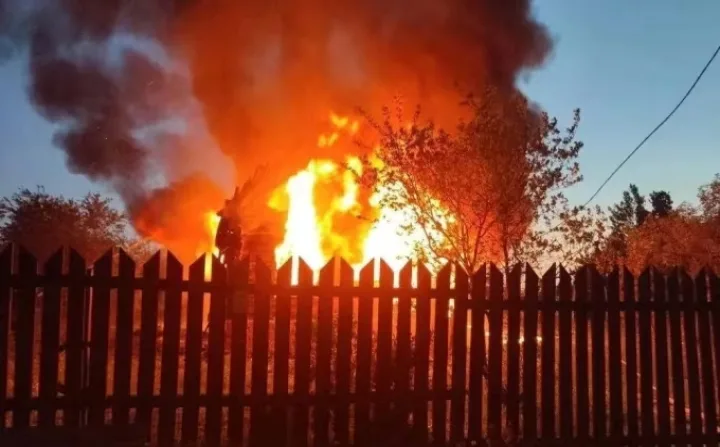
Ukrainian drones now routinely strike deep into Russia, targeting military airfields, factories, energy infrastructure, ammunition depots, and logistical hubs. The ability of Ukrainian drones to reach Moscow reportedly contributed to Putin’s interest in a temporary ceasefire during “Victory Day” commemorations in the capital.
These attacks are now forcing Russia to disperse air defenses, relocate aircraft, harden infrastructure and devote increasing resources to homeland defense.
Offensive wars are ultimately judged not by lines on a map but on whether they meet the political aims for which they were launched in the first place.
Putin’s war aims at the time of the invasion included the full subordination of Ukraine, weakening NATO as an alliance and restoring Russia as a dominant Eurasian power. Those aims are increasingly out of reach for Moscow.
The battlefield and outcome of the war is now focused on the Donbas region of eastern Ukraine with no chance for Russian forces to seize Kyiv — Putin’s initial objective.
The NATO alliance despite rhetorical critiques from Trump is larger today than when Russia invaded — Finland and Sweden have joined the alliance — and arguably stronger, with increases in defense spending throughout NATO’s European capitals.
Xi’s reported remark matters not only for what it may say about Russia. It also matters for what China may be learning about war itself — and its designs on Taiwan.
While Xi has ordered the People’s Liberation Army to be ready for an operation to seize Taiwan by 2027, his military remains untested by combat and Ukraine is proving the difficulty of achieving rapid political collapse against a determined defender.
Trump’s stated objective on Ukraine is to end the war through a diplomatic settlement. That settlement would likely require some land concessions from Ukraine together with some form of a security guarantee for Ukraine to deter future adventures from Moscow.
The diplomacy has floundered because Ukraine has been unwilling to give up land that it believes it can defend militarily — and Russia has been unwilling to accept a deal without land that it believes it can seize militarily.
The assumption underlying Trump’s diplomacy has been that Ukraine, as the smaller power, must make concessions at the table or else it will lose the war on the battlefield. That assumption, once questionable, is now false.
The new realities on the battlefield present a new opportunity for diplomacy to succeed. Ukraine is now more confident in its own defense and less dependent upon promises from Washington for its future defense.
For Trump, the best chance to end the war now lies not in assuming Ukrainian weakness, but in recognising Russia’s increasing vulnerability. There is now leverage to force a settlement on terms acceptable to Ukraine — and Washington should use it.
Credit: CNN