The precedent is already written: What the world owes Palestine — by Lim Tean
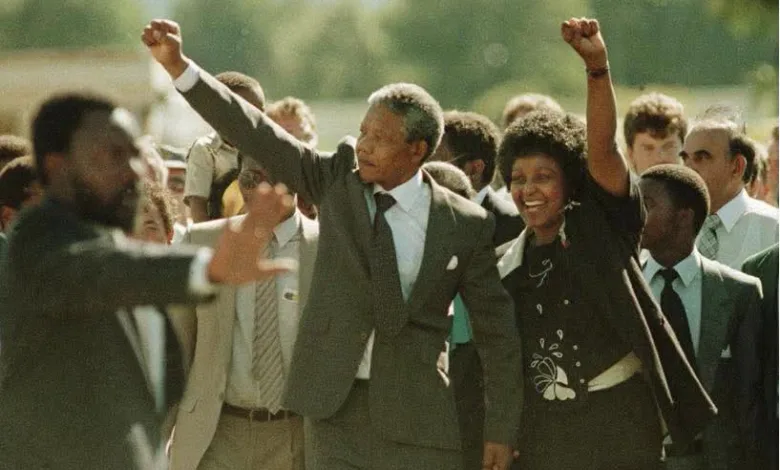
In 1962, the UN called on member states to sever ties with South Africa. It took three decades — sporting boycotts, an arms embargo, disinvestment, banks calling in loans — before Pretoria’s leaders dismantled apartheid themselves. Nobody invaded. The world simply stopped doing business with a state built on the legal subjugation of one people, and isolation did the rest.
I was a student in England for the whole arc — undergraduate 1985-88, the Bar course 1988-89, my LLM 1989-90. I watched Thatcher call sanctions “immoral” and fight the entire Commonwealth to protect Pretoria, and lose anyway. Buckingham Palace was reportedly uneasy too — the Queen was said to fear Thatcher’s stance would break up the Commonwealth. Even Britain’s own establishment couldn’t dismiss the case for sanctions as fringe moralising. De Klerk didn’t wake up with a conscience. He inherited a state that could no longer borrow, trade, or compete — and released Mandela in February 1990 because the alternative was collapse.
The comparison is precise, not rhetorical. The Bantustan system — Black South Africans confined to fragmented “homelands,” moving only by permit — has a living twin in the West Bank: 500+ checkpoints, an enclave system, two legal systems on one land depending on who you are. Gaza is that logic taken to its limit.
On genocide: I won’t overclaim. The ICJ hasn’t ruled on the merits — it has found South Africa’s claim plausible under the Genocide Convention and repeatedly ordered Israel to prevent genocidal acts, orders the Court’s own follow-ups say Israel hasn’t fully met. That case runs for years yet. My own view, watching two years of siege, starvation and mass displacement, is that “plausible genocide” is already more than the world should underwrite. You’re entitled to your own conclusion — but that’s the honest legal status, which is exactly why the pressure has to come from outside the courtroom, as it did with Pretoria.

What actually dismantled apartheid — and isn’t yet applied to Israel:
• A binding arms embargo (UNSC 418) — Israel still receives more US military financing than any state on earth.
• Sporting and cultural exclusion — South Africa was frozen out of the Olympics for two decades. Israel faces no equivalent.
• Trade and financial divestment at G7 scale — BDS exists but remains marginal next to the economies that matter to Israel.
• Diplomatic pariah status — Israel retains normal relations with most major powers, with normalization continuing even through the Gaza war.
What I’m calling for: a binding UN arms embargo; suspension from international sport and culture until ICJ compliance is verified; coordinated EU/UK sanctions and trade suspension; and recognition of the State of Palestine, with East Jerusalem as its capital, by every state that hasn’t yet done so — not as a reward for a future deal, but as the baseline the 1967 lines and decades of UN resolutions already establish.
Nobody serious thinks Israel’s government does this voluntarily. Nobody thought Botha’s would either. It didn’t change its mind about justice — it ran out of options, because the world made the cost of the status quo higher than the cost of change. The precedent worked once. The only question is whether the world is willing to be on the right side of it now, while there’s still a Gaza left to save.
Please also follow me on substack at lim.substack.com where I discuss geopolitical issues in detail.