The supplicant: Russia now begs Turkey to protect its last pipeline — by Lim Tean
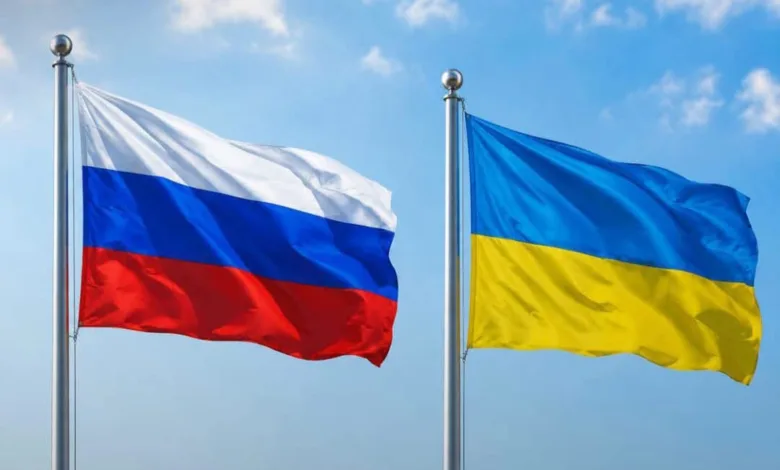
Twenty years ago, Russia turned off the gas to Europe in the dead of winter and called it diplomacy. This week, the Kremlin issued a press statement pleading with Turkey to persuade Ukraine to stop attacking its pipelines.
Read that sentence again. It contains the entire trajectory of Russian power in this war.
On Wednesday, Kremlin spokesman Dmitry Peskov confirmed that Ukrainian drones had struck the Krasnodarskaya compressor station of the Blue Stream pipeline — the artery carrying Russian gas beneath the Black Sea to Turkey. Peskov called the strikes “terrorist attacks against critical global energy facilities” and said Moscow has “repeatedly drawn Ankara’s attention” to Ukraine’s campaign against both Blue Stream and TurkStream infrastructure.
Let us be precise about the language, because language is where propaganda begins. These are not terrorist attacks. A terrorist attack targets civilians to produce fear. What Ukraine is conducting is the methodical destruction of the economic infrastructure that funds the army occupying its territory — the same doctrine the Allies applied when they bombed the Ploiești oil fields that fuelled the Wehrmacht. When a state invades its neighbour, its war economy becomes a battlefield. Gazprom is not a neutral utility. It is the treasury of the invasion.




Why these pipelines matter
Since the severing of Ukrainian transit, TurkStream is the only remaining route for Russian pipeline gas to Europe. Together with Blue Stream, these Black Sea arteries represent Moscow’s last direct pipeline earnings from the European market — billions of dollars annually flowing to a war chest that produces the drones and glide bombs falling on Kharkiv and Odesa.
Kyiv understands this arithmetic perfectly.
Gazprom itself has admitted to a dozen foiled attacks on this infrastructure earlier this year, with renewed drone strikes on the Russkaya compressor station in April and now Krasnodarskaya in July. This is not harassment. It is a campaign — patient, escalating, and aimed at the one artery Moscow cannot afford to lose.
I have called this the Reagan Playbook: you do not need to defeat the Russian army in the field if you can financially cripple the state that pays it.
Ukraine is executing that playbook with drones costing a few tens of thousands of dollars against infrastructure worth billions.
The meaning of the appeal to Ankara
Now consider what the Kremlin’s response reveals. Russia — the state that weaponised gas against Europe for two decades, that froze Ukraine in 2006 and 2009, that built its entire foreign policy on the pipeline as an instrument of coercion — cannot defend its own compressor stations. Its air defences, stripped and redeployed to protect Moscow and the front, cannot cover Krasnodar. So it does the only thing left: it petitions Erdoğan.
This is the dual hegemony thesis in motion. Turkey is no longer a customer at the end of a Russian pipe. It is the arbiter — the transit state whose goodwill Moscow must now purchase, the regional pole to which a declining Russia appeals for protection it cannot provide itself. Erdoğan holds the cards, and he knows it: every Ukrainian drone that reaches Krasnodar raises the price of Turkish mediation.
There is a deeper historical irony here. The pipeline was Russia’s imperial instrument — the modern equivalent of the railways the Tsars drove into Central Asia. Now the instrument has become the vulnerability. The empire’s arteries are exposed, and its enemies have learned to reach them.
The caveat, stated plainly
Honesty demands one note: the reporting on these strikes comes almost entirely from Gazprom and the Kremlin. Kyiv, as is its practice with deep-strike operations, says nothing. But this cuts against Moscow, not for it. When the victim of the strikes is the only one talking — publicly pleading for a third country’s intervention — the admission of weakness is authenticated by its source. States do not confess vulnerability they do not feel.
What comes next
Watch three things. First, whether Erdoğan actually lifts a finger — Turkey profits from cheap Russian gas but profits more from being indispensable to both sides. Second, whether Ukraine escalates to the TurkStream landfall itself, the strike that would sever Russia’s last pipeline euro. Third, how Hungary and Serbia — the European clients at the end of TurkStream — react as their supply becomes hostage to a war their patron cannot win.
A great power defends its arteries. A declining power writes press releases asking others to defend them. This week, the Kremlin told us which one Russia has become.