When the griot fell silent, by Folorunso Adisa
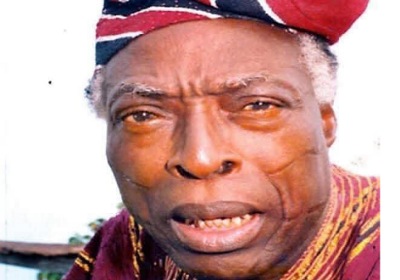
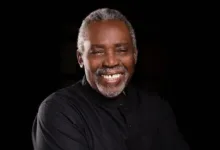
There are men. There are griots. And then, there was Faleti, who was both and more.
Every time I encounter a poetic performance laced with linguistic precision, cultural depth, and spiritual force, I remember the one who mastered it, Adebayo Faleti. He didn’t merely write or recite; he communed with language as though it were a sacred inheritance passed down through ancestral breath. Faleti was no ordinary poet. He was an aláṣejù of expression, a master of the metaphor, a high priest of tone and texture. He belonged to that rare league of custodians who understood that in Yoruba, words are not simply spoken, they are chanted, danced, divined, and weighted with moral consequence.
Consider verses like:
“Iyayawo ku fiiri wole lati buyefun,
Igba to wole ko ri Dokun.
O woyara okankan ti won gbelubo si…”


This was not entertainment; it was incantation. Each syllable, a summons. Each stanza, a libation poured to memory. And when he declared, “E wenu imado, e wenu isin, e wenu onibode Lalupon,” he was not merely naming places. He was invoking spirits of towns, assigning consciousness to geography. In Faleti’s voice, every town had a mouth. Every location bore a tale. The poet’s role, in his view, was to listen and report.
He did not write in Yoruba. He wrote Yoruba itself. His selection of rare lexical gems like agódongbó wasn’t to impress but to preserve. In every recital, Faleti resisted linguistic decay. He restored ancestral memory. His words carried the weight of a thousand proverbs, each one a seed of moral clarity. He spoke with the authority of one who had walked with the gods. His lines felt dictated by Ọ̀rúnmìlà himself at dawn. His ewi was not performance, it was prophecy.
Faleti’s legacy spans across genres: theatre, television, film, literature. But it is in his poetry that his spirit is most alive. His voice had the gravity of ancient hills and the softness of dusk winds moving through the groves of Oyo. When he played roles in films like Saworoide and Agogo Eewo, he wasn’t acting, he was embodying the mythic Yoruba consciousness. Every pause in his speech, every calculated glance, every uttered proverb was a dramaturgical revelation of cultural pride.
Of course, at the moment, shallow speech is celebrated and poetic depth is dismissed, but visiting Faleti’s works makes one realise that language is more than a tool; it is àṣẹ, the authority to command, create, and restore. To listen to him was to be initiated. To read him is to be reminded that poetry, when rightly wielded, is not a hobby. It is power. It is resistance. It is heritage.
Faleti was not just a rare breed. He was the breed we lost. The rhythm we forgot. The voice we still need. Today, we do not merely mourn Baba Faleti. We return to his verses as pilgrims to a sacred shrine. We study his diction like students of divine speech. We whisper his name, and even the trees seem to nod in assent.
He is not dead. He lives in our memories. He is not gone. He thunders, because he lives on the pages of the books and screens he left behind for us to sojourn on!