Why the Chief of Staff to President Is always dragged — by Yusuf Ali
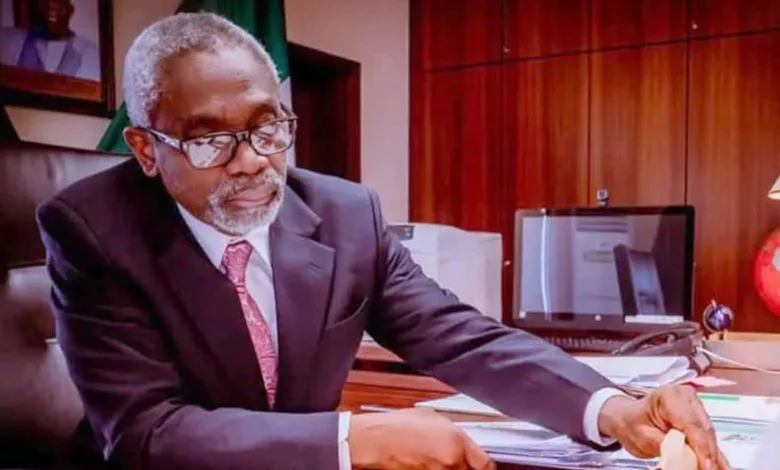
The office of the Chief of Staff to the President is arguably one of the most misunderstood positions in government. It is a powerful office, but its power is largely administrative—coordinating the Presidency, managing access to the President, and ensuring that government functions efficiently. Ironically, these very responsibilities make every Chief of Staff a constant target of criticism, suspicion, and political attacks.
The Chief of Staff serves as the President’s principal gatekeeper. He determines schedules, coordinates official engagements, filters requests, and ensures that only matters deserving the President’s attention reach his desk. Naturally, those denied access or whose interests are not accommodated often channel their frustration toward the Chief of Staff rather than the President himself.
History has shown that nearly every influential Chief of Staff eventually becomes the subject of allegations, rumours, and political campaigns aimed at discrediting him. It is almost an occupational hazard.
This is why I do not take the recent allegations surrounding the so-called Presidential Foreign Intervention Promotion Council and Presidential Economic Advisory Council against Hon. Femi Gbajabiamila very seriously. They appear to fit a familiar pattern that has accompanied the office for decades.




A similar experience befell the late Abba Kyari, the Chief of Staff to late President Muhammadu Buhari. During his years in office, he was accused of virtually everything imaginable. Allegations of corruption running into billions of dollars, claims of excessive influence, and accusations that he was “running the government” became common features of public discourse.
The reality was that Abba Kyari was an exceptionally influential Chief of Staff because he was entrusted with coordinating the affairs of the Presidency. His effectiveness inevitably created powerful enemies. Many individuals who could not gain direct access to the President or secure favourable decisions found it easier to blame the Chief of Staff.
Following his death, however, many Nigerians began to reassess his legacy. Tributes poured in from the general public and people who had worked closely with him, describing him as disciplined, hardworking, loyal, and deeply committed to protecting the integrity of the Presidency. Time softened many of the harsh judgments that had defined his years in office.
This historical experience should encourage Nigerians to approach contemporary allegations with caution. Allegations alone are not proof of wrongdoing. In a democracy governed by the rule of law, accusations should be investigated fairly, evidence should determine guilt or innocence, and individuals should not be convicted in the court of public opinion.
That is why I believe that Femi Gbajabiamila deserves the same presumption of innocence. If there is credible evidence against him, the appropriate institutions should investigate and establish the facts. If not, political propaganda and speculation should not be allowed to damage reputations.
The office of the Chief of Staff will probably continue to attract criticism because of its strategic importance. As long as someone controls access to the President, coordinates presidential activities, and implements the President’s agenda, there will always be individuals who feel excluded and seek someone to blame.
Perhaps this is the burden of serving as Chief of Staff: to stand between the President and public criticism, absorbing attacks that might otherwise be directed at the nation’s leader.
Every Chief of Staff is dragged. That has been the pattern across administrations. The challenge for the public is to distinguish between politically motivated accusations and allegations supported by credible evidence. Until such evidence is produced, it is only fair that Femi Gbajabiamila, like every public official, be judged on facts rather than speculation.
Yusuf Ali, Media Aide to Governor Mai Mala Buni CON