2027: SDP is about solutions, not ethnicity or religion – Adebayo
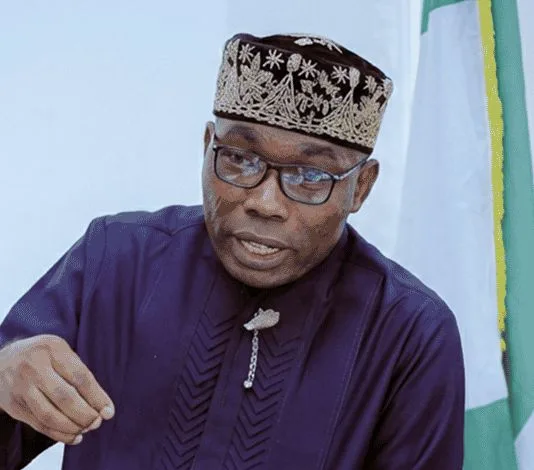
The president candidate of the Social Democratic Party (SDP), Prince Adewole Adebayo, recently spoke with the media on President Bola Tinubu education policy, describing the student loans as “a crime”, and warned that poor education policy is producing unemployable youth,
He reflected on his emergence as the SDP flag bearer, dismissing concerns about internal divisions within the party. Adebayo insisted that legal processes must take their course in ongoing disputes involving party officials. Excerpts
Congratulations seem to be in order for you right now as the presidential candidate of the SDP in the 2027 elections. How does that feel?
I feel good, although it is challenging. It presents a new opportunity for the country and for the sovereign people of this nation, who deserve good governance and a good plan.
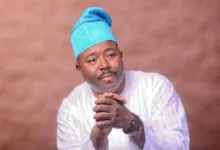
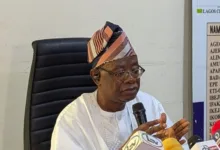
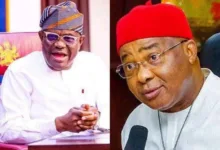
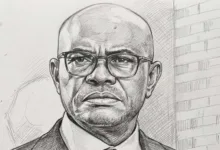
But before we get to what the SDP stands for and what your manifesto will be, let’s address some of the drama. Your former national chairman is in court, and there are reports of a rift within the party, with some members still loyal to Mr. Gabam. Now there is a new national chairman. What is the plan going forward?”
Well, I’m in a difficult position here because I’m a lawyer. Once a matter is before the court, especially involving someone who risks losing their liberty and facing a criminal trial, it would be unethical for me to comment on it. However, I hope the rule of law prevails and that there can be a political resolution without compromising the need to discourage criminality or portray criminal conduct as politics. I believe we should allow the law to take its course.
Away from the court case itself, has this created any form of friction within your party?
Not really. From what I understand, the party is simply trying to use its disciplinary mechanisms to hold officials accountable. In the process, some people may be unhappy, while others may genuinely feel that certain procedural rights were violated. What is important is that everyone adheres to the party’s constitution. If you want to discipline someone, you must follow due process, and if you are subject to disciplinary action, you should respect the process. If you are dissatisfied, there is an appellate process available. Institutions like INEC and the police should remain neutral and simply carry out their constitutional responsibilities.
Given the circumstances, why couldn’t this have been resolved within the party? Why did it escalate to the point of going to court and someone being arrested? Why did it have to reach that level?”
“I don’t know why it couldn’t have been resolved. As a lawyer, what I can say is that someone is alleged to have been involved in several financial matters — you may be referring to only one — and the person has pleaded not guilty before a court of law. The law requires me to presume innocence while the prosecution proves its case with evidence. If the legal process is being properly followed, the individual is on bail, attending trial, and politics should not interfere.
If we are serious about addressing Nigeria’s problems, we must avoid a situation where political considerations override justice, or where people assume that aligning with those in power erases wrongdoing. If I take sides with the accused simply because they are politically useful, it raises concerns about how I would handle similar matters if I were in office. On the other hand, if I condemn someone presumed innocent, I risk undermining the rule of law.
The best approach is to allow the law to take its course. Stealing public or institutional funds is not a trivial matter, and breaches of trust must be treated seriously. There was a time when people were jailed for very small amounts, yet today, allegations involving large sums are sometimes treated lightly. That attitude needs to change. Where funds belong to an institution and someone had access to them by virtue of their position, there must be accountability.
What should the people know about the Social Democratic Party, tell us about what it stands for and what it means for the Nigerian people?
Without sounding too professorial, the SDP is a party that focuses on solutions to people’s social and economic problems. It is a party for ordinary people. When you wake up in the morning, you think about feeding your family, transport costs, education, food, healthcare, jobs, and survival — these are the issues that social democratic parties prioritise.
That is why in some countries it is often described as a ‘kitchen table manifesto’ — it is about everyday life. A social democrat would not take decisions like removing subsidies without carefully considering the impact on transport, food prices, housing, jobs, and people’s savings.
The SDP is focused on social progress. Nigeria is a country where many people struggle to afford basic needs like nutrition, education, healthcare, and security. What is needed is a political party that is focused on addressing those challenges, not one built primarily around ethnicity or religion. We are concerned with how government can enable people to achieve their aspirations.
We know the failure rates in education in many states are alarming, and in some places children are not even in school at all. These are the issues politics should address. Too often, these challenges are treated lightly outside of election periods, but they are central to the SDP’s focus.
First of all, as a consensus candidate, you didn’t face any opponents. Were there people within your party who still held reservations or grievances against you?
No, I don’t think so. The party understands three key things. First, we are facing an incumbent government, so we cannot afford internal divisions. Second, we are fundamentally an ideological party, so it is not about personal ambitions or individual victories.
You are from the South-West. How do you intend to defeat President Tinubu?
I don’t know about Tinubu personally.
A lot of people say it may not be wise to field a candidate from the South-West against President Tinubu, who is also from the South-West. What is your take on that?
We don’t think along those lines in the SDP. A hungry person in the South-West is still hungry. Someone paying exorbitant fuel prices will not be concerned with regional identity. A student taking loans to attend a university with unpaid lecturers and poorly equipped laboratories will not be thinking about where the president comes from.
Other political parties have complained about the APC sending infiltrators into their ranks to destabilise them. Has the SDP experienced anything similar?
Yes, we are dealing with that. It appears to be the desire of President Tinubu to be the only person in the race. But this is not new. PDP governments also put pressure on opposition parties during the Obasanjo era.
Were you able to identify these alleged moles within your party?
They will always exist. The important thing is leadership and ensuring that people understand that transactional politics may offer short-term benefits, but in the long run, it is harmful to the country.
So you don’t want to give details?
I don’t run the party directly. I am the presidential candidate and ambassador of the party, but the party has elected officials who handle its day-to-day operations. My role is more ideological and philosophical.
I was looking at some of the proposals you’ve outlined, particularly in education. We are seeing changes in the system, such as lower cut-off marks, shortened NCE programmes, and similar reforms. Some argue that this lowers standards, while others say it improves access. What is your view on this, and would you retain these reforms if elected?
These are not reforms; they are deformations. When standards are lowered, it raises serious concerns about quality and intent. An educated population asks questions and challenges poor governance, and that is how societies progress.
If you look at the controversies around the educational qualifications of some leaders, it raises broader questions about the system. Education is meant to produce critical thinkers who move beyond ethnicity and religion and engage issues on the basis of knowledge and reason.
There are also concerns about the unemployability of Nigerian youths. How would you address that as President?
The solution is not complicated. In our time, public schools kept students productively engaged from morning till evening. There was physical education, extracurricular activities, prep classes, and exam coaching. Society must ensure that young people are constructively engaged from childhood.
Would you continue student loans?
Student loans are a crime.
Are student loans a crime?
Yes. It’s a crime against the constitution and against the people.
Many students are pleased with it. So would you remove student loans?
No, they are not pleased with it. Why should students be forced to borrow money for education if education is supposed to be free, compulsory, and of good quality? Many of the National Assembly members did not take loans for their own education; they benefited from free education.
Education should be free because if you do not invest in your people, you weaken your society. You risk turning potential scientists into taxi drivers. You undermine development, and insecurity grows because those who should become innovators are left behind.That is the kind of society APC is creating.