Ebonyi’s transformation: How subsidy removal and a focused governor are resetting the narrative — by Babajide Fadoju
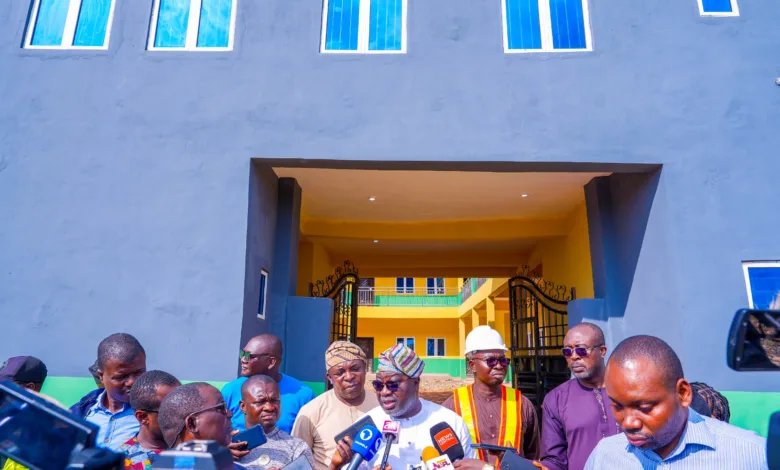
For years, Ebonyi State was spoken of in terms of what it lacked: good roads, modern hospitals, affordable housing, and world‑class schools. It was the “newest” state in the South‑East, often left behind in infrastructure rankings, its rural communities cut off by impassable roads, its capital city struggling to shed the image of a sleepy administrative outpost. But a quiet revolution has been underway. In the last three years, under Governor Francis Ogbonna Nwifuru’s “Peoples Charter of Needs,” Ebonyi has become a showcase of what happens when bold state leadership meets a transformative federal policy, the removal of the fuel subsidy by President Bola Ahmed Tinubu.
That single, difficult decision, which increased monthly FAAC allocations to all 36 states, has given Ebonyi the fiscal muscle to execute projects that were once considered impossible. The evidence is no longer anecdotal; it is concrete, visible, and verifiable. From the rocky hills of Afikpo to the flood‑prone plains of Ishielu, from the new housing estates in Izuameme to the digitalised smart schools rising across every local government, Ebonyi is being rebuilt. And the message is clear. The Renewed Hope Agenda is not a slogan. It is a partnership that delivers.
Roads That Break the Back of Rural Isolation
Start with the roads. For decades, the 22‑kilometre Ezillo–Ezzaegu road in Ishielu Local Government Area was a death trap. Last touched during the military era, it had become so bad that vehicles simply stopped using it. Farmers could not move their produce. A quarry rich with stones, a potential source of revenue, remained inaccessible. Today, that road is being transformed with eight‑inch rigid concrete pavement. Section one is complete; section two is 60 percent finished. By December 2026, the entire stretch will be commissioned, complete with before‑and‑after visuals that tell a story of redemption.
Similarly, the 24‑kilometre Ndiagassa–Mgbom–Oshoa road now serves as an alternative link between Ebonyi and Enugu States. In case of emergencies on the main route, commuters have a reliable bypass. Fourteen kilometres are already done, and the contractor, an indigenous Ebonyi firm, is on track to finish by year’s end. When critics asked about the absence of drainage along some sections, officials patiently explained that engineering design dictates drainage only where necessary. That is not cost cutting; it is intelligent planning.
Then there is the bigger picture. The Calabar–Ebonyi–Benue super highway, a federal project championed by Minister of Works Senator Dave Umahi, cuts through the heart of the state. At Onueke, a 90‑metre flyover is rising alongside a 2.2‑kilometre dual carriageway, designed to decongest the Trans‑Sahara highway. The first section, 123 kilometres from Ndibe Beach to the Ebonyi‑Benue boundary, costs ₦454 billion and features reinforced concrete pavement, solar‑powered streetlights, and dual carriage sections at strategic points. Minister Umahi has inspected the work by Age‑Link and expressed satisfaction, predicting that the foundation work, which is 60 percent of the project, will be completed by May, with full commissioning before December.
Even more dramatic is the transformation of the Abakaliki–Afikpo road. Here, the government is doing the impossible. It is cutting through rocky hills and valleys to eliminate a winding, deadly valley road that has consumed many lives. The cutting is more than 30 metres high in some places. This is not ordinary road construction; it is an engineering assault on geography, made possible by the fiscal resources unlocked by subsidy removal.
A Capital City Reimagined: Tunnel, Flyover, and Aesthetics
Ebonyi’s capital city, Abakaliki, once notorious for chaotic traffic jams, is witnessing a landmark intervention. A one‑kilometre double‑deck tunnel combined with a 28‑span flyover is now 70 percent complete. The project features columns, back caps, and beam launching already in progress. The first decking at the centre will connect the tunnel to the auxiliary works of the flyover, allowing traffic to flow seamlessly. Beyond functionality, the structure is designed as a tourist attraction, complete with aesthetic islands and landscaping. Governor Nwifuru intends to invite President Tinubu for the commissioning.
This tunnel‑flyover complex is not a federal project; it is a state initiative. But as officials openly acknowledged, it would not have been possible without the increased FAAC inflows that followed subsidy removal. In other words, the pain of that policy is now the gain of smoother commutes and a beautiful city skyline.
Housing: From Communal Tragedy to Free Homes for the Displaced
Perhaps the most emotionally resonant projects are the housing estates. In Izuameme, a communal crisis years ago left many families homeless and displaced. The state government responded by building the Izuameme Housing Estate, 140 units of three‑bedroom bungalows split between the Ameze and Izu sections. The Ameze side is 98 percent complete; the Izu side is finished. The Federal Ministry of Works is handling internal roads and drainage, the Ministry of Water Resources is providing water, and the Ministry of Power will soon energise the estate. And the cost to beneficiaries? Zero. The word “free” is not a marketing gimmick; it is a policy.
Similarly, the Senator Chris Mwanguo Housing Estate offers 140 bedroom duplexes, also free, to Ebonyians who have distinguished themselves in their professions. The estate is 90 percent complete, with painting ongoing. The total contract sum is ₦6.23 billion, and the state government has paid every contractor 100 percent. Eighteen local contractors worked on the project, proving that indigenous capacity can deliver world‑class results when given the opportunity and prompt payment.
Across all 13 local government areas, the government is distributing five housing units per LGA. Additional projects include the Nodo Ekumenyi Palm Boulevard Estate, the Enclave Housing Estate at Mofa, and a resettlement estate for those displaced by the ICT development site. All are free. This is not socialism; it is a government using its enhanced fiscal space to directly uplift its citizens.
Health: 600 New Workers, Oxygen Plants, and Maternal Deaths Slashed
The transformation of Ebonyi’s health sector under Governor Nwifuru is no less dramatic. When he took office, the sector suffered from severe manpower shortages, lack of equipment, scarce drugs, low insurance enrolment, and a broken emergency system. Today, over 600 qualified health workers have been recruited. To retain them, the government gave brand new SUVs to all medical officers, implemented the 2024 consolidated medical salary structure, and pays additional allowances for those serving outside the capital. As a result, doctors in Ebonyi’s general hospitals earn more than their counterparts in national hospitals.
The drug supply chain has been revolutionised by a state agency that procures directly from manufacturers and sells at a markup of just 7.5 percent, far cheaper than any pharmacy. Three oxygen‑producing plants now serve the north, central, and south zones, ending the costly trek to Abia or Rivers State. An ambulance system with a central control room deploys the nearest vehicle to any emergency. And over 30,000 pregnant women, plus the elderly and children under five, have been enrolled in the state health insurance scheme, free of charge.
The results are staggering. Maternal mortality has dropped from 800 per 100,000 live births to about 400 within two years, and the latest quarterly review of over 75,000 deliveries recorded only four maternal deaths. The Commissioner for Health, Dr. Moses, was candid. Even four deaths are too many, but the trajectory is clear. Ebonyi aims to be the first state to eliminate maternal death.
Education: Two Universities, 42 Smart Schools, and Overseas Scholarships
Education is perhaps the most ambitious pillar. Governor Nwifuru is the only governor in Nigeria building two universities at once. He has upgraded the state college of education from NCE to degree status, increased foundational infrastructure at Ebonyi State University, and raised worker salaries. But the most visible symbol is the 42 modern school estates, scaling to 51, plus another 12 one‑story, 12‑classroom blocks. That is 67 classrooms in total. These are not ordinary schools; they are being equipped with smart boards and fully digitalised from nursery to secondary level. A tour of education projects alone, officials say, would take over three weeks.
The governor has also sponsored over 800 Ebonyi indigenes for master’s and PhD programmes overseas, plus hundreds more for undergraduate studies. This is not just infrastructure; it is human capital development on a scale rarely seen at the sub‑national level.
A Hotel from the Ashes of a Trade Centre
Finally, there is the story of a 10‑storey hotel rising from a long‑abandoned trade centre. The project was started under the first civilian governor, Dr. Sam Omiye Egwu, and limped through the tenure of Chief Martin Elechi, who managed to roof it. Then it died. The current administration, believing that governance is a continuum, revived it, not as a trade centre but as a modern hotel with 182 rooms, a penthouse, glass‑curtain walls 95 percent complete, and ongoing electrical, mechanical, and air‑conditioning work. A congress hall and star quarters are planned. Once completed, it will boost commerce, tourism, and employment. This is another asset unlocked by the fiscal breathing room provided by subsidy removal.
The Unifying Thread: Subsidy Removal and Federal‑State Synergy
What ties all these projects together is not just the energy of Governor Nwifuru, but the financial capacity created by President Tinubu’s subsidy removal. The policy was painful; fuel prices rose, and citizens felt the pinch. But as Ebonyi demonstrates, the increased FAAC allocations have enabled states to invest in roads, hospitals, schools, and housing at a pace previously unimaginable. The state government has been able to pay contractors 100 percent, retain health workers with enhanced salaries, and build massive infrastructure without borrowing. That is the quiet miracle of the Renewed Hope Agenda.
Of course, none of this diminishes the role of the federal government directly. The Onueke flyover, the Calabar‑Ebonyi‑Benue highway, and the concrete technology championed by Minister Umahi are federal interventions. But the state has leveraged its own resources, boosted by FAAC, to complement and extend those efforts. The result is a seamless web of development that touches every citizen.
Ebonyi is not waiting for a miracle. It is building one. From the rocky cuts of Afikpo to the free duplexes of Izuameme, from the digitalised smart schools to the oxygen plants saving newborns, the state is demonstrating that when leadership is focused and fiscal capacity is expanded, transformation is possible. Governor Nwifuru has often said that government is a continuum; he has finished what others abandoned and started what others only dreamed of. And he has done so with a humility that credits President Tinubu’s difficult reforms.
As the Renewed Hope media tour moves through the South‑East, Ebonyi stands as a beacon. It proves that the subsidy removal, however unpopular, was the right decision, because it gave states the tools to serve their people. The evidence is not in press releases. It is in the concrete, the smart boards, the free health insurance, and the smiling faces of families moving into their new homes. That is the real story. And it is only beginning.