20 years in a box: The containers that could have helped light up Nigeria — by Olabode Opeseitan
Ask Nigerians what stands between them and a better life, and many will point to the generator behind the shop. Electricity is behind every price paid, every lesson taught and every night a street feels safe.
Manufacturers estimate that businesses spend about ₦1.35 trillion annually on alternative power, up from ₦1.11 trillion just a year ago. That money buys diesel, not machines, and consumers and the unemployed end up paying it.
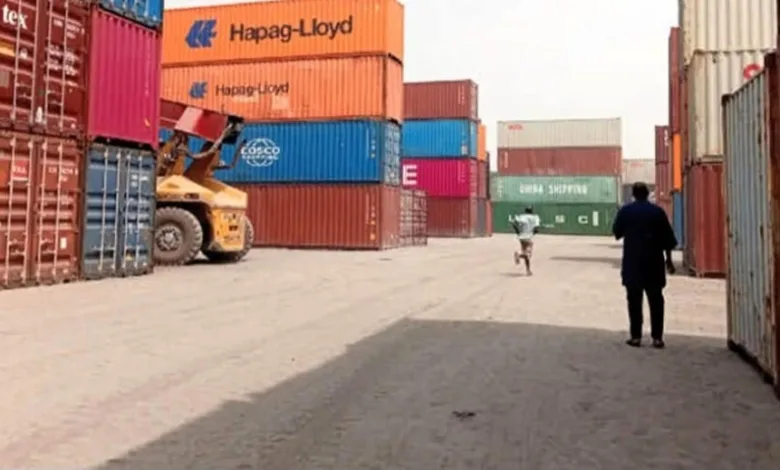
Now Nigerians have learned that part of the remedy was sitting at the harbour. Power Minister Joseph Olasunkanmi Tegbe told journalists that more than 300 containers of power equipment have been at the ports for as long as 15 to 20 years, and that the President, Asiwaju Bola Ahmed Tinubu has ordered them cleared. The order deserves applause. It also deserves a sober review.
Minister Olasunkanmi Tegbe also deserves credit for bringing the matter into the open and elevating it as a priority issue. Public disclosure of long-neglected problems is often the first step toward solving them, and the prompt presidential directive suggests the issue received the attention it might otherwise have continued to lack.

If the remaining equipment is usable, every year it sat idle was a year the country endured darkness it might well have avoided.
What We Know
Port charges went unpaid, and the minister said past governments left the issue unresolved. The government has not disclosed the equipment’s value, the accumulated charges or a deadline.
Experts will open the containers and assess what is inside, and the inspection will clarify the condition of the equipment. Officials expect a sizeable part to be serviceable.
The Orphan Problem
The Ministry of Power needed the goods, the Ports Authority held them and Customs wanted its duty. Each could say, truthfully, that the next step belonged to someone else. A problem owned by three agencies is owned by none.
The minister’s fix is revealing. The charges will be netted off between government agencies, and he said it took political will and a presidential “go ahead whatever it takes.” If netting was that simple, why did it take two decades and an order from the top? The uncomfortable answer may be that a problem owned by three agencies was ultimately owned by none.
The useful questions concern process, not personality:
- What failures allowed the containers to slip into demurrage so high it became destructive?
- Why did no mechanism exist to escalate unresolved public-interest cargo before costs became catastrophic?
- How did three agencies hold pieces of the problem without anyone owning the solution?
- What gaps in coordination made it possible for critical equipment to sit idle while the country paid for darkness?
- Do procurement and project records reveal any link between these containers and the much-debated allegations surrounding roughly $16 billion in past power-sector spending? Only a transparent review of the records can answer that question.
Bridging the Gap
In the same briefing, the minister said transmission capacity is about 5,000 megawatts, against generation of over 13,000. The plan is to reach 19,000 through East and West Super Grids. He also said the national control centre is 64 years old and is being rebuilt in Osogbo. Three new 300MVA transformers for Ikeja West will be made abroad, in a global queue, in three to six months once ordered.
The lesson is straightforward. Before a country joins the global queue for new equipment, it should have full visibility of what is already in its custody. The containers at the ports are a reminder that better coordination can save both time and money.
Four Recommendations to Prevent a Recurrence
A situation this costly should leave behind a set of practical improvements. Here are four recommendations the government may consider adopting to prevent a recurrence:
- Audit the ports. Just as the government did with the fake agency scandal, this is an opportunity for in-house cleaning. Audit all government-linked consignments stranded at ports, documenting their value, purpose, status and accrued charges.
- Start a clock. Institute an alarm system where priority public-interest cargo escalates automatically to the Presidency if uncleared after 90 days.
- Net by default. Institutionalise a process where charges between public agencies are settled by offset for containers rated as critical social and economic assets, because one treasury pays them all.
- Name one owner. Each consignment gets an accountable official and a public record.
Closing
Somewhere, a hospital ran a generator while a crate of equipment waited by the sea. Somewhere a tailor bought fuel with the money meant for cloth. Those are the line items behind the ₦1.35 trillion.
Opening the containers and publishing what is inside will help the country understand what was lost and how to prevent it from happening again.
Accountability is not about blame; it is about learning from the past so the future is brighter than the present.
In Part 2, “Trapped 300 Containers: How Bureaucratic Gridlock, Political Rivalries and Institutional Failure Left Nigeria in the Dark,” we examine how four administrations, multiple agencies and competing political priorities allowed critical national assets to remain stranded for nearly two decades, and the lessons Nigeria must learn to ensure such a costly mistake is never repeated.