From clearing FX backlogs to stabilizing the naira: the Nigeria’s new monetary direction, by Tayo Mabeweje
In the unfolding narrative of Nigeria’s economic renaissance, the interplay between political will and institutional credibility has become strikingly evident. The administration of President Bola Ahmed Tinubu has demonstrated, perhaps more than any in recent memory, that reform is not merely an act of policy, but an act of courage—and that credibility, when restored, is the surest path to confidence, both at home and abroad.
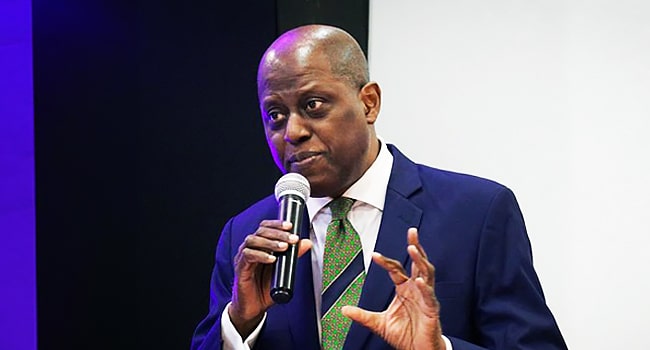
The clearest expression of this new philosophy can be found in the Central Bank of Nigeria’s (CBN) monetary reset under the leadership of Mr. Olayemi Cardoso. It is a story that transcends bureaucracy; it is a statement of national intent.
When Cardoso assumed office, Nigeria was facing formidable headwinds: inflationary pressure was escalating, external reserves were strained, and investor sentiment was severely eroded. The financial community watched keenly to see whether the new Central Bank Governor—himself a seasoned technocrat with deep private-sector insight—could anchor stability in such uncertain waters.
One of his earliest and most consequential decisions was the clearing of more than $7 billion in accumulated foreign exchange backlogs—an audacious move that instantly recalibrated perceptions of Nigeria’s fiscal credibility. Cardoso’s reflection on that moment was revealing: though the source of funds was not immediately clear, he resolved that honoring the obligation was non-negotiable. In his words, a central bank without credibility cannot command confidence; and without confidence, no economy can attract sustainable investment.



That single act, though technical in nature, carried profound moral weight. It restored Nigeria’s financial integrity and reopened channels of trust that had long been obstructed by hesitation and doubt. The result is evident in rising foreign exchange inflows, external reserves now exceeding $42 billion, and a steady stabilization of the naira—tangible outcomes that affirm the coherence of the Tinubu administration’s economic vision.
Beyond liquidity management, the CBN’s renewed focus on financial innovation and inclusion has also begun to reshape Nigeria’s banking landscape. The introduction of the Non-Resident BVN (NRBVN) framework, which allows Nigerians in the diaspora to open and operate domestic accounts remotely, represents a landmark development in bridging global connectivity with local participation. This initiative is deepening financial inclusion, strengthening diaspora remittances, and expanding Nigeria’s formal banking footprint across borders.
Similarly, the restoration of naira debit card usability abroad—a policy Cardoso described as transformative—has reaffirmed the credibility of Nigeria’s payment system and the growing confidence in its currency. Together, these reforms underscore a central message: Nigeria is reasserting itself as a disciplined, trustworthy player in the global financial architecture.
Indeed, the reemergence of Nigeria on the radar of international investors owes much to this new discipline at the apex bank—one that aligns monetary orthodoxy with fiscal responsibility. The CBN, under Cardoso’s leadership and with the President’s unwavering support, has drawn a firm line between policy activism and institutional excess.
The Central Bank has tightened monetary policy by over 800 basis points, halted the practice of overreaching government borrowing beyond statutory limits, and reinstated the willing-buyer, willing-seller framework that unifies the foreign exchange market. Each measure sends a consistent signal: Nigeria is done with policy inconsistency and backroom discretion; the era of transparency, rules, and results has returned.
The Inaugural Lagos Business School Lecture, where the CBN Governor articulated these perspectives, was not just a policy forum—it was a declaration of values long missing in Nigeria’s economic governance: credibility, accountability, and principle-driven leadership.
As Cardoso aptly put it, when credibility falters, confidence weakens and opportunities narrow; but when it is rebuilt, capital flows, growth resumes, and stability takes root. Those words are no longer theoretical—they reflect lived experience.
While many Nigerians continue to navigate the immediate pressures of reform, the truth remains that the foundations being laid today are the ones upon which a more sustainable and self-reliant economy will rise. Reforms are seldom painless, but the price of credibility is always lower than the cost of failure.
For President Tinubu, who has anchored his administration on the Renewed Hope vision, this trajectory is both validation and vindication. By ensuring that the CBN operates with professional independence while maintaining strategic alignment with fiscal objectives, the administration has restored predictability and discipline to monetary policy. The results are visible: improved investor sentiment, restrained inflationary pressures, and a currency regaining its strength after years of volatility.
This is what happens when leadership and integrity converge—when the presidency defines the vision and the Central Bank executes it with precision and purpose. Nigeria’s economic story today is one of reclaimed credibility and resurgent confidence. It is a quiet revolution—less about politics, more about performance; less about promises, more about proof.
Under President Bola Tinubu, the message is unmistakable: the world will once again take Nigeria seriously—not because of what it says, but because of what it does. And in the steady hands of Governor Olayemi Cardoso, that message is being translated into policy, performance, and progress.
As the global financial community reengages with Nigeria, one truth has become self-evident: when credibility leads, confidence follows. And in that sequence lies the true architecture of national renewal.