How FG can break the minimum wage stalemate – Olaopa
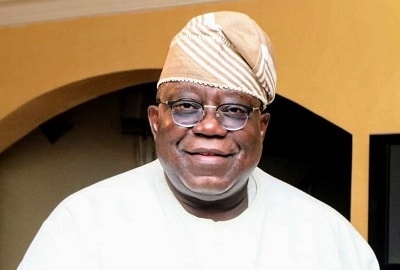
Following the stalemate between the Nigeria Labour Congress and the Federal Government on a new minimum wage for workers, the Chairman of the Federal Civil Service Commission (FCSC), Prof. Tunji Olaopa, has suggested ways to resolve the crisis.
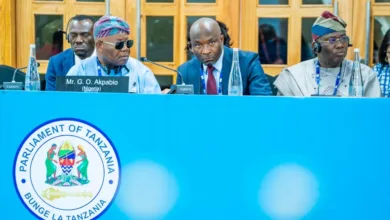
Olaopa spoke on Monday in Abuja during a retreat on “Labour Reforms and the Quest for Living Wage in Nigeria: A Focus on Legislative Intervention,” organised by the National Institute for Legislative and Democratic Studies (NILDS).
He noted that the impasse between the government, labour unions, and the organised private sector on the appropriate wage for adoption continues to jeopardise the country’s industrial peace and harmony.
President Bola Tinubu had in April 2024 constituted a 37-member Tripartite Committee on National Minimum Wage to recommend a New Minimum Wage (NMW). The government’s decision follows the achievement of the required 5-year period after the rate was last enacted in April 2019; and the notable increase in living expenses, caused by the unification of FOREX rates and the removal of fuel subsidy.

The Tripartite Committee had submitted its report to the President. But there is no agreement yet on the proposed wage figures. Labour’s last offer is N250,000 per month and that of the government and private sector employers is N60,000.
According to Prof. Olaopa, faced with the current stalemate, the president can either ask Labour for a last-ditch negotiation towards a compromise figure or present the government’s preferred amount to the National Assembly for enactment.
“If the second option is chosen, the National Assembly will be advised to take up the gauntlet of mediation to reach a mutual rate, before the enactment.
“Where no agreement is reached after such efforts, the Assembly can pass the law anyway, because it is not absolutely necessary that agreement is reached in every negotiation,” he said.
While acknowledging that a minimum wage would encourage workers to put in more effort and increase productivity, he also pointed out that the ability of employers to pay the proposed wage depends on various factors, including their revenue base, other cost obligations, profitability, and ability to fulfil their core mandates.
Prof. Olaopa argued that putting the N62,000 that the government is recommending into effect will already put a great deal of strain on the country’s economy, emphasizing how impractical is labour’s demand.
He said: “With regard to the unresolved minimum wage, even the N62,000 which the government is proposing if calculated and extrapolated along compression ratio and the consequential it will generate, implementing will be significant pressure on the national economy, how much more if the government meets the labour even half-way to the N250,000 it proposed?
“The only window according to him, is for the government to work harder on unbundling the bloated cost of governance through efficiency cum productivity audits of the entire expenditure structure of government with a view to freeing resources to finance development programmes and enhanced remuneration for the workforce. And even at that the government would only have addressed the government side and not that of the private sector.
“Indeed, the nation has reached a point where the tripartite committee needs a no-holds-barred conversation that should culminate in a national summit, the objective of which will be to arrive at a shared vision on Nigeria’s development future and how to achieve industrial harmony that is so badly required for national economic transformation. And the paper presented by Hon. Justice Benedict Kanyip, president of the National Industrial Court has thrown up some issues that should feature along with numerous others in that national conversation.”