Kyari unveils climate-smart policies to strengthen Nigeria’s food security
By Kunle Sanni –
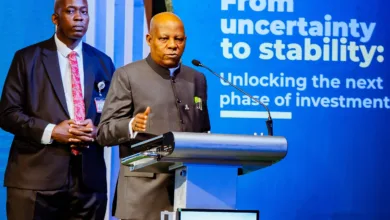
The Minister of Agriculture and Food Security, Abubakar Kyari, has emphasized that proactive policies in Nigeria’s agricultural sector are key to unlocking sustainable food systems, improving productivity, restoring ecosystems, and securing better livelihoods for farmers.
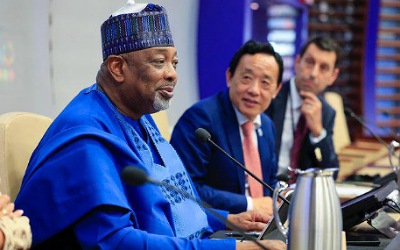
Kyari made this known while addressing a high-level event on “Unlocking Sustainable Agrifood Systems for Climate, Nature, and Livelihoods” during the Standing Committee on Finance (SCF) Forum of the United Nations Framework Convention on Climate Change (UNFCCC), held recently in Rome, Italy.
Highlighting Nigeria’s efforts, the minister recalled that in 2022, the ministry partnered with the Food and Agriculture Organization (FAO) through the Monitoring and Analyzing Food and Agricultural Policies (MAFAP) programme. According to him, this collaboration has provided in-depth policy analyses that continue to shape Nigeria’s agricultural strategies.



Kyari said Nigeria is driving a national initiative to build a climate-resilient and nature-positive food system. Current efforts include the distribution of improved seeds, sustainable soil management, expansion of agroforestry, and increased food production.
He explained that the National Agrifood Systems Investment Plan (NASIP) is central to this vision. The plan aims to boost investments in agriculture, expand job creation, reduce poverty, and make healthy diets more affordable—while also cutting greenhouse gas emissions and promoting reforestation.
The minister also revealed that Nigeria’s forthcoming Nationally Determined Contributions (NDC 3.0) will align climate commitments with inclusive agricultural reforms. Priorities include climate-smart farming, restoring degraded land, promoting regenerative agriculture, and empowering women and youth farmers.
Kyari further noted progress in the National Adaptation Plan (NAP), which integrates agriculture with water, health, and infrastructure development—emphasizing community-led solutions and ecosystem-based approaches.
On financing, he said Nigeria is positioning itself under Article 6 of the Paris Agreement to leverage carbon credits from climate-smart agriculture, afforestation, and ecosystem restoration. This, he explained, would attract new investments while supporting smallholder farmers.