La Santé: A lesson in power and freedom, by Folorunso Adisa
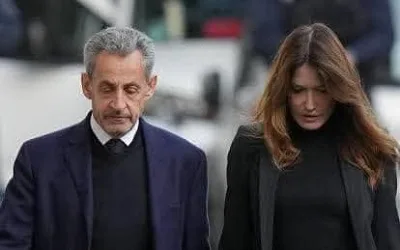
La Santé will be his new home for the next five years. I have known the name Nicolas Sarkozy for a while now, and I was first fascinated by the finesse of it. The preponderance of sibilants and glottals in that name gives it a rare kind of music. During his days as the President of France, the 70-year-old man was widely known as a fierce fighter of corruption. He’s a leader who, at the height of his influence, projected himself as a reformer of public morality.
But then came the denouement. When his tenure ended, the hunter became the hunted. Sarkozy was found guilty of corruption, the very vice he once vowed to eradicate. Consequently, he was sentenced to prison. Antithesis personified.
Yesterday noon, I watched a video clip of the moment he was driven to La Santé prison by the police. From the car window, he muttered in a trembling voice, “An innocent man.” That statement was not just emotionally disturbing, it was existentially haunting. I also saw a short video of his cell, a small bed, a fridge, a few toiletries, and a narrow toilet space. To imagine a former president of a powerful nation confined within such a modest, almost austere room is both humbling and deeply instructive.
Two lessons crystallised in my mind as I watched. The first is that nothing lasts forever. Power is transient; influence is perishable. So, when you are in charge, tread carefully and lead with conscience. The second is that freedom is far more precious than we often admit. It should never be traded for anything, not for wealth, fame, or power. Incarceration does more than restrain the body, it gradually reshapes the mind.


Sarkozy will now spend more than twelve hours alone each day, with only two short walks in the courtyard. That is the true anatomy of imprisonment, the slow erosion of liberty, minute by minute.
For me, more than the personal tragedy of Sarkozy lies a larger civic warning. His imprisonment is a pure lesson that no one is above the law, not even those once surrounded by power’s dazzling illusion. In China, corruption often attracts even harsher punishment, in some cases, death. If Nigeria could borrow a leaf from that firmness, holding even yesterday’s men of power to account without fear or favour, perhaps we might yet breathe a fresher air in our public life and awaken to a saner, more accountable society.