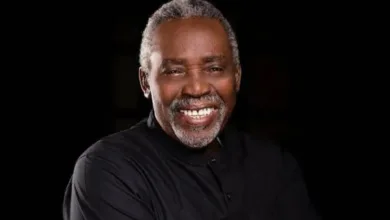
Nigeria and the moral republic: Lessons in coexistence from a Mainer in Nigeria, by Najim Animashaun

In the summer of 2001, before the world changed, a small circle of Mainers—Muslims, Christians, Jews, and later other faiths—began meeting at the Bangor Theological Seminary to explore interfaith discourse that would later become Interfaith Maine. After the attacks of September 11, Governor Angus King invited us to Blaine House to participate in Maine’s candlelit memorial service. That night, as people of many faiths stood shoulder to shoulder in mourning, I saw how pluralism embraced in good faith binds the deepest of wounds.
Years later, living and working in Nigeria, I was reminded of that lesson when the U.S. State Department placed Nigeria on its “Country of Particular Concern” list—a designation for nations accused of severe violations of religious freedom. The label shocked many Nigerians, not because persecution is unknown, but because it flattened the country’s complex reality into a story of Christian victims and Muslim aggressors. It overlooked a deeper truth: that Nigeria, and particularly its Yoruba southwest, has one of the most enduring traditions of religious coexistence anywhere in Africa, if not the world.
The late Professor J.D.Y. Peel spent decades documenting this pluralism. He described Yoruba society as built on kinship pluralism—families in which Christians, Muslims, and devotees of the Òrìṣà faith live under one roof, often intermarrying across belief. For Peel, this was no accident but a deliberate moral architecture: the domestication of world religions within an older ethic of mutual belonging.
Speaking in Lagos in 2015, shortly before his death, Peel observed:




“Endemic religious violence over much of Northern Nigeria has risen to a shocking level with the activities of Boko Haram. By contrast, the Yoruba religious situation seems almost miraculous.… There are surely lessons here, not just for Northern Nigeria, but for other places in the world torn by religious conflict.”
He added a warning: religious harmony must never be taken for granted—it is an accomplishment, something that must be worked at.
This heritage of coexistence is lived experience in the Yoruba heartland. Few families are untouched by diversity: a Muslim brother, a Christian sister, an elder who honors the Òrìṣà. That everyday intimacy across faith lines has done more to sustain peace than any treaty or decree. To ignore it for the sake of rhetoric is to forget the moral wisdom that has long held Nigeria’s diverse communities together.
Today, the country faces new pressures—climate stress, migration, and fragile institutions—that test this civic ethic. In northern Nigeria, desertification pushes herders southward, straining relations with farming communities. Population growth exacerbates and accelerates competition for water and land, creating a climate doom loop. Yet even amid such tension, violence is not national policy; it is a product of these stresses that demands cooperation.
Cooperation as statecraft is embodied in the marriage between Nigeria’s President Bola Ahmed Tinubu and his wife, Oluremi. Tinubu is Muslim; his wife is an ordained minister in one of the country’s largest Pentecostal churches. Their partnership is itself a quiet gesture of national unity, confirming what Peel devoted his life to studying, and an example of faith beyond boundaries.
From Maine’s coastal towns to Nigeria’s crowded cities, the lesson is the same: pluralism produces peace and prosperity when promoted and defended. The moral republic endures only when its citizens choose to defend the coexistence that defines it.
Najim Animashaun is a graduate of the Muskie School of Public Policy and a founding member of Interfaith Maine. He writes from Abuja, Nigeria.