Nigeria-Egypt trade hits $315m as Tuggar seeks balanced partnership
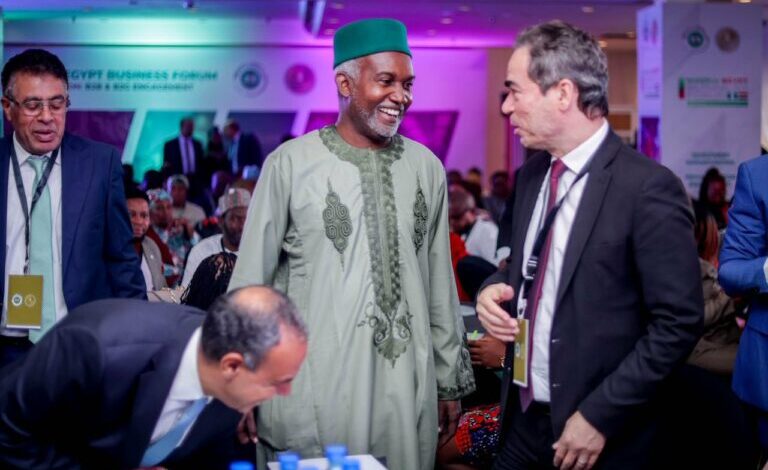
Trade relations between Nigeria and Egypt recorded a 68.45% surge over the past year, with bilateral trade volumes climbing from approximately $187 million in 2023 to about $315 million in 2024. This was disclosed by the Egyptian Minister of Foreign Affairs, Badr Abdelatty, at the second Nigeria-Egypt Business Forum held in Abuja on Monday.
While celebrating the growth in trade, Nigeria’s Minister of Foreign Affairs, Yusuf Tuggar, expressed concern over the lopsided nature of the trade ties. He noted that despite the significant increase, Nigeria’s share in exports remains disproportionately low, urging a strategic shift to balance the exchange.
“In 2023, total trade between our two nations stood at just $211.2 million. Egypt exported goods worth $199 million to Nigeria, while Nigeria’s exports to Egypt amounted to only $12.2 million. That is a staggering imbalance. We must do better,” Tuggar said.
Tuggar emphasized the need for the two African giants to go beyond symbolic diplomacy and focus on building robust trade and industrial linkages. He highlighted sectors such as agriculture, ICT, pharmaceuticals, and leather as potential growth areas under the African Continental Free Trade Area (AfCFTA).


He urged Nigerian producers and exporters to seize the opportunity in the Egyptian market, stating, “The time has come for Nigerian goods to find their way into Cairo, Alexandria, and beyond. Let this forum be a turning point.”
The minister also underscored the significance of the Developing-8 (D-8) Organisation for Economic Cooperation, of which Nigeria and Egypt are the only African members. He called for a stronger push toward the group’s goal of achieving $500 billion in intra-bloc trade by 2030.
Tuggar noted that both countries are undergoing rapid industrialization and should align strengths in sectors like renewable energy, solid minerals, water management, and aviation to achieve mutual prosperity.
He concluded by highlighting the role of the private sector in driving real economic integration. “Governments can only create the enabling environment. It is the entrepreneurs, investors, and innovators who will turn MoUs into machinery and dialogue into development,” he said.