Nigeria to develop National Air Quality Policy, says Environment Minister
By Kunle Sanni
The Minister of State for Environment, Iziaq Salako, has announced that the Ministry of Environment is collaborating with stakeholders at both national and sub-national levels to develop a National Policy on Air Quality Management. This initiative aims to establish air quality monitoring stations across Nigeria, creating a reliable nationwide database on air quality.
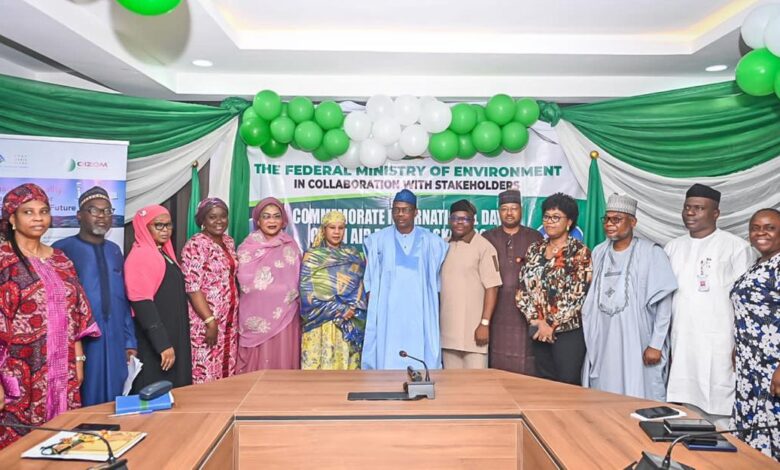
Speaking at the commemoration of the second International Day of Clean Air for Blue Skies 2024, themed “Investment in Clean Air Now,” held in Abuja, Salako emphasized the Ministry’s commitment to tackling air pollution.
“The ultimate vision is to establish air quality monitoring stations across the country, generating reliable data that will guide policies and actions,” Salako stated.



The Minister highlighted that the United Nations General Assembly designated this day to enhance international cooperation in improving air quality and reducing pollution. He noted that the event aims to raise awareness about the importance of clean air for human health, environmental sustainability, and economic growth.
“Globally, there is a growing concern about air pollution and the threat it poses to our existence, with air pollution now regarded as the world’s single largest environmental health risk. It is estimated that 99% of the world’s population is breathing polluted air, with dire consequences for everything we hold dear,” Salako said.
Salako further explained that the Ministry, through its regulatory and enforcement agencies, is working in collaboration with other MDAs to improve the air quality in Nigeria. This effort includes using multifaceted policy instruments, legislation, programs, and projects to regulate, enforce, and promote minimum air quality standards.
“The issue of vehicular emissions is a major area we need to address to improve our air quality. The government will continue to implement measures, including appropriate tariffs and taxes, to discourage the importation of old and rickety vehicles and to encourage local manufacturing and assembly of vehicles,” he added.
The Minister also highlighted President Bola Ahmed Tinubu’s strategic agenda to promote the use of alternative fuels such as compressed natural gas, liquefied natural gas, and electric vehicles. This initiative, he noted, is a bold step that will significantly improve air quality in Nigeria.
Speaking further, the Minister reiterated the government’s commitment to promoting mass transportation systems such as trains and rail, not only for their cost-effectiveness but also to reduce cumulative emissions from the transport sector that pollute the air and harm public health.
Salako added that the Ministry is working urgently with other relevant Ministries and Agencies to switch to low-sulphur fuels, while the Nigeria Industrial Standards (NIS) for Petroleum Products have been reviewed in line with AFRI IV Standards, with implementation expected to commence soon.
In his opening remarks, the Permanent Secretary of the Federal Ministry of Environment, Mahmud Adam Kambari, represented by the Director of Human Resource Management, Mrs. Mariya Rufai, emphasized the need for increased awareness, particularly among the elderly, women, and children, who are more vulnerable to air pollution.
Kambari pointed out that air pollution is hazardous to society, leading to numerous health problems and negatively impacting societal well-being. He stressed that the commemoration of this day provides an opportunity to deliberate and find lasting solutions to the environmental challenges facing the country.
“As you are aware, clean air is crucial globally because it is essential for good health, a healthy environment, enhanced productivity, and a vibrant economy,” Kambari said.
“We need to embark on broader sensitization and enlightenment campaigns to educate our people about the dangers and consequences of air pollution. Issues like chemical pollution, soil and water contamination are contributing to air pollution, and unless we take measures to address these, we will continue to face significant challenges. This forum is an excellent opportunity to deliberate on solutions to the air pollution that is plaguing our society,” Kambari added.
Similarly, the Registrar of the Environmental Health Council of Nigeria (EHCON), Dr. Yakubu Mohammed Baba, in his goodwill message, urged all agencies and departments under the Ministry to work together to address these challenges. He also recognized the vital importance of clean air to human health and the environment.
“Let us all work together across all sectors to support initiatives that ensure our air remains safe, clean, and breathable. Together, we can build a future where blue skies are a lasting legacy,” Baba advised.
Baba emphasized that EHCON recognizes the critical importance of clean air for our health, environment, and future. He noted that this year’s theme serves as a powerful reminder that investing in clean air is an investment in our communities, economies, and the well-being of future generations.