Nigerian bank’s average maximum lending rate depreciates to 33.16% in June 2026, says CBN
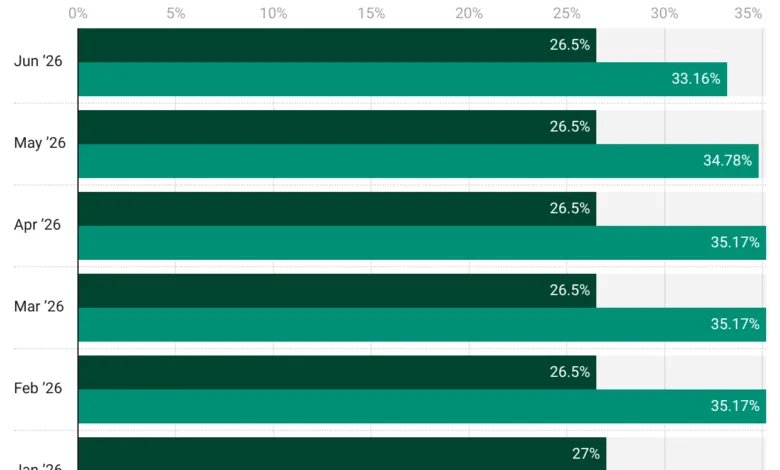
As the Central Bank of Nigeria (CBN) retained its interest rate at 26.50 per cent, the Nigerian banking sector’s average maximum lending rate dropped to 33.16 per cent in June 2026 from 34.78 per cent in May 2026.
On a Year on Year (YoY), the Money Market Indicators of the CBN revealed that average maximum lending rate was at 29.51per cent in June 2025 as against 33.16 per cent in June 2026.
Maximum lending rate refers to the highest permissible interest rate that Nigerian banks can charge borrowers. The rate is crucial for ensuring fair lending practices in the Nigerian banking sector and protecting borrowers from excessive interest rates.
The decline in average maximum lending rate is taking place for the second time this year since the Monetary Policy Committee (MPC) of the CBN maintained the status quo on interest to 26.50 per cent in late February 2026 from 27 per cent.



For maintaining the interest rate at 26.5 per cent, the committee at its meeting last week confirmed widespread projection amid exchange rate stability and slowing inflationary numbers.
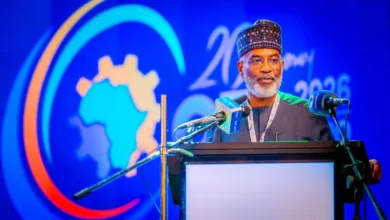
CBN Governor, Mr. Olayemi Cardoso said members unanimously agreed to leave the policy rate unchanged as they weighed the risks posed by global developments, particularly uncertainties surrounding the United States economy and the ongoing conflict in the Middle East.
According to the CBN’s money market indicators the average maximum lending rate that opened January 2026 at 32.68 per cent moved to 35.17per cent in February 2026 at a time interest rate was reduced to 26.50 per cent.
The data by CBN revealed that the average maximum lending rate remained flat at 35.17 per cent between February and April 2026 amid 26.50 per cent interest rate.
Before now, the International Monetary Fund (IMF) had responded to the unchanged average average maximum lending rate in the Nigerian banking sector between February and April 2026 , expressing that banks raise lending rates rapidly when monetary policy is tightened but are slower to reduce borrowing costs or increase returns to savers.
“Interest rate transmission displays a clear “rockets-and-feathers” pattern, with borrowing rates adjusting upward rapidly during tightening cycles but declining only gradually when policy is eased,” IMF said
“When the CBN tightens, wholesale and lending rates respond strongly and more than proportionally: a 100 basis-point MPR hike raises T-bill and lending rates by roughly 175–180 basis points on impact, whereas a comparable cut lowers them by only about 25–30 basis points.
“This asymmetry – statistically significant – implies that banks transmit tightening rapidly and even amplify it but adjust much more slowly during easing cycles.
“By contrast, while the interbank rate responds symmetrically (around 0.6 in both directions) and deposit rates show little response either way (around 0.12), both are not significant,” the report by IMF had stated.
In 2025, the maximum lending rate was 29.32 per cent, when the MPC voted to retain the MPR at 27.00 per cent from 27.50 per cent.
The average maximum lending rate has sparked concerns regarding the potential impact on the cost of credit for businesses already facing economic hardships due to foreign exchange unification and fuel subsidy removal by the Federal Government.
The data by CBN revealed that the average maximum lending rate rose to 29.79 per cent in January 2025 from 29.71 per cent in December 2024 when MPC members of CBN voted to retain MPR to 27.50 per cent.
The banking sector lending rate in Nigeria averaged 14.17 per cent from 1961 until 2024, reaching an all-time high of 37.80 per cent in September of 1993 and a record low of six per cent in April of 1975. In 2020, the average maximum lending rate reached a peak of 30.73 per cent when the MPR rate stood at 13.5per cent