Open letter to President Tinubu: Justice and root causes in the fight against terrorism – by Bukola Oyeniyi
A Significant Counter-Terrorism Victory
Your Excellency, President Bola Ahmed Tinubu, I write to congratulate you and the Nigerian security agencies on the recent apprehension of two high-profile terrorist leaders. The capture of Mahmud Muhammad Usman (alias Abu Bara’a Abbas Mukhtar), the self-proclaimed Emir of Ansaru, and his deputy Mahmud al-Nigeri (alias Mallam Mamuda) is a major victory in Nigeria’s war against insurgency.
These two men had long been on Nigeria’s most-wanted list and were even sought internationally for spearheading deadly attacks on civilians, security forces, and critical infrastructure. Their arrest, following a high-risk operation conducted between May and July 2025, has been described as “the most decisive blow against Ansaru since its inception,” effectively dismantling the group’s central command.
The feat has drawn praise from Nigeria’s international partners. The United States Embassy in Nigeria hailed it as “a significant step forward” in the fight against terrorism, while the British High Commissioner lauded it as an “extraordinary… major step forward” under your leadership. Decapitating terror leadership disrupts networks, hinders coordination, and sends a strong signal that impunity will not be tolerated.
We commend your resolve and the gallantry of our forces in achieving this milestone. However, while this victory is significant, it does not mark the end of terrorism. Experts caution that extremist networks may attempt to regroup or retaliate. Boko Haram and its offshoots have historically shown resilience, often morphing or splintering after leadership losses.

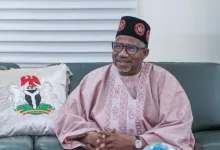

Your National Security Adviser, Mallam Nuhu Ribadu, aptly noted that this marks “the beginning of the end of impunity” for such leaders. It is crucial that it also becomes the beginning of the end of terrorism itself. This can only be achieved by coupling security successes with justice and long-term solutions.
Justice Over Extrajudicial Measures
Mr. President, the critical next step is to ensure that these arrested terrorist leaders face justice in a court of law, rather than extrajudicial execution or mysterious deaths in custody.
The National Human Rights Commission has rightly called on the government to inaugurate a special trial process for the Ansaru leaders, holding them accountable for their heinous crimes. We strongly support this call. Justice must not only be done but must be seen to be done. By arraigning Usman (Abu Bara’a) and al-Nigeri (Mallam Mamuda) before a special tribunal or court – operating swiftly, transparently, and fairly – your government will reinforce public faith in the rule of law.
Conversely, executing or secretly eliminating these men would be a grave mistake. Nigeria has trodden this path before, with dire consequences. In July 2009, Boko Haram’s founder, Mohammed Yusuf, was captured alive but summarily executed in police custody. Human Rights Watch condemned it as “a shocking example of brazen contempt… for the rule of law.” That extrajudicial killing, rather than ending the threat, fueled Boko Haram’s resurgence under Abubakar Shekau, escalating the insurgency into a nationwide crisis.
The lesson is clear: killing terrorists without trial risks martyring them in the eyes of followers, making recruitment easier. A fair trial, by contrast, strips them of legitimacy, brands them criminals, and exposes the hollowness of their ideology. Justice is a powerful antidote to terror because it replaces chaos with order and vengeance with accountability.
We therefore urge you to constitute a special terrorism tribunal or designate judges equipped to handle these cases. Protected witnesses, classified evidence protocols, and security safeguards can mitigate risks, but the principle must be firm: terrorists will be tried in a court of law.
Revisiting Past Mistakes: The Case of Mohammed Yusuf
Reinforcing this commitment to justice requires confronting past mistakes. The extrajudicial killing of Boko Haram founder Mohammed Yusuf in 2009 remains a dark stain on Nigeria’s counter-terrorism history – one that arguably haunts us to this day.
After Yusuf’s death, Boko Haram’s violence escalated dramatically. His successor, Abubakar Shekau, invoked revenge for Yusuf to justify waves of attacks. What began as a contained radical sect metastasized into a full-blown insurgency. Despite promises of accountability, no police officer or official was ever punished for Yusuf’s unlawful killing.
Mr. President, your administration must break this cycle. We urge you to establish a special investigative panel to uncover the truth of Yusuf’s arrest, detention, and execution. If culpability is established, those responsible should face justice. This would send a clear message that no one – terrorist or officer – is above the law.
Reckoning with this past would help heal grievances in the North East, encourage professional conduct in security forces, and demonstrate that Nigeria learns from history. Justice denied once has cost us dearly; justice delivered now can prevent repetition.
Global Lessons: Justice and Reform as Anti-Terror Tools
Your Excellency, lasting solutions to terrorism require more than military might – they require justice, accountability, and addressing root causes. Successful models worldwide highlight this:
- Indonesia combined swift trials of terrorists with deradicalisation programs, drastically reducing Jemaah Islamiyah’s threat.
- Morocco paired security crackdowns with socio-economic investments and religious reforms, dismantling over 200 terror cells while reducing recruitment.
- The United Kingdom achieved peace in Northern Ireland through political inclusion and justice, not just military measures.
- The United States prosecuted Timothy McVeigh for the Oklahoma City bombing in a civilian court, demonstrating fairness even for heinous crimes.
These examples prove that governments can be tough on terror without abandoning principles. Nigeria should follow this path – ensuring captured terrorists face lawful justice while pursuing reforms that prevent extremism’s resurgence.
Targeting Root Causes, Not Just Symptoms
Capturing terrorist leaders addresses symptoms, not the disease. Boko Haram, Ansaru, and similar groups thrive on poverty, lack of education, impunity, and weak governance. Unless these root causes are addressed, terrorism will persist.
We urge a comprehensive package of reforms:
- Economic development in the North-East – schools, hospitals, jobs, and infrastructure.
- Educational reform and partnerships with moderate religious leaders to counter extremist ideology.
- Governance and security reform – fighting corruption, ensuring accountability, and human rights compliance.
- Community engagement – reconciliation, victim support, and deradicalisation for repentant fighters.
By treating the disease, not just symptoms, Nigeria can ensure lasting peace.
Conclusion: Seizing the Moment for Lasting Peace
Mr. President, the arrests of these terrorist leaders represent a pivotal moment. By choosing justice, transparency, and reform, you can convert this tactical victory into a strategic turning point. Swift, fair trials will reinforce Nigeria’s rule of law, while addressing past abuses and root causes will prevent future insurgencies.
Your administration’s mantra of renewed hope can be applied here: hope that Nigeria can end terrorism not by mirroring the lawlessness of terrorists but by upholding justice. Whether this becomes a fleeting success or a historic turning point depends on the follow-through.
We commend your leadership and urge you to cement your legacy by ensuring justice and addressing the root causes of extremism. The Nigerian people, who have suffered greatly, deserve no less.
Sincerely,
Bukola Adeyemi Oyeniyi, Ph.D.
Concerned Citizen and Advocate for Peace and Justice
Cc: Nigerian Security Agencies, Human Rights Commission, Media Houses
Bukola Adeyemi Oyeniyi (Ph.D.)
Reynolds College, Missouri State University
Email: [email protected]