Saraki, Jonathan tensions began during Yar’Adua’s presidency — Abdullahi
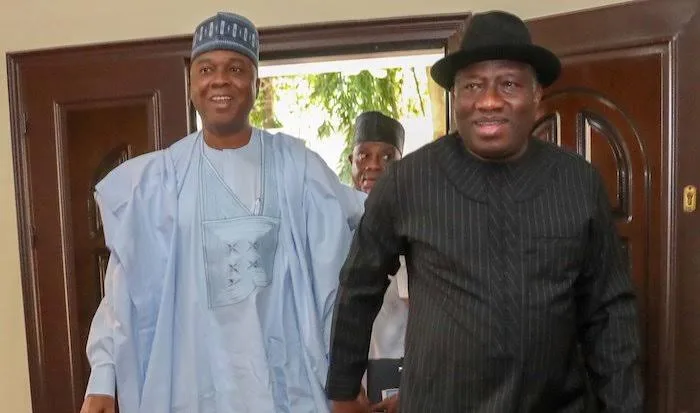
National publicity secretary of the African Democratic Congress (ADC), Bolaji Abdullahi, has said the long-standing strain between former Senate President Bukola Saraki and ex-President Goodluck Jonathan originated during the administration of the late President Umaru Musa Yar’Adua.
Abdullahi made the disclosure on Tuesday in Abuja during the public presentation of his book, The Loyalist. He recounted that his relationship with the Jonathan administration suffered after he declined to publicly criticise Saraki during a political campaign in Kwara State, a decision he said later led to his removal as a minister.
In the book, Abdullahi explained that tensions emerged when Saraki, then chairman of the Nigeria Governors’ Forum (NGF), enjoyed close access to Yar’Adua, while Jonathan, who was vice-president at the time, was largely excluded from the president’s inner circle. He said the situation made it easy for Jonathan to feel marginalised despite his constitutional position.
According to Abdullahi, Yar’Adua was aware of Jonathan’s discomfort and asked Saraki to intervene to ease the situation. Although a meeting was held, he said the engagement resolved little, as politeness masked deeper grievances.


He further noted that after Yar’Adua’s death and Jonathan’s eventual rise to power, there was a belief within Jonathan’s camp that Saraki had worked against his emergence as acting president. Abdullahi dismissed this view as inaccurate, noting that Saraki and the NGF were instrumental in proposing the “Doctrine of Necessity”, which enabled the National Assembly to formally empower Jonathan. “I actually heard about the term ‘Doctrine of Necessity’ for the first time when Governor Saraki called from Abuja asking me to draft a statement to propose it to the National Assembly,” he said.
Abdullahi said suspicions nevertheless persisted, particularly after the then national chairman of the Peoples Democratic Party (PDP), Vincent Ogbulafor, declared that the presidency would remain in the north in 2011. He said Saraki’s involvement in a northern consensus arrangement deepened Jonathan’s mistrust, even though Saraki later reportedly backed Jonathan after losing out to Atiku Abubakar.
The former sports minister added that relations deteriorated further during the fuel subsidy crisis of early 2012. He said the Jonathan administration believed Saraki instigated the crisis through a Senate motion calling for a probe into subsidy payments, a development that triggered nationwide protests and destabilised the government.
Abdullahi said the two men later met in an attempt to mend fences after the crisis, amid investigations into Saraki and his family by the Economic and Financial Crimes Commission (EFCC). He described the meeting as a reconciliation effort, during which Jonathan denied using state institutions to harass Saraki and promised to look into the matter.