South Africa and the inescapable crucible of nation-building — by Bukola Oyeniyi
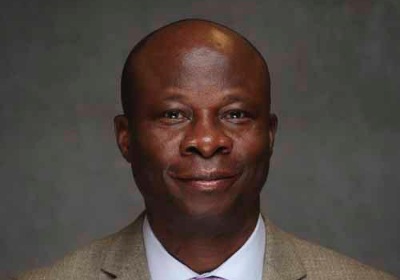
When he stood before us that harmattan-cool morning in the early 2000s, our professor, a former Nigerian ambassador to the Federal Republic of Germany, carried no notes, only a certain weariness in his eyes that we mistook for academic detachment. We were mid-way through his course—Problems of Nation-Building in Africa—and had just finished a session celebrating the almost cinematic triumphs of Nelson Mandela and Thabo Mbeki.
We were young, starry-eyed postgraduates, and we loved nothing more than to hold up post-apartheid South Africa as the definitive rebuttal to Afro-pessimism: a functioning constitutional democracy, a progressive Bill of Rights, a Truth and Reconciliation Commission that the world applauded, and above all, a peaceful transition that seemed to suspend the very laws of post-colonial political physics. South Africa, we chorused, had cracked the code.
The professor adjusted his glasses. Then, in a voice that had once presented Nigeria’s credentials to the Bundestag, he said: “Don’t entertain high hopes. South Africa has not yet experienced the different problems of nation-building.”
A painful silence settled over the lecture hall. He proceeded to catalogue the afflictions that, in his assessment, would inevitably visit South Africa: ethnic and religious rivalries, endemic corruption, mass unemployment, extreme economic disparities, lopsided ownership of the means of production, and the simmering insecurity that arises when millions are locked out of dignity.


We left the hall that afternoon visibly rattled; some of us considered his prognosis needlessly pessimistic, even intellectually arrogant. Who was this diplomat-turned-academic to dismiss a project that had been blessed by a living saint called Mandela?
I recalled that afternoon with almost painful clarity in late 2025, as news feeds flooded with footage of uniformed men marching in formation through the streets of Johannesburg, members of a vigilante outfit called Operation Dudula—a Zulu word meaning “push back”—chanting for Nigerians, Ghanaians, Zimbabweans, and Angolans to “go back home.” I thought of him again when I read the grim dispatches from the Addo farming community in the Eastern Cape: four immigrants dead, ten injured, hundreds of women and children displaced and sleeping in ditches after mobs went door-to-door with iron bars and sledgehammers. Our professor had not merely been right. He had been, as I would later characterise it, disappointedly right.
The Unfinished Architecture of a Nation
To understand why South Africa is bleeding from wounds that seem strikingly similar to those of Nigeria, the Democratic Republic of Congo, or Kenya, one must first accept a difficult historical premise: the overthrow of a brutal regime—even a spectacularly successful overthrow—does not automatically erect a nation where none previously existed.
Nation-building is not a singular event captured in iconic photographs of a presidential inauguration. It is a grinding, generational process of forging a shared moral economy, redistributing access to resources, and constructing institutions whose legitimacy is anchored in performance, not merely in constitutional text.
What South Africa is experiencing today is not a unique pathology; it is, as my professor foretold, the arrival of the problems of nation-building. The country, for all its 1994 euphoria, remained an economic apartheid state long after political apartheid was dismantled.
The Johannesburg Stock Exchange, the boardrooms of Sandton, and the ownership of prime agricultural land continued to mirror the pigmentocracy the struggle had ostensibly defeated. The ANC government’s decision to pursue a relatively orthodox, market-friendly transition—celebrated by global capital—effectively deferred the economic reckoning that political freedom had promised.
That deferral has now expired.
Corruption: From State Capture to Impunity’s Architecture
If one needs a metaphor for South Africa’s corrosion, it is the image of Raymond Zondo, then Deputy Chief Justice, presenting the final volumes of the State Capture Commission report in 2022—over four volumes, 832 recommendations, and the staggering revelation that at least R1.5-trillion had been systemically looted from public entities. Eskom, the power utility that was once the continent’s pride; Transnet, the logistics backbone; Prasa, the passenger rail agency—all of them hollowed out by a network that connected the Gupta family to former President Jacob Zuma in what the Commission described as a feudal patronage system.
By early 2026, the Presidency’s own implementation tracker showed 62% progress on a core 60-point plan, yet convictions hovered at a pitiful 12% of the 218 criminal referrals, hampered by prosecutorial backlogs, witness intimidation, and a criminal justice system deliberately designed to be slow—a post-apartheid safeguard that now functions as insulation for the powerful.
Beyond the Zondo headlines, the pathology has replicated itself at every administrative level. At Tembisa Hospital in Gauteng, over R2-billion was looted through fraudulent procurement; the whistle-blowing accounting officer, Babita Deokaran, was assassinated in August 2021 after exposing the rot. The Special Investigating Unit (SIU) subsequently uncovered a network involving bribes channelled to politically connected figures, recommending 116 disciplinary referrals and four criminal prosecutions. In December 2025, the SIU froze a luxury Bendor home and a vehicle linked to an R8-million Eskom tender fraud scheme, with investigators tracing how a single surveyor and project manager allegedly funnelled payments through family members and associates in exchange for rigged contracts.
Meanwhile, the National Prosecuting Authority (NPA) under Advocate Shamila Batohi has stumbled from one collapsed prosecution to another: the R2.2-billion Matshela Koko case struck off the roll for “unreasonable delays”; the R280-million Estina Dairy Farm case similarly dismissed before being ordered to retrial by the Supreme Court of Appeal; the Nulane Investments case against Gupta-linked Iqbal Sharma ending in acquittals. The machinery of accountability has been so thoroughly compromised that South Africans now treat exposure as accountability, as though naming the wound could replace stitching it closed.
Economic Inequality: A Gini Coefficient as a Monument to Injustice
If corruption is the cancer, economic inequality is the congenital deformity that makes the cancer terminal. South Africa does not merely rank high on the Gini coefficient scale; it occupies the summit. By 2025, the country’s Gini coefficient stood between 0.63 and 0.67, the highest in the world, while its wealth Gini—measuring asset concentration—hovered around 0.8, placing it alongside Brazil and Russia.
To appreciate the brutality of these numbers: the wealthiest 20% of South Africa’s population hold nearly 70% of the national income, while the poorest 40% hold just 7%. Approximately 37.9% of South Africans—some 23 million people—live below the lower-bound poverty line of R1,300 per person per month. The South African Federation of Trade Unions (SAFTU) has argued that comparing South Africa to its supposed “peers” in the upper-middle-income bracket is an exercise in statistical fraud; the country is 50% more unequal than the average of comparable economies.
What makes this inequality uniquely explosive is its racial geography. Apartheid’s spatial architecture—townships far from economic nodes, deliberately underdeveloped rural reserves—has been preserved largely intact, even as a modest black middle class and a tiny black elite have emerged. The result is a society where inequality looks like the old order, smells like the old order, and for those stuck in Alexandra or Khayelitsha, feels indistinguishable from the old order. The structural violence of this arrangement is the fuel that powers xenophobic mobilisation; when a young black South African with no job, no skills, and no prospects looks around for an explanation, the foreign-owned spaza shop on the corner becomes a more visible target than the boardroom in Sandton.
The Youth Crisis: A Generation on Hold
And who are these young South Africans? They are the NEETs—Not in Employment, Education, or Training—a clinical acronym for a generation effectively discarded. As of the third quarter of 2025, South Africa’s official unemployment rate stood at 31.9%, but among youth aged 15 to 24, the rate was a staggering 58.5%, with 43.7% of the broader 15-to-34 cohort unemployed.
Behind these percentages lies a human catastrophe. Over 3.4 million young South Africans aged 15 to 24 are classified as NEET, a number that has barely shifted in a decade. As of 2025, the NEET rate for this age group had reached 34.2%. Approximately 3.5 million out of 10.3 million young people in this bracket are neither studying nor working. Long-term unemployment among the youth increased from 61.9% in 2015 to 75.7% a decade later.
Education, the supposed equaliser, is failing catastrophically. More than 50% of NEET youth now hold a matric certificate, and growing numbers possess some tertiary qualification, suggesting that credentials no longer guarantee access to opportunity. Those without matric are shut out of almost everything—no training, no apprenticeships, no foothold in the formal economy. Deputy President Paul Mashatile acknowledged in September 2025 that millions remained “locked out” of both jobs and education, calling for “radical” interventions. Yet the structural drivers remain stubbornly in place: a deindustrialising economy, a private sector that frequently prefers migrant labour that it can pay less, and an education system that continues to produce graduates for an economy that no longer exists.
A 2025 SALDRU study captured the tragedy in plain terms: “South Africa remains unable to reliably transition young people into sustainable income-earning opportunities—and thus, out of poverty”. These are not idle youth; they are a generation on hold, and an idling generation is, in political terms, a powder keg waiting for a match.
Xenophobia: Ingratitude Dressed as Vigilantism
That match has been struck repeatedly, and the flames have consumed the very people whose nations once sacrificed for South Africa’s liberation. This is the historical wound that makes the xenophobic attacks of 2025-2026 not merely criminal but morally obscene.
The facts of African solidarity are not in dispute. After the ANC was banned in 1960, Oliver Tambo established anti-apartheid missions across the continent, basing the movement in Tanzania. Zambia became a critical transit point for recruits heading to Umkhonto we Sizwe training camps. The Frontline States—Angola, Botswana, Mozambique, Tanzania, Zambia, Zimbabwe—bore the cost of bombing raids, economic sabotage, and destabilisation by the apartheid military for decades.
Nigeria, a “frontline state from afar,” contributed over $61 billion in direct and indirect support, including a special Southern Africa Relief Fund financed by mandatory deductions from civil servants’ salaries and university students’ meal allowances—the so-called “Mandela Tax”. Nigeria funded ANC operations, offered scholarships to exiled South Africans, provided diplomatic passports to liberation fighters, and led the push for international sanctions, including a costly oil embargo that alone cost the apartheid regime an estimated $40 billion. Thabo Mbeki himself lived in Nigeria for seven years during exile, serving as the ANC’s representative in Lagos from 1976 to 1978.
Yet in May 2025, in the quiet farming town of Addo in the Eastern Cape, a South African man was killed in a tavern dispute allegedly by an immigrant. The response was not a targeted police investigation but a rampage: mobs went house to house, beating immigrants with iron bars and sledgehammers, chasing women and children into the bush, forcing hundreds to seek refuge outside the Addo Police Station. Four immigrants died. Kevin Mapurisa, a Zimbabwean community leader who had lived in the township for 15 years, described the violence as “like one of those bloody Hollywood movies”. Vimbai Chiware, a single mother of three who had worked on a farm in Addo for seven years, pleaded: “We left the house with nothing because the mob was baying for our blood”.
Operation Dudula has taken this vigilante logic and institutionalised it. Registered as a political party preparing for the 2026 local government elections, the group has systematically harassed foreign nationals, checked identity documents outside clinics and hospitals, blocked migrant children from attending schools, and intimidated foreign-owned businesses. In November 2025, the Johannesburg High Court issued a landmark ruling declaring Operation Dudula’s conduct unlawful and unconstitutional, ordering the government to implement the National Action Plan to Combat Racism, Xenophobia and Related Intolerance. Judge Stuart Wilson described xenophobia as “one of the greatest threats to democracy and human rights we presently face,” calling it “merely another kind of racism”.
Yet court rulings do not extinguish the underlying rage. Since 2022, there have been at least 255 documented xenophobic attacks, 57 deaths, and over 6,000 displaced persons, targeting black Africans—especially Nigerians, Ghanaians, and Zimbabweans. The violence tends to intensify near local elections, suggesting that opportunistic politicians find immigrant-bashing a convenient electoral strategy.
The Necessary Pain of Nation-Building
It is here that we must return to my professor’s framework. What he identified—and what South Africa is now living through—are the classic symptoms of nation-building’s most painful phase: the period after the liberation heroes depart the stage, when the deferred promises come due, when the institutions inherited from the old order prove inadequate for the new, and when the population discovers that freedom is not a destination but a construction site.
Nation-building theorists identify several preconditions for successful consolidation: a shared national identity transcending ethnicity or race; legitimate and effective institutions; equitable resource distribution; and elite consensus on the rules of the political game. South Africa meets none of these conditions in full. The national identity remains fractured along racial and, increasingly, nativist lines. Institutions have been captured and hollowed out. Resource distribution is obscenely unequal. And the elite consensus that underpinned the 1994 settlement is fraying, as factions within the ANC and the broader political class battle over the spoils of a shrinking pie.
What the professor was telling us, in effect, was that nation-building is not a certificate one receives upon liberation; it is a furnace into which every post-colonial society must eventually walk. South Africa, insulated for a time by Mandela’s moral capital and the world’s goodwill, has now entered that furnace.
What the Chased Could Teach the Chasers
The bitterest irony is that those being chased through the streets of Johannesburg and Addo—the Nigerian welder, the Zimbabwean farmworker, the Ghanaian trader—possess precisely the human capital that South Africa desperately needs. These are people who, by sheer entrepreneurial necessity, have acquired skills in the informal economy, in cross-border trade, in artisanal production. They have navigated hostile bureaucracies, built supply chains across porous borders, and created livelihoods where none existed.
A young South African NEET who has never held a job could learn more from a Nigerian auto-parts dealer in downtown Johannesburg about inventory management, customer acquisition, and informal credit systems than from any government youth employment programme. The Zimbabwean farmworker who rises before dawn and labours until sunset possesses a work ethic forged in a country where survival demands relentless productivity. The Ghanaian seamstress operating three sewing machines in a rented garage understands micro-enterprise in ways that no SETA-accredited training course can teach.
South Africa’s tragedy is not merely that it exports xenophobia; it is that it expels the very expertise that could, if harnessed through structured mentorship and skills-transfer programmes, begin to address the vocational desert in which millions of its youth are stranded. The problem is not that immigrants take jobs; it is that South Africa has failed to create an ecosystem in which immigrant knowledge fertilises indigenous enterprise.
Conclusion: The Furnace Is Not the End
My professor was not a prophet of doom. He was a student of history who understood that the arc of nation-building is long, repetitive, and littered with the wreckage of premature celebrations. Nigeria, after all, had celebrated its independence in 1960 with similar euphoria—only to descend into civil war within six years, followed by decades of military rule, corruption, and the perennial struggle to transform ethnic coexistence into genuine national cohesion.
South Africa’s current agonies—the kleptocracy exposed by Zondo, the inequality that shames the world’s conscience, the youth left to rot, the xenophobia that disgraces the memory of the Frontline States—are not evidence that the project has failed. They are evidence that the project has begun. The nation is being built, painfully, through the collision of expectation and reality, through the exposure of institutional weakness, through the ugly surfacing of contradictions that the 1994 transition papered over but could not resolve.
The question is not whether South Africa will experience these problems of nation-building; that stage, as my professor warned us two decades ago, is non-negotiable. The question is whether South Africa’s leaders, institutions, and citizens will recognise these afflictions for what they are—the necessary, if brutal, labour pains of a nation struggling to be born—and respond with the wisdom, the honesty, and the solidarity that genuine nation-building demands.
The furnace is hot. But furnaces, in the right hands, also forge steel.
Bukola Adeyemi Oyeniyi, Ph.D., is Professor of History at Missouri State University. He writes this column in his personal capacity.