Tinubu and the ASUU agreement: When political will meets economic capacity — by Kayode Adebiyi
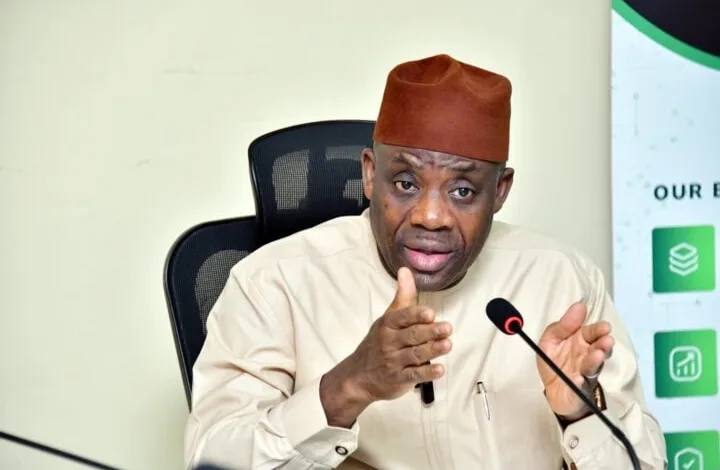
For well over a decade, one of the greatest sources of instability in Nigeria’s university system was the recurring face-off between the Federal Government and the Academic Staff Union of Universities (ASUU). Every strike meant another disruption to the academic calendar, another delay in graduation, another setback for research, and another dent in Nigeria’s higher education system.
This issue is deeply personal to me. I belong to the generation that endured the endless cycle of ASUU strikes, with academic calendars repeatedly disrupted and graduation dates pushed back. Sadly, decades later, my five children who all attended public universities in Nigeria were forced to endure the very same experience.
Not one of them completed a four-year degree programme within the prescribed four years. Every one of them spent at least five years before graduating, not because they failed academically, but because repeated industrial actions shut down the universities. No parent should have to watch one generation suffer the consequences of an unresolved problem only to see the next generation inherit exactly the same burden.
Many Nigerians mistakenly believed that successive governments simply lacked the desire to honour their agreements with ASUU. The reality was more complicated.
The 2009 FG-ASUU Agreement contained far-reaching financial commitments, including improved salaries and allowances for lecturers, university revitalisation funds, better pension provisions, enhanced research funding, improved working conditions, and greater institutional autonomy. Implementing these commitments required enormous financial resources running into trillions of naira over time.
That was where successive administrations encountered perhaps their greatest obstacle.
For years, Nigeria’s revenue profile simply could not comfortably sustain the full implementation of the agreement while simultaneously meeting other national obligations. Governments under Presidents Umaru Musa Yar’Adua, Goodluck Jonathan and Muhammadu Buhari implemented portions of the agreement, paid some allowances and released some revitalisation funds, but the broader issues remained unresolved. The result was an endless cycle of negotiations, broken implementation timelines, strikes and renewed distrust.
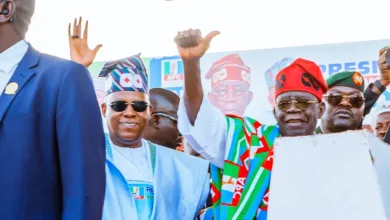
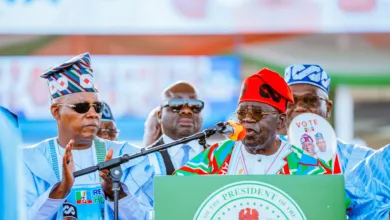
President Bola Ahmed Tinubu inherited that same long-standing dispute. Rather than allowing the crisis to linger indefinitely, his administration demonstrated what has become one of its defining characteristics: the political will to confront difficult national problems instead of postponing them.
Political will alone, however, is rarely enough.
The bold economic reforms undertaken by the Tinubu administration which includes the removal of unsustainable fuel subsidies, foreign exchange reforms and aggressive revenue mobilisation substantially improved government revenue. While these reforms initially imposed hardship on many Nigerians, they also expanded the fiscal space available to government.
That stronger revenue position made it possible for the Federal Government to successfully conclude the long-running renegotiation with ASUU and begin implementing its commitments.
The agreement delivered significant benefits.
Lecturers now benefit from:
- Improved salaries and emoluments.
- A 40% increase in consolidated academic allowances.
- Better pension and retirement benefits.
- Improved compensation for teaching, supervision and research responsibilities.
- Better conditions of service.
- Greater certainty regarding future welfare negotiations.
For many academics who had endured years of uncertainty, these measures represented a substantial improvement in professional welfare and morale.
The agreement equally strengthens Nigeria’s universities through:
- Increased revitalisation funding.
- Better-equipped laboratories and libraries.
- Improved teaching and research facilities.
- Greater support for research and postgraduate education.
- Stronger institutional autonomy.
- Better staff retention and reduced brain drain.
- Greater stability in academic calendars.
- Improved learning conditions for students.
These are not merely benefits for lecturers; they are investments in the future of Nigerian higher education.
Perhaps the most important outcome of the renewed agreement is one that receives far less public attention.
Both the Federal Government and ASUU agreed to establish a standing advisory and engagement mechanism through which emerging issues can be discussed, reviewed and resolved before they degenerate into industrial disputes. This provides a structured platform for continuous dialogue, ensuring that grievances are addressed through consultation rather than confrontation.
This represents a fundamental shift from the old pattern where unresolved disagreements almost inevitably culminated in strike actions.
Dialogue is now institutionalised. Negotiation replaces confrontation. Students are no longer expected to pay the price for every disagreement between government and university lecturers.
That may prove to be the most enduring achievement of the entire exercise.
President Tinubu deserves credit not merely because an agreement was signed, but because an issue that had defied multiple administrations was finally untied through a combination of political courage, economic reform and sustained negotiation.
Leadership is often measured not by the problems a leader inherits but by the difficult problems they are willing to solve.
The ASUU agreement was one of Nigeria’s most stubborn governance challenges. It survived several administrations, consumed countless negotiations and repeatedly shut down public universities.
Resolving such a deeply knotted national issue required more than promises. It required the courage to undertake difficult economic reforms, the capacity to expand government revenues, the willingness to negotiate in good faith, and the determination to implement what had been agreed.
That combination of economic capacity and political will is what distinguishes President Bola Ahmed Tinubu’s handling of the ASUU question.
For Nigeria’s lecturers, universities and, above all, millions of students whose academic future depends on stable university calendars, that is an achievement worthy of recognition.
It also means that today’s students stand a far better chance of completing a four-year degree programme in four years—a privilege that eluded my generation and, regrettably, all five of my adult children.
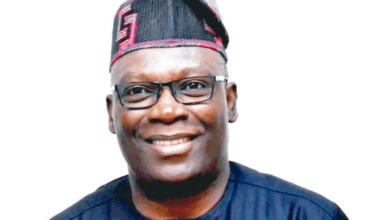
–Adebiyi is a UK-based Public Affairs analyst