Yorubaland: The curious indifference to Molaasan — by Bamidele Johnson
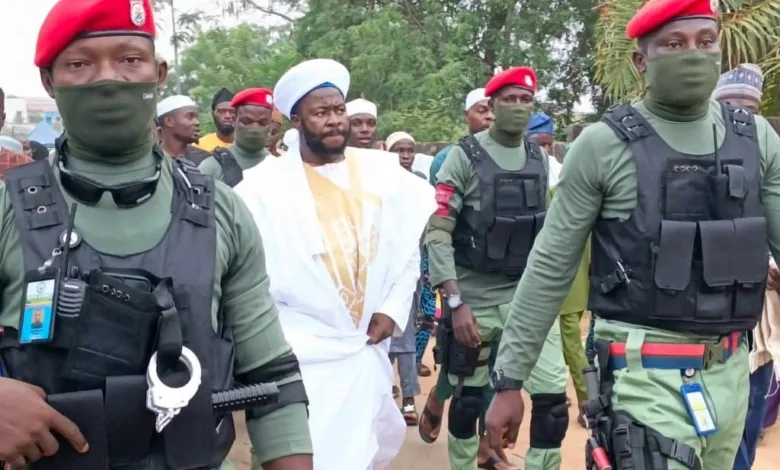
One of the things I find most remarkable about contemporary Nigeria is the sheer elasticity of our threat perception. We can spend weeks dissecting a politician’s unfortunate choice of words during a television interview, yet barely raise an eyebrow when a self-appointed religious leader starts talking and acting like a man erecting the infrastructure of a parallel state.
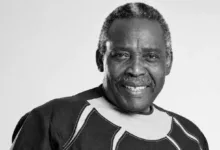
Daood Imran Molaasan, the Iwo-based cleric who styles himself Sheikh and Grand Mufti of Yorubaland, has over the years built a following that extends well beyond Osun State. He is not merely another loud preacher with a titanic sense of self-importance. He appears increasingly determined to position himself as a source of authority that sits alongside, and occasionally above, the authority of the Nigerian state itself.
A nation should pay attention whenever an individual begins accumulating the symbols, language and trappings of sovereign authority without possessing either a democratic mandate or constitutional legitimacy. It should pay attention when a religious leader increasingly speaks less like a preacher and more like the custodian of a distinct jurisdiction as well as when followers are encouraged to regard him not just as a spiritual guide but as the ultimate arbiter of disputes, loyalty and identity.
But in our country, developments like this often attract insignificant scrutiny. Part of the problem is that we have become conditioned to view threats almost exclusively through political and ethnic lenses. We are acutely sensitive to the possibility of one region dominating another, one political tendency outmanoeuvring another or one politician uttering an social media outrage-worthy phrase. What we are considerably less adept at recognising is the emergence of alternative centres of authority operating beneath the radar of formal politics.


History shows that parallel structures rarely arrive fully formed. They emerge incrementally through the accumulation of influence, legitimacy and institutional presence. A devoted following emerges, followed by an alternative source of authority, followed by structures and expectations that increasingly compete with those of the state.
Eventually a point can be reached at which loyalty to the movement begins to rival loyalty to the constitutional order. By the time this becomes obvious, the process is often well advanced.
None of this constitutes an argument against religious freedom. Nigerians are free to worship as they choose and religious leaders are entitled to organise communities around shared beliefs. That freedom is both legitimate and necessary. The issue is that there remains an important distinction between religious leadership and quasi-political authority.
There is a difference between guiding souls and cultivating structures that begin to resemble a state within a state. Democratic societies ultimately depend upon the principle that authority derives from constitutional legitimacy and that no individual, regardless of charisma or following, exists beyond the reach of the law. Perhaps Molaasan’s ambitions are entirely benign. Perhaps his activities amount to nothing more than an energetic cleric building influence among like-minded believers. It is nevertheless difficult to argue that the trajectory is unworthy of examination.
Influence is not dangerous merely because it exists. It becomes potentially dangerous when it ceases to recognise limits and when those exercising it begin to acquire the attributes of authority without the constraints that normally accompany authority.
The broader issue extends well beyond one cleric in Iwo. It concerns our remarkable tendency to overlook developments that would provoke intense public debate in many other societies. We have become so accustomed to dramatic crises that we often fail to notice slower and more subtle transformations occurring in plain sight. So, when an individual begins assembling the trappings of a parallel authority structure, complete with grand titles and an expanding sphere of influence, our collective response is often little more than a shrug.
It is a curious hierarchy of concern and one that may eventually prove rather expensive.