Lagos, other South-West states top in petroleum products consumption in H1 2026
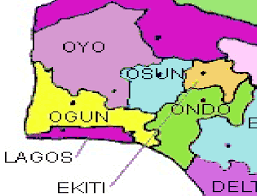
The Major Energies Marketers Association of Nigeria (MEMAN) in report has revealed that Lagos, other South-West states in Nigeria led other regions in petrol, diesel and cooking gas consumption in the first half (H1) of 2026.
The association in a report Nigeria Half Year Downstream Industry revealed that South-West took the lead in Premium Motor Spirit (PMS) or petrol, which is petrol consumption by 29.95 per cent, followed by North Central (18.36 per cent), North West (16.02 per cent), South South (5.48 per cent), North East (10.11 per cent) and South East (10.08 per cent).
On diesel consumption in the last six months, according to the report, South-West region also topped others by recording 31 79 per cent, followed by South South (19.65 per cent), North Central (17.30 per cent), North West (15.18 per cent), South East (8.40 per cent) and North East (7. 68 per cent).
Also in the area of LPG, which is cooking gas, South West consumed more, hitting 41.20 per cent, South-South (18.72 per cent), North Central (14.97 per cent), South East (12.34 per cent), North West (11.09 per cent), and North East (2.07 per cent), respectively.



In all, Lagos State tops the list of highest products consumption in petrol, diesel and cooking gas.
Lowest PMS consuming states are Jigawa, Ebonyi, Yobe, Bayelsa and Ekiti.
Lagos State tops others in petrol consumption with 12.56 per cent, followed by Ogun (6.96 per cent), FCT (6.29 per cent), Oyo (4.78 per cent) and Kano (4.66 per cent).
In diesel, Lagos records 16.80 per cent, followed by Ogun (8.60 per cent), Rivers (7.12 per cent), Kano (5.57 per cent) and Delta (4.93 per cent).
Lagos State also tops other states in cooking gas consumption with 17.55 per cent.
The MEMAN report noted that fuel demand remained closely aligned with Nigeria’s economic geography, with the South West continuing to serve as the country’s largest downstream energy market.
According to the report, LPG exhibited the widest regional disparity among all petroleum products, indicating substantial untapped growth potential outside the southern regions.
As domestic refining capacity continues to improve, analysts said that aligning supply logistics with regional demand centres, particularly the South West, South South, and North Central – will be critical to minimising transportation costs. improving product availability, and enhancing national supply efficiency
Comparing petrol supply in H1 2025 and 2026, the MEMAN report said that PMS supply peaked at 64.9 million litres per day in January 2026, the highest monthly supply recorded in H1 2026 and the only month to outperform H1 2025.
“Supply declined sharply in February amid global market tensions but recovered steadily through the remainder of the first half, reaching approximately 50.6 million litres per day (ML/D) by June.
“The market shifted from being import-led in H1 2025 to domestically driven in H1 2026, reflecting the growing contribution of local refining,” it read.
The report has it that diesel (AGO) supply increased from approximately 18.9 million litres per day (ML/D) in January to a peak of about 24.9 ML/D in February 2026, the highest monthly supply recorded during the first half of the year.
“Supply declined sharply in March and remained subdued through April as geopolitical tensions in the Middle East constrained international gasoil availability, making imports more expensive and difficult to secure.
“Despite these challenges, the AGO market delivered an overall average performance, with supply recovering in May as domestic production strengthened, restoring average supply to approximately 18.8 ML/D and enabling H1 2026 to outperform H1 2025 by the end of the half-year,” the report read
According to the MEMAN’s industry report, LPG supply remained relatively stable throughout H1 2026 compared to H1 2025, adding that supply was higher in most months, reflecting improved market stability despite minor monthly fluctuations.
It added that a large portion of domestic LPG output from the Dangote Refinery was utilised internally as feedstock for polypropylene petrochemical production.
“Despite this internal utilisation, domestic production and gas plants remained sufficient to sustain market supply, with only minimal imports required to support supply adequacy,” it read.