Another rumour of coup in Nigeria: The return of old shadows, by Idowu Ephraim Faleye
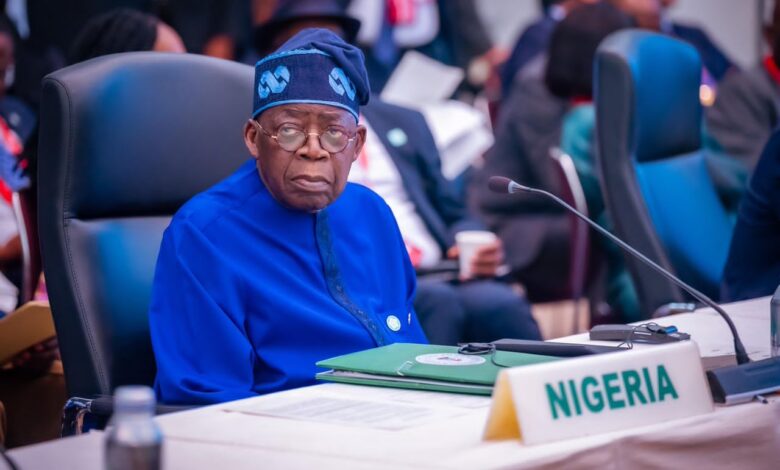
Nigeria is once again caught in the winds of another coup rumour. Although the Defence Headquarters has dismissed any plot as a mere rumour, the conversation refuses to die. People talk about it online and offline. In a country with a long history of military interference in politics, such rumours stir old fears and remind Nigerians how fragile their hard-earned democracy still is.
This latest rumour comes at a tense political moment when the government’s reforms are shaking long-standing power structures. President Bola Ahmed Tinubu’s administration has rolled out bold policies — creating zonal development commissions for all six geopolitical zones, initiating tax reforms, pushing for local government autonomy, and proposing state police. These steps aim to deepen federalism, bring governance closer to the people, and break the monopoly of power at the centre. Yet, for those who have benefited from the old system, these reforms appear as a threat to long-enjoyed privileges.
This is where the fear of a coup begins to make sense. Nigeria’s history shows that most military takeovers were never purely about patriotism or national rescue — they were always about power. The present rumour, if true, follows the same old script: a group of officers, mostly from a particular axis, allegedly plotting to “correct” political imbalance. Those are phrases Nigerians have heard too many times before.
Since independence, Nigeria has been a playground for military ambition. The first coup in 1966, led mainly by Igbo officers, claimed to fight corruption and political chaos, but it soon took on ethnic colour and triggered a bloody counter-coup by Northern officers. That counter-coup led to massacres of Igbo civilians and set the stage for the civil war.

In 1975, General Murtala Mohammed overthrew General Yakubu Gowon, accusing him of overstaying in power, only to be killed a year later in another coup attempt. In 1983, President Shehu Shagari’s civilian government was toppled by General Muhammadu Buhari, who accused politicians of wrecking the economy. Two years later, Buhari himself was overthrown by General Ibrahim Babangida, another Northern officer, who accused him of rigidity. Babangida ruled for eight years before “stepping aside” in 1993 after annulling the most credible election in Nigeria’s history and installing an interim government that was soon ousted by General Abacha in a palace coup.
The pattern is clear: whenever democracy begins to tilt power away from entrenched groups, men in uniform suddenly find reasons to “intervene.” Each coup has been justified with noble slogans like “saving the nation” or “fighting corruption,” but beneath those words lies a struggle for control — often along ethnic and regional lines.
Now, many observers fear that history may be repeating itself. The latest coup rumour fits into Nigeria’s familiar pattern of power panic. Tinubu’s rise to power has altered the political balance that long favoured the Northern oligarchy. For years, the North — particularly the Fulani political and military establishment — enjoyed dominance through a mix of population advantage, control of security agencies, and influence over oil revenue. With Tinubu, a Yoruba from the Southwest, those strings are gradually slipping out of their hands.
His administration’s efforts to empower all regions equally through fiscal and institutional reforms look like a quiet revolution. The North, used to federal largesse and central control, sees its grip weakening. Many in the old political class, who once used ethnicity, religion, and military influence to maintain dominance, are uncomfortable.
It is whispered in political circles that some elements fear Tinubu cannot be defeated through the ballot in 2027. His political network is vast, his grassroots structure strong, and his financial reach wide. For those who see democracy as an impossible route to power, the next option — unfortunately — is often the barracks. It is the same logic that once drove coups across Africa: if you can’t win the argument, win with the armour.
What sharpens this current rumour is that it echoes 2015, when another Southern president, Goodluck Jonathan, was quietly outmanoeuvred. Jonathan’s government wasn’t overthrown by soldiers, but the strategy used to unseat him was just as calculated. A coordinated alliance of Northern politicians, powerful business figures, and international actors who felt Jonathan had sidelined Northern interests exploited public anger over insecurity and corruption to drive him out through the ballot box.
Nearly a decade later, that same bloc finds itself sidelined again, this time with less faith in democratic manipulation. The difference now is that Tinubu appears to be dismantling the deep structures that sustained that old order — decentralising power, promoting fiscal autonomy, and pushing for state police, a move that threatens central control of force. For those who once used federal might to dominate regions, this is unsettling.
If the alleged plotters truly exist, their financiers’ motive seems rooted in fear of losing relevance and the desire to reverse the gains of certain ethnic groups. The pattern is familiar: whenever reform threatens the monopoly of a few, they find soldiers willing to “save the nation.” But what they really mean is “save our privileges.” The president must therefore, act decisively but lawfully. Investigations into any alleged coup plot should transparently trace the financiers.
Those entertaining such ideas should remember history. Coups do not save nations — they destroy them. Each coup in Nigeria has set the country back by decades. After 1966 came civil war. After 1983 came economic collapse and repression. After 1993 came political chaos that birthed dictatorship. Each time the military intervened, corruption worsened, rights vanished, and progress halted. The promise of discipline always ended in greed.
The government should also speed up reforms that give each region a sense of belonging. Zonal development commissions must be properly funded and inclusive. The proposed state police must operate under clear laws, not as tools of intimidation. Fiscal federalism should move from paper to practice.
Civil society, journalists, and religious leaders must speak out against any attempt to reverse democratic gains. Nigerians must remember that no matter how frustrated we are, a coup is never the answer. Military rule does not feed the hungry or heal the wounded — it only silences them.
In the end, Nigeria’s future depends on whether it learns from its past. Another coup — even an attempt — would not just overthrow a government; it would overthrow hope in a nation already bleeding from insurgency, banditry, and poverty. The solution lies not in the barracks but in building a nation where no ethnic group feels endangered and where reforms are not seen as threats.
This new coup rumour should not only alarm us but awaken us. It reminds us that the work of nation-building is unfinished, that democracy needs constant defence, and that peace requires justice. If Nigeria fails to fix its structural injustices, the story of coup plots will never end.
But if Nigeria succeeds — if it turns its diversity into strength, its reforms into fairness, and its politics into service — then perhaps, at last, the era of rumours will give way to the era of renewal. Until then, Nigerians must stay awake, stay informed, and stay united — because the price of silence is always dictatorship.
©️ 2025 EphraimHill DataBlog. This article may be shared freely on social media, messaging platforms, and offline, provided it remains unaltered. Republishing on blogs or websites without written permission is not allowed.
Idowu Ephraim Faleye | EphraimHill DataBlog | Freelance Writer | Independent Stories | Data-Driven Insights