Honouring Fatiu Abiola Arogundade: The quiet force behind a medical shift — by Lanre Elufowoju
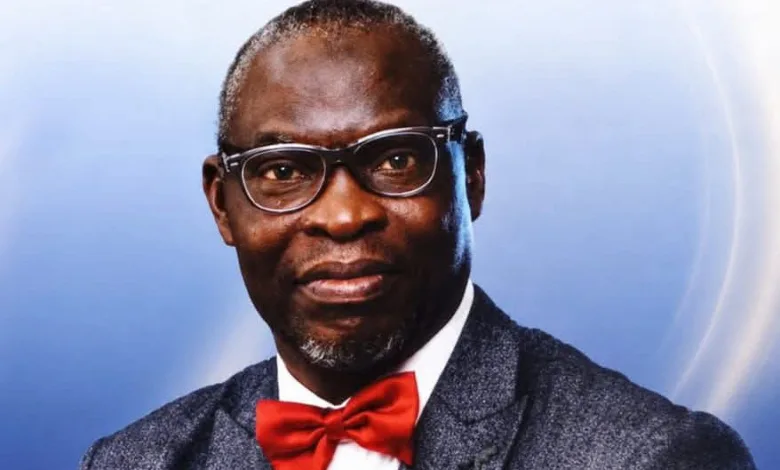
By all measures, some men inherit institutions, while others build them. Professor Fatiu Abiola Arogundade belongs unmistakably to the latter tribe.
When the story of modern medical education in Nigeria is eventually told with the benefit of historical distance, the emergence of the Federal University of Medicine and Medical Sciences, Abeokuta (FUMMSA) will likely occupy an important chapter. Yet, beyond the brick and mortar, beyond policy papers and presidential approvals, history may reserve a more intimate space for one figure whose calm intellect and disciplined stewardship have become central to the university’s unfolding identity: Professor Fatiu Abiola Arogundade.
There is a Yoruba saying that “the river that runs deepest makes the least noise.” Those who know Arogundade often invoke this quiet metaphor to explain a man whose influence has long preceded fanfare. Measured in speech, restrained in temperament and exacting in standards, he has cultivated a reputation not merely as an accomplished physician but as a scholar-administrator whose life’s work has sat at the difficult intersection of science, service and institutional transformation.
To understand the man is to first understand the physician.

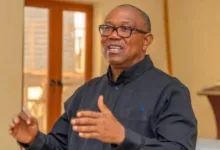
Arogundade is, by training and distinction, a nephrologist, a specialist in kidney medicine whose professional life has been devoted to understanding one of the body’s most complex systems and one of Nigeria’s most urgent healthcare burdens: chronic kidney disease. His medical journey began at the College of Medicine of the University of Lagos, where he earned his medical degree before proceeding through rigorous postgraduate clinical and academic formation in internal medicine and nephrology, eventually distinguishing himself in a field that demands patience, precision and uncommon emotional stamina. His later professional formation would include fellowships and international engagements that deepened his expertise in renal medicine, transplantation science and health systems strengthening.
Over the years, he rose through the demanding academic corridors of the Obafemi Awolowo University (OAU), Ile-Ife and the Obafemi Awolowo University Teaching Hospitals Complex (OAUTHC), Ile-Ife where his reputation as a clinician-scholar crystallised. Here was a physician who did not merely treat disease, but interrogated it, teaching generations of medical students and resident doctors that medicine, at its noblest, is equal parts competence and compassion.
In nephrology circles, Arogundade became known not simply for clinical expertise, but for scholarship. His research interests, particularly in chronic kidney disease, dialysis outcomes, renal transplantation and preventive nephrology, have contributed to scientific understanding in ways that ripple far beyond hospital walls. His scholarly works, widely cited in peer-reviewed medical literature, have engaged difficult questions surrounding kidney failure in low-resource settings, access to renal care and public health realities confronting developing nations. He is also a Fellow of respected professional medical bodies, including the Faculty of Internal Medicine of the National Postgraduate Medical College of Nigeria and the West African postgraduate medical system, distinctions earned through years of rigorous scholarship and practice.
Yet, if scholarship built his reputation, service enlarged it.
For decades, Professor Arogundade occupied spaces where medicine meets policy, leadership and institutional nation-building. Whether through professional associations, postgraduate medical education, specialist training or advisory responsibilities, colleagues increasingly came to view him as what leadership theorists call an “institutional stabiliser”, a figure trusted to navigate complexity without surrendering principle.
Perhaps it was this rare blend of scholarship, administrative discipline and professional credibility that made his appointment as the pioneer Vice-Chancellor of FUMMSA not merely fitting, but strategic.
For new institutions, the choice of pioneer leadership often determines whether vision survives contact with reality. Founding universities are delicate enterprises. They demand not only intellectual vision, but patience, emotional intelligence and the courage to make difficult decisions before applause arrives. “A tree,” an old proverb reminds us, “is known by the quality of shade it promises before it matures.”
At FUMMSA, Arogundade inherited no ready-made blueprint. He arrived at a moment demanding imagination, structure and uncommon resilience. The challenge before him was not merely to run a university, but to birth one, to transform aspiration into architecture and policy into purpose.
It is perhaps telling that when eminent scholars, physicians and associates gathered in Lagos on Saturday, May 9th, 2026 to honour him at a civic reception following his appointment as pioneer Vice-Chancellor, the conversation extended far beyond ceremonial congratulations. The gathering, chaired by distinguished medical scholar, Professor B.L. Salako, with revered elder statesman of medicine, Emeritus Professor A. Akinsola, and keynote reflections by Professor Gregory E. Erhabor, became less about celebration and more about responsibility, leadership and impact.
The keynote theme, “From Appointment to Impact: How to Be Impactful in Your Appointment/Leadership,” offered a fitting philosophical mirror to Arogundade’s journey. Speakers reflected on the difficult burden of leadership, reminding attendees that appointments are not trophies for yesterday’s achievements but invitations to greater accountability, courage and service. They stressed emotional intelligence, resilience, mentorship and ethical leadership as the true tests of enduring institutional stewardship. In many ways, the discourse seemed an elegant metaphor for the expectations now resting upon the shoulders of FUMMSA’s pioneer helmsman.
And expectations, indeed, are high.
Nigeria’s healthcare sector sits at a crossroads. A nation confronting shortages of medical personnel, rising disease burdens and increasing brain drain desperately needs institutions capable of producing highly skilled, ethically grounded healthcare professionals. FUMMSA, by design, represents part of that national response. The stakes, therefore, are immense.
But those who have worked closely with Arogundade insist he possesses one advantage often underestimated in public leadership: patience married to discipline.
He belongs to an old but enduring school of leadership, one suspicious of noise and enamoured instead with systems, standards and substance. He appears to understand that institutions are not transformed by slogans alone. They are built through consistency, careful planning and an almost stubborn commitment to excellence.
The American author and leadership thinker, John Maxwell, once observed that “a leader is one who knows the way, goes the way and shows the way.” By this measure, Arogundade’s career offers a compelling study in earned authority. He has walked hospital wards, supervised laboratories, chaired academic deliberations, shaped medical scholarship and trained specialists. His authority, therefore, rests less on title than trajectory.
Yet, perhaps his greatest test lies ahead.
Founding leaders are remembered differently. Their mistakes echo longer; their victories endure deeper. Long after convocation gowns are worn and inaugural ceremonies forgotten, the true measure of Professor Fatiu Abiola Arogundade’s stewardship may ultimately be found in the culture he institutionalises, the excellence he normalises and the generation of healthcare professionals shaped under his watch.
For now, however, one truth appears difficult to dispute: in an age frequently seduced by spectacle, FUMMSA’s pioneer Vice-Chancellor, Professor Fatiu Abiola Arogundade, represents something increasingly rare in public life, a scholar whose quiet strength speaks louder than performance.
And sometimes, history moves forward not with thunder, but with disciplined footsteps.
–Elufowoju writes from the Public Relations Unit of the Federal University of Medicine and Medical Sciences, Abeokuta (FUMMSA)