Is Kwankwaso working for Tinubu? — by Oluwadare Ayeni
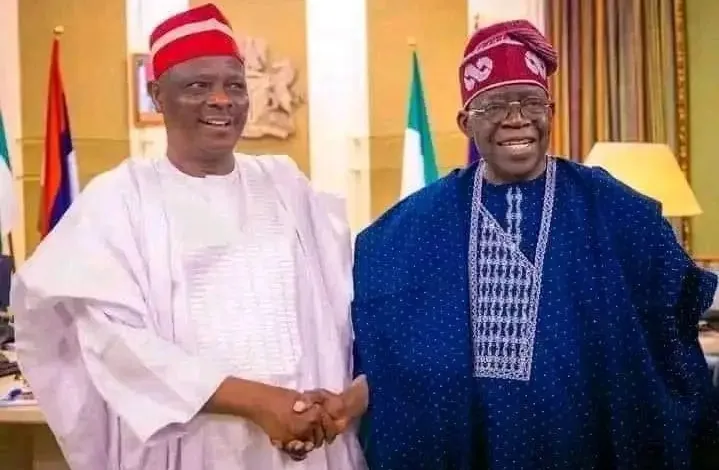
Nigerian politics is rarely straightforward. Behind public speeches and political rallies are quiet meetings, strategic friendships, and alliances that often reveal themselves only when it is too late. In recent months, one question has continued to surface in political conversations across the country: is Rabiu Musa Kwankwaso playing a political game that ultimately benefits President Bola Ahmed Tinubu?
Kwankwaso and Tinubu share a relationship that did not begin yesterday. Both men rose to prominence during the early years of Nigeria’s Fourth Republic when Tinubu governed Lagos State and Kwankwaso held power in Kano State. Over the years, their political paths have crossed repeatedly, and neither has hidden the fact that they share mutual respect and friendship.
What is often less visible, however, are the many meetings they have held over the years. Both leaders have met on several occasions at home and abroad, frequently behind closed doors, with little or no disclosure of what was discussed. In politics, silence often speaks louder than words, and such quiet engagements naturally raise questions about the deeper calculations at play.
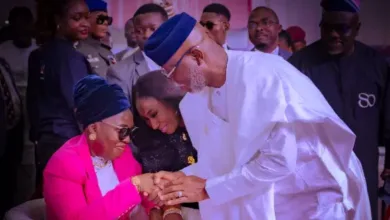
The speculation intensified recently in Ibadan during the installation ceremony of Rasheed Adewolu Ladoja. At that event, President Tinubu publicly described Kwankwaso as “my good friend.” While some dismissed the remark as a casual expression of goodwill, others saw it as a revealing glimpse into a relationship that may carry significant political implications. Even more intriguing is the recent political movement involving Abba Kabir Yusuf, the governor of Kano State and widely regarded as Kwankwaso’s political protégé. His move toward the All Progressives Congress (APC) has triggered intense debate. For many observers, the development raises an uncomfortable but unavoidable question: could this be part of a broader political strategy?
Then came the recent visit of Peter Obi to Kano. To some analysts, the visit may signal an attempt by Kwankwaso to position himself as a kingmaker in the evolving opposition landscape. If the path to a presidential ticket in any coalition becomes blocked, particularly by influential figures such as Atiku Abubakar, Kwankwaso may seek alternative arrangements that keep him politically relevant.



But this is where the conversation becomes more complicated. If the opposition fails to unite and instead fragments into competing camps, the ultimate beneficiary would almost certainly be the incumbent. A divided opposition, especially one split between strong figures like Atiku and Obi , could dramatically weaken the possibility of a coordinated challenge to the ruling establishment.
This is why some political observers have begun comparing Kwankwaso’s potential role to that played by Nyesom Wike within the People’s Democratic Party (PDP), where internal divisions have repeatedly undermined the party’s cohesion. When powerful political actors operate from within while pulling in different directions, the consequences can reshape the entire political landscape.
Of course, politics thrives on perception as much as reality. It is possible that Kwankwaso is simply pursuing his own political ambitions, independent of any hidden alignment. Yet the sequence of events, private meetings, strategic friendships, shifting loyalties, and emerging alliances, is difficult for many observers to ignore. In politics, actions often matter more than declarations. And sometimes, the most consequential political strategies are those carried out quietly, away from the glare of public attention.
For now, Nigerians are left with a question that may become more pressing as future elections approach: is Rabiu Musa Kwankwaso acting as an independent political force, or could his moves, deliberately or otherwise, be helping President Bola Ahmed Tinubu maintain the upper hand in Nigeria’s evolving political chessboard?
Oluwadare Ayeni PhD