Judge withdraws from Malami’s ₦213bn asset forfeiture suit
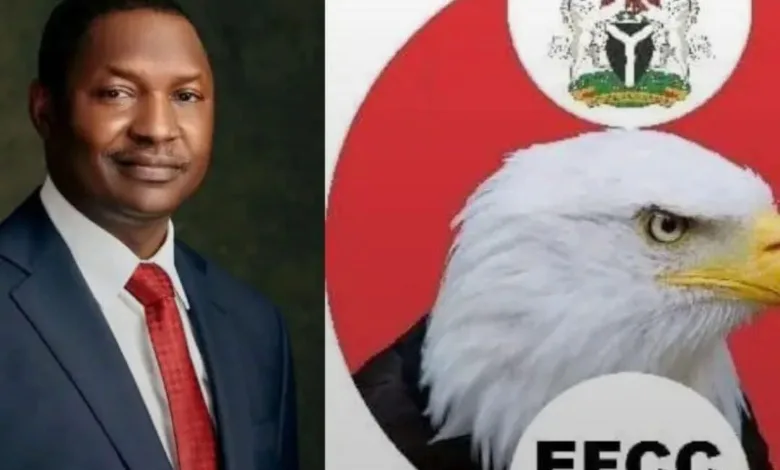
A judge of the Federal High Court in Abuja, Justice Obiora Egwatu, on Thursday recused himself from the asset forfeiture case involving former Attorney-General of the Federation, Abubakar Malami (SAN), and two others.
Justice Egwatu announced his decision shortly after lawyers representing the parties identified themselves in court. He said he would no longer preside over the matter for personal reasons and in the interest of justice. The judge subsequently ordered that the case file be returned to the Chief Judge of the Federal High Court for reassignment to another judge. The suit, marked CR/700/2025 and filed by the Federal Republic of Nigeria against Malami and two others, will now await further directives.
The development comes amid an ongoing legal dispute over 57 properties valued at approximately ₦213.2bn. The assets were temporarily forfeited to the Federal Government in January by Justice Emeka Nwite.
The interim forfeiture order was granted on January 6 following an ex parte application by the Economic and Financial Crimes Commission. The anti-graft agency maintains that the properties are suspected proceeds of unlawful activities allegedly linked to Malami and his sons.




According to the EFCC, the assets include university buildings, hotels, plazas, filling stations, residential estates and extensive parcels of land located in Abuja, Kebbi, Kano and Kaduna states. The commission argues that the properties were reasonably suspected to have been illicitly acquired.
Justice Nwite had also directed the EFCC to publish the interim forfeiture order in a national newspaper and invite interested parties to show cause within 14 days why the properties should not be permanently forfeited to the Federal Government.
Malami has challenged the forfeiture, insisting that his assets were lawfully acquired and properly declared to the relevant authorities. He urged the court to dismiss the case, citing concerns about conflicting rulings and duplicative litigation, and argued that the proceedings infringe on his rights to property, presumption of innocence and family life.
The former minister further sought an order restraining the EFCC from interfering with three specific properties listed in the application, stating that one of them is held in trust for the estate of his late father, Kadi Malami.