Atiku Abubakar: From political heavyweight to perennial presidential contender — by Tony Ogbetere
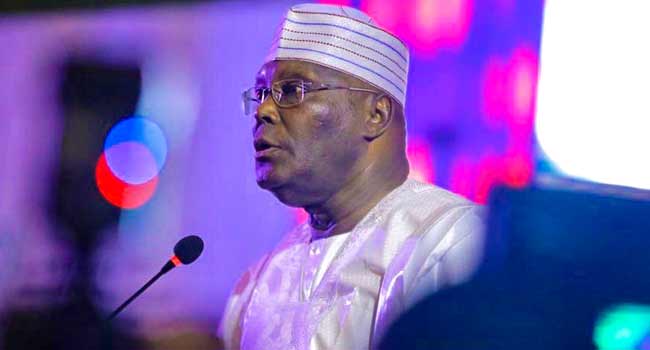
There was a time in Nigerian politics when Atiku Abubakar was more powerful than the President he served under.
By 2003, Atiku was arguably the most influential politician in Nigeria—so powerful that most state governors of that era were ready to abandon President Olusegun Obasanjo and line up behind him. It has been widely alleged that Obasanjo had to personally beg Atiku—some say even to the point of prostrating—before Atiku agreed to step aside and allow him seek a second term.
That moment changed everything.
Obasanjo never truly forgave Atiku for that humiliation. And from that point onward, the story of Atiku Abubakar became one of lost momentum, broken alliances, and unfulfilled dominance.
But how did Atiku become that powerful in the first place?
The answer lies with the late General Shehu Musa Yar’Adua, elder brother of former President Umaru Musa Yar’Adua. Shehu Yar’Adua was one of the most formidable political minds Nigeria has ever produced. During the Babangida era, he formed a powerful political movement known as the People’s Democratic Movement (PDM), with the ambition of becoming Nigeria’s president.
When Babangida banned Shehu Yar’Adua and other politicians from contesting, Yar’Adua did not give up. Instead, he began grooming Atiku Abubakar as his political successor.
When Babangida later dissolved all political parties and imposed a two-party system—SDP and NRC—the PDM moved into the SDP.
With Shehu Yar’Adua still banned, Atiku emerged as the PDM’s presidential project.
At the SDP presidential primaries, two men stood out: Atiku Abubakar and M.K.O. Abiola. In a strategic move, Shehu Yar’Adua persuaded Atiku to step down for Abiola to improve the party’s chances. Many reports suggest this decision was made with the expectation that Abiola would later pick Atiku as his running mate.
Abiola won the ticket—but picked Babagana Kingibe, not Atiku.
To the PDM and Shehu Yar’Adua, this was a deep betrayal. Angry and sidelined, the PDM reportedly withdrew support and eventually backed the annulment of the June 12 election as payback.
When Abacha later lifted the ban on political activities, the PDM began repositioning itself again. But fate intervened. Shehu Yar’Adua, Obasanjo, and others were accused of plotting a coup against Abacha. They were arrested. Shehu Yar’Adua died in Abakaliki prison.
With his death, the leadership of the PDM naturally fell into Atiku’s hands.
When Abacha died and General Abdulsalami Abubakar began a transition to civilian rule, new political parties were formed. The PDM merged with other groups to create the PDP.
Atiku ran for governor of Adamawa State and won. Obasanjo ran for president and won. In a move that shocked many, Obasanjo picked Atiku—then a governor-elect—as his running mate.
By 2003, Atiku had complete control of the PDP machinery. He had governors, lawmakers, and party structures firmly under his influence. That was why Obasanjo had to negotiate his survival politically.
At that point, many expected Atiku to eventually become the most powerful president Nigeria ever produced.
But that never happened.
Why?
The first major problem was Atiku’s habit of jumping from party to party. Each time he lost a party primary, he moved to another party to pursue the presidency. Over time, this weakened his grip on the PDM. The men who formed the backbone of the PDM could not keep relocating politically to satisfy the ambition of one man.
This opened the door for smarter political strategists.
Bola Ahmed Tinubu and Muhammadu Buhari began quietly absorbing former PDM members into their political families. While Atiku jumped parties, Tinubu and Buhari gave governorship tickets, protected political careers, and built loyalty. Many former PDM members found stability with them.
Atiku’s loss became their gain.
These same men later formed the nucleus of the APC, which eventually defeated the PDP under Goodluck Jonathan.
Another major problem for Atiku was his disregard for zoning. His repeated attempts to run for president even when power was clearly zoned to the South alienated many southern PDM members. Over time, they drifted away.
Atiku also developed a reputation for desperation—a man seen as too eager, too persistent, and too unwilling to wait his turn.
Then there is the issue of principle. Atiku is widely seen as a political flip-flopper, willing to pander to any crowd that might help his ambition. This makes him difficult to trust. Today he says one thing; tomorrow he says another.
Closely tied to this is his belief in money politics. Over time, Atiku became a magnet for political opportunists—people who took his money, pledged loyalty, and quietly worked against him. For many, Atiku became less a leader and more a source of personal enrichment.
But perhaps the biggest blow to Atiku’s political career came from Olusegun Obasanjo himself. Through books, speeches, and interviews, Obasanjo relentlessly portrayed Atiku as corrupt, untrustworthy, and dangerous. That image stuck—and it damaged Atiku beyond repair.
Ironically, despite this long decline, Atiku Abubakar remains the most visible opposition figure in Nigeria today.
But the reality is harsh.
Atiku no longer commands the kind of structure, loyalty, or fear needed to challenge a far more formidable opponent like President Bola Ahmed Tinubu, who now controls the largest share of the old PDM network.
Many have advised Atiku to step aside and anoint a successor. But the figures around him—those who could inherit the opposition mantle—are either ethnic paper tigers, politically confused figures, or social media entertainers who don’t know whether they want to be politicians, influencers, or rock stars.
And so, Atiku remains stuck in history—a man who once held the keys to the kingdom, but lost them through impatience, poor strategy, and broken trust.
In Nigerian politics, ambition alone is never enough.
Timing, loyalty, discipline, and restraint matter.
Atiku had the moment.
He just couldn’t hold it.