Olubadan Ladoja: a principled man for a principled stool, by Olabode Opeseitan
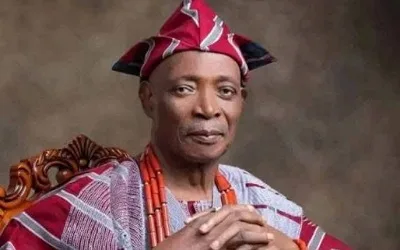
As Oba Rasheed Adewolu Ladoja, the 44th Olubadan of Ibadanland, ascends the throne, he brings with him three timeless virtues—integrity, character, and simplicity.
These are not mere words but the very essence defining his life and leadership. His emergence symbolizes a moral reset—a return to the values that once grounded our society but which have been eroded by moral decadence.
The stool he now occupies is itself principled, as the Olubadan succession process is clear, unambiguous, and respected by all, reflecting a tradition of order and fairness.
In this way, Oba Ladoja’s personal virtues align perfectly with the nature of the institution he leads, offering a new foundation for the Yoruba society to rise anew.


One of the most iconic aspects of his story lies in his childhood. Born and raised in Gambari village near Ibadan, the monarch’s upbringing was rooted in discipline yet softened with humility.
From an early age, he exhibited resilience and a sharp intellect, connecting deeply with the average Ibadan man—courageous, industrious, and steadfast in pursuit of progress. This solid grounding became the bedrock of his later achievements and shaped his outlook as a leader always tied closely to his people even while rising to prominence.
As a businessman, Oba Ladoja earned respect for his daring yet prudent approach. He built enduring success across diverse sectors such as shipping, manufacturing, banking, agriculture, and transport, embodying the spirit of African enterprise driven by vision and hard work.
His political career shone through his tenure as Executive Governor of Oyo State. Notably, he refused to compromise his principles even when it led to his impeachment in January 2006 amid political machinations.
His subsequent reinstatement by Nigeria’s Supreme Court in December 2006 stands as a powerful validation: integrity lost through compromise can never be regained, but an office lost by steadfastness to principled conduct can be reclaimed.
This ordeal underscored the virtues that define his leadership legacy. Today, these virtues—unyielding integrity, inspiring character, and humble simplicity—are urgently needed to reorder society’s priorities.
In a Yoruba nation, and indeed Nigeria at large, where ostentation frequently overshadows values, Oba Ladoja is a refreshing embodiment of service, honor, and community.
His lifestyle and record challenge us to rethink our conception of leadership and renew our commitment to deeper ideals.
Oba Ladoja’s stature goes beyond the traditional throne. He commands profound respect within Nigeria’s political and economic elite—not solely out of respect for tradition but because of his personal integrity and courage across decades of public and private service.
This unique influence positions him as a bridge-builder capable of healing longstanding rifts within the Yoruba traditional institution and beyond. His leadership offers a crucial platform to unify Yorubaland, dissolve ancient rivalries, and foster collective renewal.
Looking forward, Oba Ladoja’s vision for Ibadanland is transformative. He is the shining armor, the compass, and the pathfinder Yoruba society needs to refocus, retool, and excel in complex times.
Collaboration with other traditional rulers is essential to harness the full strength of Yoruba unity. If this collective heritage can be galvanized under his principled reign, a golden chapter will be written—not only for Ibadan and Yorubaland but for all who look to the Yoruba nation for leadership and inspiration.