Open Letter to Uncle Kunle Afolayan — by Gbemisola Falona
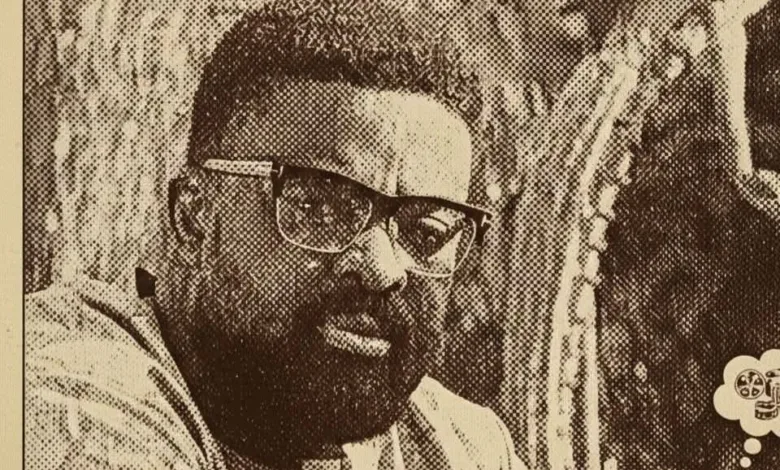
The very first time I encountered your screen power was The Figurine.
That movie was a hypnotic collision of myth and modernity, yes it is a slow-burn psychological thriller, but one that blurred the line between coincidence and curse, leaving viewers suspended between fate and free will. I didn’t just watch it; it lingered. It made me fall in love with you as a creative cinematographer.
But October 1… that one leaned on nostalgia and national sentiment, and the plot never quite matched the weight of its setting for me. It felt like a government-sponsored unity exercise, patriotic, yes, but to me, a bit propagandist, with a weak predictable storyline, but it’s execution and cinematography was premium.
Then came Aníkúlápó. Ambitious, visually stunning, but riddled with internal contradictions. The Eye Akala was said to be deadly on sight, yet Saro’s girlfriend strikes it with a stick, it flies away without hurting her, and even drops it’s life-giving gourd. Which she picks up without any consequence! Convenient, unearned, and contradictory, for me that isn’t layered storytelling; that’s lazy writing.




The portrayal of Oyo Ile’s defense fence, which an elephant could stroll through it, made me question either the budget or the creativity of the team. If a fence or city wall was that porous, how realistic was such in a time period Oyo was touted to be the capital of an empire, surrounded by hostile neighbors!
And the series… the very first episode is a continuity disaster. Saro is at heaven’s gate, accused of taking the gourd from the Akala bird, when it was Arolake, his lover, who struck the bird while Saro was unconscious. That isn’t symbolism. That isn’t nuance. That’s a lapse in narrative memory.
Many felt the story should have ended with the first series installment. Yet with this continuation, mixed reviews, mostly negative, have followed.
Then there’s the statement: “I make films for people who can think.” Baba, that line carries a quiet arrogance. Once you frame your audience as “people who can think,” anyone who criticizes your work automatically becomes… what? Unintelligent? Incapable of depth? That’s a dangerous place for any artist. It makes you look and sound desperate and frustrated.
Layered storytelling is one thing; audience disconnection is another. Intellectual movies or series isn’t validated by declaring itself intellectual, it’s validated when both thinkers and casual viewers find it compelling.
Even documentaries, the most cerebral of forms, hope to engage audiences. Depth does not excuse disconnect. “If film no sweet e no sweet “
The irony? The same filmmaker who dismissed promotional tactics, like dancing to market films, and stated on tv that ” Its his personal opinion” which to be fair he’s entitled to, now recoils at public opinion. You can’t critique others for their methods and then flinch when people critique yours.
Art invites interpretation. Once released, it no longer belongs solely to the creator.Not every criticism is premature; sometimes, it’s perceptive.
Nollywood audiences today are evolving. With positively reviewed epic movies like Agesinkole and Jagun jagun by Femi Adebayo, they know when something resonates and when it doesn’t.
Referencing Game of Thrones doesn’t automatically turn your work into misunderstood genius. Some shows build intrigue; others lose momentum. Audiences know this. So labeling your movie for “people who think” risks making it feel like it belongs in a classroom or lecture hall not on a public platform like Netflix, which serves a wide, diverse audience.
Confidence in your craft is powerful. But once confidence starts sounding like condescension, people notice.
Sometimes the most intelligent move isn’t defending the work.
It’s refining it.