Oyo targets over 100,000 jobs with new Agribusiness Industrial Hub
By Adejayan Gbenga –
The Oyo State Government has flagged off the construction of the Ijaiye Agribusiness Industrial Hub, a major agricultural development project aimed at creating over 100,000 direct and indirect jobs while supporting more than 500,000 farmers across the state.
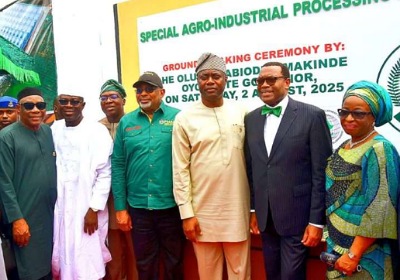
The groundbreaking ceremony, held on Saturday at Atan Village in Akinyele Local Government Area, was attended by top dignitaries including Vice President Kashim Shettima (represented by the Minister of Agriculture and Food Security, Senator Abubakar Kyari), President of the African Development Bank (AfDB), Dr. Akinwumi Adesina, and Governor Seyi Makinde. The project is part of the Special Agro-Industrial Processing Zone (SAPZ) initiative supported by the AfDB.
Vice President Shettima described the hub as a strategic step toward unlocking the state’s agricultural potential and transforming rural areas into productive economic zones. He reaffirmed the Federal Government’s commitment to supporting Oyo State in becoming a national leader in agribusiness.




In his remarks, Governor Makinde emphasized that the Ijaiye hub is part of his administration’s roadmap to reposition agriculture from a subsistence activity into a commercial enterprise capable of driving economic growth, attracting investment, and creating jobs for youths.
Makinde explained that the Ijaiye project follows earlier hubs established in Fasola and Eruwa and announced plans for similar hubs in Ilora, Iresa-Adu, and Ipapo before the end of his tenure in 2027. He said the hubs would serve as anchors for an integrated agribusiness ecosystem connecting farms to markets.
Dr. Adesina, while commending the governor’s efforts, described the Fasola hub as a success story that attracted over ₦11 billion in private investment. He stressed the importance of agricultural industrial platforms like SAPZs to boost food production, reduce post-harvest losses, and increase exports.
The Director-General of OYSADA, Dr. Debo Akande, noted that the hubs would accommodate more than 40 agribusinesses and transform smallholder farmers into medium- and large-scale producers. He said the initiative would stimulate rural economies and enhance food security in the region.
The event drew a wide range of stakeholders, including lawmakers, commissioners, traditional rulers, development partners, and local leaders, all of whom expressed strong support for the state’s agricultural transformation agenda.