Issues in Tosin Ayo’s treatise on Wike vs Yerima’s face-off, by Oluwadare Ayeni
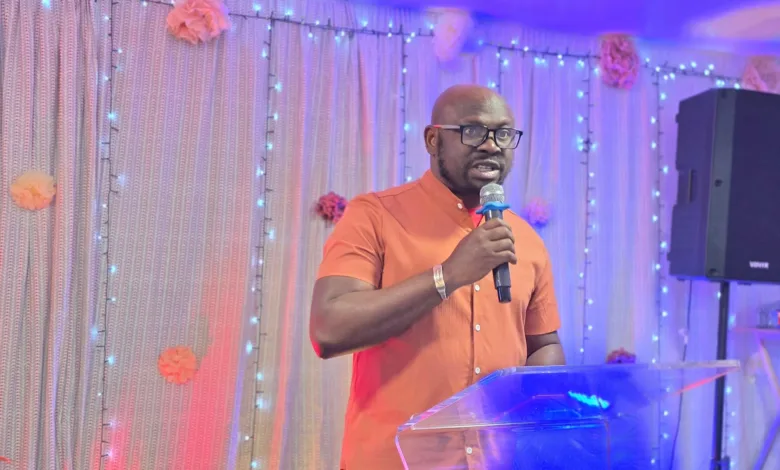
I have not met Tosin Ayo personally, but my childhood friend, Engrn Ayo Ogunsakin, tagged me with his essay and requested my review. Tosin Ayo’s recent commentary on the now, famous faceoff between the Honourable Minister of the Federal Capital Territory, Barr. Nyesom Wike, and Lieutenant A.M. Yerima of the Nigerian Navy raises thought, provoking questions about civil, military relations and democratic order in Nigeria. His essay is intellectually stimulating, well, crafted, and deeply reflective, but it requires a balanced review to validate certain claims, invalidate others, and place the argument within the broader framework of constitutionalism and global military ethics.
Ayo rightly emphasises that the powers of a Minister, no matter how politically influential, do not extend to direct command over military personnel. This position aligns with Section 5(1) of the 1999 Constitution (as amended), which vests executive powers in the President, and Section 217(2)(c), which grants the President alone the power to deploy the Armed Forces. The FCT Minister exercises delegated executive powers but cannot issue military orders except through the constitutional chain of command. Therefore, Tosin Ayo’s criticism of Wike’s physical intervention at the disputed site is procedurally correct, it was a breach of administrative decorum and a misstep in democratic etiquette.
However, the article would have been stronger had it verified whether Lieutenant Yerima acted on lawful instructions from the Naval High Command. Without such confirmation, Ayo’s assumption that Yerima’s stance was entirely constitutional becomes speculative. Military deployment without authorisation from the Chief of Defence Staff or Defence Headquarters would itself be unlawful, even if executed calmly. The Constitution does not excuse insubordination under the pretext of discipline or honour.
Nonetheless, Tosin Ayo’s central concern about the lingering tension between military order and civil authority is well, founded. The Nigerian political culture, even decades after the end of military rule in 1999, remains steeped in authoritarian reflexes. The “obey the last order” syndrome, which Ayo appears to justify as a sign of discipline, is in fact a relic of military authoritarianism, a psychological residue of years under military dictatorship.


As I reflect on Ayo’s piece, I find it intellectually stimulating, but also symptomatic of how deeply militarised our political consciousness remains in Africa. The blind obedience to “the last order” represents one of the most dangerous remnants of military rule. Unfortunately, just like colonialism, even after years of democratic governance, our mentality and politics remain militarised. We have been conditioned to believe that a soldier who swore to uphold the Constitution and defend the territorial integrity of the nation must obey human orders, even when they contradict constitutional principles. This mindset undermines the very essence of the military oath, which binds every officer to defend the nation’s lawful order, not to protect personalities or unlawful commands.
Across the world, history has celebrated soldiers who chose to uphold their constitutional oath rather than follow illegal or immoral commands. During the 1991 Soviet coup attempt, several military units refused to carry out orders to attack civilians or seize the Russian Parliament, helping to preserve the democratic transition. In the United States, helicopter pilot Hugh Thompson Jr. defied direct orders during the Vietnam War and intervened to stop the My Lai massacre of civilians, rescuing civilians and exposing war crimes. Similarly, during Egypt’s 2011 revolution, some Egyptian officers refused to fire on peaceful protesters, asserting their loyalty to the nation and its people, not to a ruling regime. These acts of constitutional defiance underscore a higher form of military honour, one grounded in law, conscience, and humanity.
Tosin Ayo’s insistence on obedience without contextual qualification overlooks these vital global precedents. Military obedience, in modern democratic ethics, is not blind. It is obedience to lawful authority, and the Constitution is the supreme commander. Section 1(1) of Nigeria’s 1999 Constitution makes it clear that “this Constitution is supreme and its provisions shall have binding force on all authorities and persons throughout the Federal Republic of Nigeria.” Any order that contradicts it is null and void, no matter who gives it.
Where Ayo is correct, however, is in his recognition that Nigerian politicians often blur the boundary between authority and arrogance. The Minister’s decision to confront soldiers personally, outside of due process, reflects a deeper governance flaw, the substitution of institutional procedure with personal power. It also exposes the weakness of civil, military communication in Nigeria. The presence of armed personnel from multiple agencies, the Police, DSS, and Military, without coordination, could easily have escalated into a fatal exchange of fire. The Minister’s aides erred by prioritising ego over safety. That lesson must not be lost.
That said, romanticising the military’s defiance, as some public commentators did, is equally dangerous. Nigeria’s history, from the 1966 coups to the Abacha dictatorship, demonstrates how easily public sympathy for “disciplined soldiers” can mutate into justification for authoritarian takeover. According to Afrobarometer surveys, Nigerians still trust the military (69%) more than elected politicians (34%), a troubling indicator of our fragile democratic confidence. This trust imbalance risks encouraging subtle forms of militarisation in governance discourse.
Ultimately, Tosin Ayo’s essay succeeds in reigniting a vital national debate on power, professionalism, and procedure, but it stumbles in equating obedience with virtue. In a constitutional democracy, virtue lies in discernment, in knowing when to obey and when to refuse. A soldier’s highest duty is to the Constitution, not to transient commands. If obedience preserves power but undermines justice, it ceases to be honourable.
The Wike, Yerima confrontation is not just a clash of personalities, it is a mirror reflecting Nigeria’s unfinished democratic transition, a state still oscillating between constitutionalism and command culture. The lesson, therefore, is twofold, Ministers must exercise restraint and adhere to process, while soldiers must remember that their loyalty is not to the “last order”, but to the first law, the Constitution. Only then can Nigeria truly claim to have demilitarised its democracy.
Oluwadare Ayeni, Ph.D
Associate Professor of African Democracy and Public Governance