Ten lessons on power, politics, and loyalty from Bolaji Abdullahi’s book — by Abbas Faruq
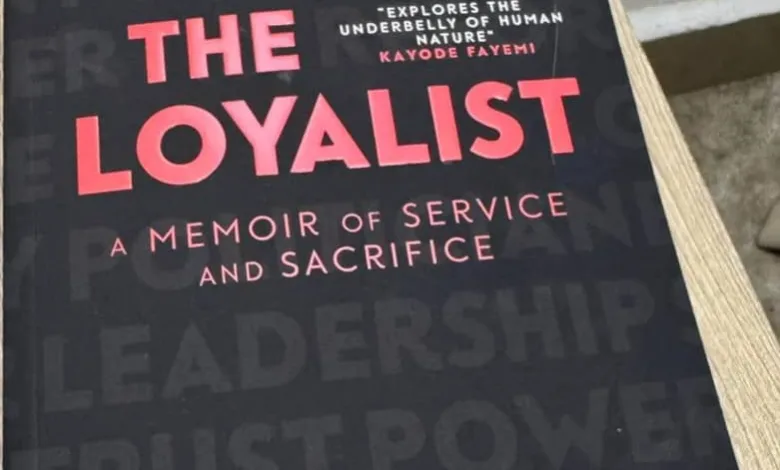
I typically have a policy of primarily reading only Islamic materials during Ramadan, but this year, I made an exception to complete The Loyalist by Bolaji Abdullahi for two reasons. First, I started reading the book before Ramadan began, and I found it difficult to put it down until I finished it. Second, Senator Bukola Saraki is one of the few Nigerian politicians alive today whose mind I would love to understand.
Bolaji Abdullah is a renowned journalist who was tapped into politics by Senator Bukola Saraki and served as a Special Assistant and Commissioner for Education during Senator Saraki’s time as governor of Kwara State. He is also a former Minister for Youth and Sports, a former National Publicity Secretary of the APC, a former Governorship Aspirant under the PDP, and the PDP candidate for Kwara Central Senatorial District in the 2023 General elections.
Bolaji Abdullah decided to write The Loyalist to document his experience in politics and governance over the past twenty years, and he also wrote it as a form of therapy after he failed to secure the PDP governorship ticket in 2019.
I believe every political actor or student of politics should read the book because I deduced several lessons from the author’s experience and relationship with his erstwhile principal, Senator Bukola Saraki. Although I must have noted over twenty takeaways from the book, I have decided to share only ten for the benefit of my readers:



- The political terrain is like a desert, and no matter how you understand it, a powerful wind can blow at any time, which will wipe out all that you previously knew or render it irrelevant. Therefore, you must ensure you constantly evolve to adapt to changing times. For example, politicians who could only secure tickets from political parties by bribing delegates are now in for a shock following the enactment of the Electoral Act 2026, which abolished indirect primaries and restricted political parties to choosing their candidates through direct primaries or consensus arrangements. This crucial amendment will make it significantly harder for any moneybag to simply purchase a ticket through a small group of pliable delegates.
- The official position you are given in government doesn’t matter. What matters most is what you do and the influence you have. Senator Saraki initially promised to appoint the author as a Special Adviser during his first term as the governor of Kwara State, but he later offered him the lesser position of Special Assistant. When the author complained about this demotion, Senator Bukola Saraki shared the lesson about what you do and the influence you have with him. Instructively, the author was eventually elevated to the position of Commissioner for Education, thereby confirming the wisdom behind this lesson.
- Always know the category you fall into as a follower or loyalist. Senator Bukola Saraki told the author that people can be categorised into the following three categories: (a) Those who always stay loyal because it is their nature to be loyal. This category of people is in the minority; (b) Those who always stay or remain loyal because they have nowhere else to go; and (c) Those who will continue to follow their leader because they believe their leader can help them to achieve their goals. Instructively, the majority of people fall into this third category.
- At the grassroots, people tend to focus more on the personal benefits they have derived from a politician than on the infrastructural projects the politician or government has undertaken in their community or plans to undertake. Although Senator Bukola Saraki had several projects he could use to campaign for his second term, he decided to focus his campaign on the personal benefits he had dispensed to individuals and groups in various communities. He also promised them greater benefits if they re-elected him and chose “Oun ti o ba se looje” (what you eat will be determined by what you do) as his campaign slogan. This shows that a lot of enlightenment is still required at the grassroots, as many Nigerians would prefer that a Governor buy motorcycles for them and sponsor their children’s wedding ceremony, rather than use those same funds to build a library or school in their communities.
- In politics, neutrality is a punishable offence. Once the battle lines are drawn, there are no fences to sit on. In his appointments as a Minister and the National Publicity Secretary of the APC, the author continued to live under consistent monitoring and suspicion because everyone around him felt he could not be fully loyal to the Nigerian President based on his close relationship with Senator Bukola Saraki, who was not on good terms with the President.
- In politics, secrecy does not last long. Therefore, if you secretly collect money from your party’s opponent or strike a shady deal with them, your secret will eventually be exposed, and your reputation will be damaged.
- Having a godfather or deep war chest is not the same as having God on your side, as godfathers can also experience unexpected failures.
- Loyalty can only endure if it goes both ways. Therefore, while a political leader naturally expects loyalty from their followers, this loyalty will be sustainable only if the leader is also loyal to them. Indeed, most leaders’ failure to be loyal to their followers is usually the reason many key followers eventually leave them, just as the author eventually left Senator Bukola Saraki’s camp.
- Political leaders should endeavour to be forthright with their followers and let them know early enough if it becomes impossible for them to fulfil a promise made to a follower. The author stated that Senator Bukola Saraki promised him the PDP Governorship ticket in 2019, but he did not keep this promise and did not notify him early enough when he decided to support another aspirant. Senator Saraki’s decision to back another aspirant deeply hurt the author, and it appears that he never fully recovered from this shock based on the energy, time and resources he deployed to pursue his campaign across the sixteen Local Governments of Kwara State.
Beyond the specific lessons listed above, the most instructive for me was when the author stated as follows:
“For any political system to endure, it must continue to admit people into its fold; otherwise, it will soon succumb to inbreeding, circulating the same genetic qualities and listening only to its own voice of self-delusion. Our people seemed terrified of bringing in new members because they did not want to lose their privileged positions to newcomers or be forced to share their patronage benefits. For them, it was perfectly rational to bar or kick out as many people as possible.”
My General Comments on the Author’s Relationship with Senator Bukola Saraki
Just as it is usually difficult for a third party to understand the nuances or the real source of a dispute between a husband and wife, it is often difficult for a third party to understand the nuances or the real source of a dispute between a political leader and their follower. Notwithstanding this fact, I believe that the relationship between the author and Senator Bukola Saraki should not have ended the way it did, because Senator Bukola Saraki was highly instrumental in the political advancement of the author.
Although the author also had good intentions in his relationship with Senator Bukola Saraki, I believe he could have done more to assure Senator Saraki of his loyalty because it was obvious that at some point in their relationship, the leader started to doubt the author’s unflinching loyalty, just as he doubted Professor Oba Abdulraheem’s loyalty in the past.
In sum, I hope both the author and Senator Saraki can come back together as political associates, as I could tell from the book that the author genuinely admires Senator Saraki. I thoroughly enjoyed the book, and at some point, I almost thought I was reading a novel by Mario Puzo!