The fear of freedom in Northern Nigeria, by Mahfuz Mundadu
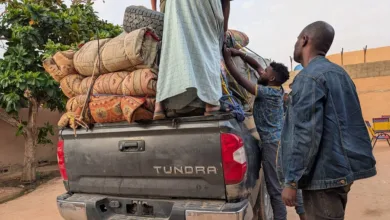
I recently received a video clip on a part of Northern Nigeria, most likely Zamfara, showing what appeared to be an exploration site for precious stones.
Foreign personnel supervised the mining, their security guaranteed not by private guards but by government forces, paid for, of course, with public funds. And yet, the very communities on whose land these riches are extracted are denied their most basic right to a dignified life. Stripped of livelihood, they are condemned to penury, forced to watch outsiders plunder their soil under the protection of their own state. As if to deepen the insult, another clip arrived: a man, mute from birth, throwing himself into the grotesque art of praise-singing for an elite, merely to secure scraps with which to keep body and soul together. The spectacle was at once laughable and heartbreaking; a mirror held up to the desperation and humiliation of a people pushed so low that even silence itself is commodified into flattery.
This is the North today, a region once the heartbeat of empires, now reduced to a beggarly province where resources are stolen under military escort while its people starve. The contrast could not be sharper: foreigners and their local collaborators carting away gems and gold while children die of hunger in the villages surrounding the mines; politicians boasting of security votes while peasants mortgage their goats to pay ransom; a mute man turning his condition into an act of supplication before an elite whose wealth and arrogance thrive precisely because the masses will not rise. What is this, if not a theatre of humiliation, where the audience applauds its own degradation?
Here lies the central paradox of Northern Nigeria: a people vast in number, fierce in faith, proud in heritage, yet condemned to bow before bandits in the forests and politicians in Abuja. The farmer who once fed the nation now cowers in his hut, afraid of bullets from marauders who demand tribute. The trader who once filled Kano’s markets with the hum of commerce now closes early, fearing abduction on the highway. The youth, full of vigour and dreams, leaves home to wander the streets of Lagos or Accra, hawking trinkets, washing windshields, or begging for survival. And the elders, those once revered as custodians of wisdom, sit silently, their voices muted by dependency on stipends from the very rulers who have betrayed them.



Freedom is not merely the absence of chains; it is the courage to live by principles one sets for oneself. Yet in the North, what thrives is not freedom but the fear of it. The people prefer dependency on crumbs to the responsibility of standing upright. They queue for cup of rice at campaign rallies, chant slogans for klaptomaniacs, and disguise cowardice as patience. They invoke God to justify their submission, confusing divine justice with human tyranny. They tremble before the bandit’s rifle but kneel even lower before the politicians. In this, they have become complicit in their own subjugation, slaves not just to oppressors but to their own fear of freedom.
History has taught us that underdevelopment is never natural. Europe underdeveloped Africa deliberately, creating economies that served external masters and local collaborators. Northern Nigeria’s ruling class has done the same to its people. They starved the schools, preferring the perpetuation of an nonempowered almajiri system to produce a reserve army of pliant followers. They abandoned industries, preferring the importation of goods that line their pockets. They looted health budgets, leaving clinics without medicine. And above all, they converted insecurity into profit, a perpetual crisis that justifies endless security votes and foreign interventions. Banditry is not an accident of history; it is a political economy, a carefully maintained ecosystem where fear sustains the profits of the elite.
The masses, meanwhile, oscillate between silence and mimicry. Some accept domination as fate, repeating Allah ya isa as if piety is an excuse for paralysis. Others, when granted a sliver of power, reproduce the same oppression; youth who become political thugs, extorting their own neighbors; civil servants who, having endured exploitation, exploit others in turn. Thus, the oppressed do not dream of freedom; they dream of becoming oppressors. To this end, we do have two categories of oppressors: the serving oppressor and the oppressor in waiting. So, the cycle continues.
Northern Nigeria today is ruled by two tyrannies. One is the bandit in the bush, ragged and armed, collecting ransom in cattles and naira. The other is the politician in the capital, robed and perfumed, collecting ransom in the commonwealth of the nation. Both demand tribute, both thrive on fear, both feed on the helplessness of the people.
The bandit kidnaps your child; the politician kidnaps your child’s future. The bandit blocks the road with bullets; the politician blocks progress with bureaucracy. One wears rags, and the other wears suit or shadda brocade. Both are partners in crime.
At least the bandit shows his face; the politician robs smiling, quoting scripture, invoking God as cover for theft. Which, then, is the greater criminal? And if our armed forces can not subdue ragtag bandits in forests and villages, what hope is there the day a neighbouring country decides to invade? A military that can not defend its citizens from criminals at home will collapse like cardboard before real armies abroad.
The tragedy is not only in external oppression but in the internal paralysis of the oppressed. The North’s greatest enemy is not the bandit’s gun nor the politician’s greed but the fear of freedom inside the northern soul. To rise demands courage, sacrifice, and organization. Yet too many cling to fatalism, disguising their cowardice as destiny. To say this is God’s will is to blaspheme against God, for God does not will injustice. To excuse tyranny in the name of patience is to betray both heaven and humanity. The Qur’an itself reminds us: God will not change the condition of a people until they change what is in themselves. This is not a metaphor but law.
And so the question begs an answer: given the bad and humiliating condition the region faces, what is left to live for? Is it money, when money itself is stolen by politicians and drained by ransom payments running into hundreds of millions? Is it pride, when pride has been crushed under the boots of bandits? Is it dignity, when dignity has been stripped away by inept rulers? We do not want to lose our lives, but we are being killed in droves. We do not want to lose our wealth, but we are being traded like goats in the market of banditry. To defend our honour requires no permission beyond what is already enshrined in the constitution. The time has come to rise to the occasion, not with excuses or fatalism, but with the resolve to live with dignity and nothing less.
O Northerner, why do you bow before thieves and murderers? Why do you clap for men who loot your treasury, chant for men who abandon your children, pray for men who profit from your suffering? Why do you tolerate humiliation as if it were an honour? Do you not see that your silence strengthens your oppressors? Do you not feel the shame of crawling in your own land while others carry away your wealth? You are not few; you are millions. You are not weak; your history is rich with empires and resistance. But you have allowed fear to hollow you out until you resemble shadows, living but not alive.
The time has come to tear out this fear and replace it with courage. The time has come to stop whispering in corners and start shouting in the streets. The time has come to stop chanting the names of thieves and start demanding justice. The time has come to refuse the crumbs of rice and demand bread baked in dignity. The time has come to organize, not as clients of godfathers but as free citizens of a region that deserves better.
He who does not plan to succeed is invariably planning to fail. And this, too, is part of the northern tragedy: a mindset of complacency, of drifting without vision, of entrusting tomorrow to fate while today crumbles in neglect. It is reflected in the feudal attitude preserved in the Hausa adage Allah ba ku mu samu “may God give you so that we can get from you.” It is not the spirit of enterprise but of dependence, not the dignity of labour but the humiliation of handouts. This mentality could never have survived if the North had held fast to its rich tradition of economic emancipation. Islam itself makes zakat, alms-giving, and khums central pillars of survival, but to partake in these duties, one must first be financially capable. And financial capability can not be attained by begging or by complacency; it can only come through enterprise, industry, and the discipline of honest work. To fight terrorism is therefore to fight on many fronts: not only with weapons, but by stimulating economic activity, reviving industries, and building communities so organized and so determined that any armed criminal who dares to trespass into their midst does not live to tell the story.
Freedom will not come from prayers alone. It will not descend from heaven wrapped in banners. Yes, prayer is good. Yes, prayer is capable. Yes, prayer remains the bone marrow of worship. But prayer without action is like a bird trying to fly with one wing, beating the air desperately yet never leaving the ground. It must be seized by hands calloused from struggle, by voices hoarse from shouting, by bodies willing to sacrifice.
Communities must organize for their own defense, not as vigilantes for personal gain but as collectives rooted in justice. Farmers must refuse to pay taxes to bandits. Voters must refuse to reward thieves. Youth must refuse to become political thugs. Women must refuse silence, for they have carried the heaviest burdens of loss and humiliation. Freedom demands a revolution of the spirit and of the street.
The North must remember its past. This is the land of empires, of scholars, of warriors who once stood proud. Are their descendants now content to live as slaves to bandits and errand boys to politicians? The South may rise, the East may organize, but if the North continues in silence, it will remain shackled. The world will not pity cowards. History will not excuse passivity. God will not bless submission to injustice.
Better a short life in dignity than a long life in humiliation. Better to die standing than to live crawling. This is the lesson of history, the demand of justice, the command of reason. To fear freedom is to embrace death while alive. To kill that fear is to begin to live.
Stand, O North. Tear out the fear from your hearts. Refuse humiliation. Demand dignity. Live as men and women, not as slaves. Your numbers are great, your faith is deep, your history is rich. What you lack is courage. And courage begins not tomorrow, not after another election, not after another funeral, but now.
Stand, O North. Live with dignity, or do not live at all.