The high cost of democracy: Who can really participate in Nigeria? By Oluwadare Ayeni

Democracy is widely regarded as the most just and effective system of governance because of the values it enshrines: freedom, equality, accountability, and the right of citizens to determine how they are governed. Philosophers like Plato and Aristotle argued that governance must be guided by the common good, emphasising that political participation is essential to prevent power from falling into the hands of the self-interested or unqualified. Plato warned that disengaged citizens allow the state to be controlled by those lacking virtue, while Aristotle highlighted that active participation in public affairs cultivates moral and intellectual development, both for individuals and society. Similarly, John Locke, writing centuries later, emphasised the social contract, arguing that government derives its legitimacy from the consent of the governed and must serve to protect the natural rights of life, liberty, and property. These philosophical foundations underscore that democracy is not merely a political arrangement but a moral imperative for societal well-being.
Historically, democracy has evolved over centuries from the early city-states of Greece, where citizens exercised direct participation, to modern representative systems that balance citizen involvement with institutional governance. In Nigeria, democratic ideals took root after independence in 1960, following a long colonial history marked by centralisation and exclusion. The Fourth Republic, established in 1999 after years of military rule, was intended to restore citizen engagement, freedom of expression, and the right to participate in the political process.
Yet, despite these philosophical and historical foundations, the practice of democracy in Nigeria today faces serious obstacles. One of the most significant is the cost of participation, particularly the rising fees for nomination forms and expression of interest, which increasingly restrict access to political office to the wealthy few. What should be a system that empowers the many has, in practice, become a domain where financial capacity often outweighs competence, vision, or public service commitment.
The historical evolution and escalation of nomination and expression-of-interest fees in Nigeria



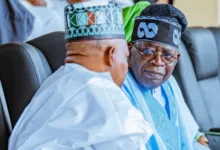
The introduction and subsequent rise of nomination and expression-of-interest fees in Nigeria’s political parties have significantly affected the inclusivity of the democratic process. These fees were initially modest but have escalated over the years, creating serious barriers to participation. Early Years (1999–2011), following the return to civilian rule in 1999, political parties did not impose substantial fees for nomination or expression-of-interest forms. The emphasis was on party membership, grassroots mobilisation, and building political support. However, as campaigns became more competitive and resource-intensive, parties began introducing fees to cover the costs of organising primaries and other electoral activities.
Between 2011 and 2015, there was an initial increase in the amount paid for nomination and expression of interest fees. For instance, the All Progressives Congress (APC) charged ₦10 million for a presidential nomination form in 2014, while the People’s Democratic Party (PDP) charged ₦5 million. Gubernatorial nomination fees ranged from ₦5 million to ₦10 million, depending on the state and party.
Similarly, between 2015–2019, there was a significant hike in what candidates paid for nomination fees and expression of interest. The 2015 general elections saw another sharp increase. The APC increased its presidential nomination form to ₦20 million, while the PDP set theirs at ₦10 million. Gubernatorial nomination fees rose to between ₦10 million and ₦15 million, and legislative positions experienced corresponding increases.
Between 2019 and 2023, fees escalated to unprecedented levels. In 2023, the APC charged ₦100 million for a presidential nomination form, while the PDP set theirs at ₦40 million. Gubernatorial fees ranged from ₦12 million to ₦25 million, depending on the party and state.
Legislative and local government positions also saw increases, with chairmanship forms reaching ₦5 million and councillorship forms ₦1 million. While some parties occasionally offered discounted fees for women, youth, and persons with disabilities, the overall costs remain prohibitive for the majority of Nigerians.
These escalating fees have serious democratic consequences. High costs exclude competent professionals, educators, community leaders, and young people who might otherwise bring vision and integrity to governance. Candidates who invest millions in forms and campaigns often feel compelled to recoup their expenditure once in office, fuelling corruption. Civil servants inflate contracts, politicians manipulate public funds, and institutions like universities and law enforcement can be compromised as individuals prioritise personal gain over public good.
Impact on political participation and governance
The steep rise in nomination and expression-of-interest fees in Nigeria has far-reaching consequences for political participation and governance. At the most fundamental level, these prohibitive costs exclude a significant portion of the population from contesting for political office. Talented professionals, educators, community leaders, and young people, individuals who could bring fresh ideas, integrity, and competence into governance, are often shut out because they lack the financial resources required to enter the race. This exclusion undermines the democratic principle that public office should be accessible to all citizens based on merit and vision, rather than personal wealth.
High entry costs also distort the incentives of those who can afford to participate. Candidates who spend tens or hundreds of millions of naira on nomination forms and campaigns may feel compelled to recoup their investments once in office. This creates a culture where public office is treated primarily as a business venture rather than a platform for service. Consequently, corruption becomes systemic: civil servants inflate contracts, politicians divert public funds, and institutions, including law enforcement and universities, can be compromised as individuals prioritise personal enrichment over the public good.
The marginalisation of ordinary citizens is another significant effect. When people perceive that politics is dominated by the wealthy, many disengage from the democratic process entirely. Youth participation remains low, women are underrepresented, and citizens from economically disadvantaged backgrounds often feel that their voices do not matter. This creates a cycle of exclusion, where governance becomes less responsive to the needs of the majority and more reflective of elite interests.
Furthermore, media influence exacerbates inequality in political participation. Wealthy candidates can afford extensive publicity, while candidates without significant resources struggle to gain visibility. This creates an uneven playing field where public opinion is often shaped more by financial capacity than competence or vision. As a result, even elections that are technically free and fair may fail to produce leaders who genuinely represent the diverse interests of the populace.
The high cost of political participation also weakens democratic institutions. When the pool of candidates is restricted to the affluent, political parties become elite clubs rather than inclusive platforms for societal representation. Legislatures, executive offices, and local government councils may increasingly reflect the interests of the wealthy rather than the common citizen. Over time, this erodes public trust in democratic institutions and can lead to political apathy, cynicism, and disengagement.
Finally, the long-term implications for governance are severe. When offices are occupied primarily by those who can afford the financial burden of entry, policymaking and implementation often prioritise personal or elite gain over national development. Social programs may be underfunded or mismanaged, public services deteriorate, and corruption becomes normalised. The promise of democracy to empower citizens, ensure accountability, and promote equitable development is thus undermined.
Justifications and criticisms
Political parties in Nigeria defend high nomination and expression-of-interest fees on several grounds. One of the main justifications is that these fees serve as a filter to ensure only serious and committed aspirants participate in elections. Party officials argue that politics is demanding and resource-intensive; high fees are seen as a way to discourage frivolous candidates who lack the vision or organisational capacity to run an effective campaign. For example, APC and PDP leadership have repeatedly stated that the cost of nomination forms is intended to cover the expenses of conducting primaries, mobilising party structures, and facilitating electoral processes. In theory, this ensures that aspirants are committed to the process and willing to invest the time and resources necessary to compete.
Another justification often cited is revenue generation for political parties. In a country where internal party financing and grassroots funding can be challenging, high fees from aspirants are a critical source of operational funds. Parties argue that these funds help finance administrative activities, party campaigns, and nationwide mobilisation, which might otherwise rely on external donations that could compromise party autonomy or expose the party to undue influence from wealthy donors.
However, critics argue that these justifications are largely facades that reinforce elite dominance and exclusion. High fees systematically prevent competent, qualified, and visionary candidates from participating, especially women, youth, educators, and professionals from economically disadvantaged backgrounds. While parties claim fees ensure seriousness, in practice, they often screen for wealth rather than competence. A wealthy aspirant may have no experience, vision, or commitment to service but can easily pay the fees, whereas a highly capable candidate without personal wealth is excluded.
Critics also highlight that these fees exacerbate corruption and poor governance. Candidates who spend tens or hundreds of millions of naira to secure nomination and run campaigns often feel compelled to recover these funds once in office. This creates a cycle where public office is treated as a personal investment, incentivising rent-seeking behaviour, embezzlement, and manipulation of public resources. It also shifts the focus from service and policy delivery to financial self-preservation, which undermines democratic accountability. Moreover, the high costs undermine the inclusivity and legitimacy of democratic institutions. When political participation is skewed toward the wealthy, ordinary citizens become disenfranchised and disengaged, leading to political apathy and low voter turnout. The perception that politics is “for the rich” erodes public trust, weakens civic engagement, and diminishes the moral authority of elected leaders.
Academic studies and media reports reinforce these criticisms. Research published in the Journal of Public Affairs and various Nigerian newspapers have shown that escalating nomination fees systematically exclude capable candidates, reduce competition, and entrench dynastic or elite politics. In some cases, political offices have effectively become privatised, with wealth serving as the primary qualification rather than competence, integrity, or commitment to public service.
In short, while parties argue that fees ensure seriousness and generate funds, the reality is that these costs have created structural barriers that undermine democratic principles, restrict access to political office, and compromise governance quality. Without reform, the democratic process remains skewed toward the affluent, and Nigeria’s political landscape continues to be characterised by inequality, exclusion, and systemic corruption.
Recommendations for reform
To make Nigerian democracy genuinely inclusive and functional, urgent reforms must address these financial barriers. First, political parties should drastically reduce or eliminate prohibitive nomination and expression-of-interest fees, allowing qualified citizens, professionals, educators, community leaders, youth, and women to participate meaningfully.
Second, the public funding of political parties must be strengthened and applied transparently. Government support would reduce reliance on exorbitant fees and private contributions, which often fuel patronage networks. Funding should be fairly distributed across parties and tied to accountability measures, ensuring that financial support does not benefit only the wealthy or connected. Third, parties should implement targeted programs to encourage participation by women, youth, and marginalised groups, including subsidised fees, mentorship programs, and reserved candidate slots.
Fourth, regulation and oversight of campaign financing is essential. The Independent National Electoral Commission (INEC) should set and enforce limits on internal party fees and campaign expenditures. Candidates and parties must declare all sources of funding and expenditures to ensure transparency and reduce the influence of money in politics.
Finally, civic education campaigns should be intensified to raise awareness about political participation and responsibilities. Citizens must understand that democracy is not only about voting but also about holding leaders accountable and demanding equitable access to opportunities. Strong civic engagement can pressure parties and policymakers to adopt reforms that make politics more accessible and responsive.
By implementing these reforms, Nigeria can build a democratic system where participation is determined by competence, vision, and service, rather than financial capacity. Only then can democracy fulfil its promise of accountability, inclusivity, and effective governance. Democracy is meant to empower the many, not the few. Making politics affordable is not charity, it is a necessity if Nigeria hopes to achieve accountable, inclusive, and effective governance.
Oluwadare Ayeni
Associate Professor of African Democratic Studies and Public Governance