Between the idyllic 70s and the challenging 2000s, by Simbo Olorunfemi
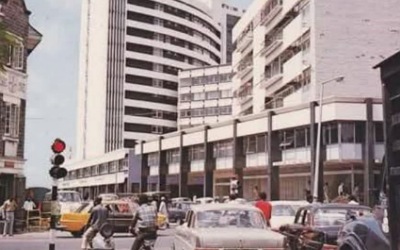
I often truly wonder when I hear some of our Parents and Elders coo about their lives in the idyllic 70s and roaring 80s. I often wonder, not for the fact that life could not have been as good as they paint it, Afterall some of us saw it with the eyes of ‘innocence’, but for the seeming inability to connect the past with the present and the irony in their songs.
When I hear them talk about receiving generous bursaries, which some put into travelling abroad, I smile, with the fact that some did not even bother to pay back loans they obtained as students. I wonder particularly at the comparison often made about the value of the Naira then and now. How some, perhaps not realising they were privileged, bought tickets of Nigerian Airways for next to nothing and exchanged Naira for so much Dollars.
For me, one question jumps at me – One, if as we have been told, that the value of the Naira is a function of the country’s production base in comparison with the level of consumption, is it that Nigeria’s production base was higher then? It is definitely not so, even though the country suffered a setback with industrialisation on the back of SAP and devaluation, there is no comparing where the country was in the 70s, in terms of production base, and now.
So, it can only be that in the 70s and 80s, the level of consumption of foreign goods and services was much lower than what we have now. That, beyond the fact the exchange rate was fixed, must explain the ‘strong’ value of the Naira then. It simply cannot be about ‘Nigeria don spoil’.
Now, here is the irony, the foundation for the rampant appetite for everything foreign, leading to Naira chasing dollars to meet up with the bingeing, was actually laid in the 70s and 80s so revered that our Elders recall misty-eyed. Indeed, it is often about the elite and the direction they choose. They are the ones who brought in the Uncle Ben’s rice. They are the ones who began to push the country in the direction of foreign is good and local is bad, as they swarmed the Kingsways, Leventis, etc. as our appetite for the foreign shot up.




They laid the foundation for what would eventually hook the country in the neck by the 1980s, as the struggle to keep up with imports pushed the country down the slope. Looking for solution, we would eventually fall into the trap of devaluation which we have not been able to get out from. It all started in these 70s and 80s.
Our parents received the Udoji award in the 70s. Those who could not afford cars went for motorcycles, those who could not go for that went for refrigerators and televisions. It was a good time, but no doubt about the fact that with that came the era of what Veblen refers to, in a slightly different context, as ‘conspicuous consumption and invidious comparison’.
In other words, it is the way we laid our beds in the idyllic 70s and roaring 80s that we have it now. We have only gone gaga with conspicuous consumption, washing the future away with champagne and their companions.
It is the way our Parents and Elders laid the beds. I was listening to one of the Elders, last night, talking about life in the old Lagos, how things were so great. He got to the point about bursary, how he collected his bursary of N500 and teamed up with his friend to…. I had thought he was going to say they set up a business, factory, or something. I was stunned when he said they contributed N300 each to buy a brand-new car – Igala. I almost…. but then I remembered my Mum too had bought Igala in the 70s, but that was after 10 years she had put into Nursing.
Of course, I am not saying that people who had legitimately earned income should not have put them into improving their lifestyles, but I wonder if government putting money in the hands of the elite/middle class/ students in form of loans and grants which were funnelled into the consumption of largely foreign goods was a wise course of action at the time. I wonder at the wisdom in paying so much as bursary to undergraduates such that the Elder here was able to put over 50% of what he was paid into buying a new car with which he and his friend painted the town red.
Well, I am only wondering though. But then, how was the country going to continue with the consumption binge on foreign goods, with increase in population, more people getting educated and attendant social mobility? How were we going to continue with going to London for weekend parties? How was the Naira supposed to hold up? So much for the idyllic 70s, in which all was smooth and people were just jenlekeing.
The real point is that the idyllic picture painted of undergraduate living large on campus, having so much money than they had need of, such that some could travel to London for a weekend to party, is not one I find inspiring, but to put it mildly, amusing. For it is that kind of lifestyle on the part of the emerging elite, driving a penchant for conspicuous consumption of largely foreign goods and services that led the country to where it is, with the Naira, even yet battered still desperately chasing the dollars to service our obsession with the foreign.
I am stunned that some of our elders cannot see the nexus between yesterday and today when they regale us with their idyllic life in the 70s and 80s.
To ba jo bi afojudi, e dari ji mi. Omode lo’nse mi.
Photo credit: Nigerian Nostalgia Project