Beyond saboteurs, the runaway cinema success of Funke Akindele’s ‘Behind the Scenes’, by Oladeinde Olawoyin
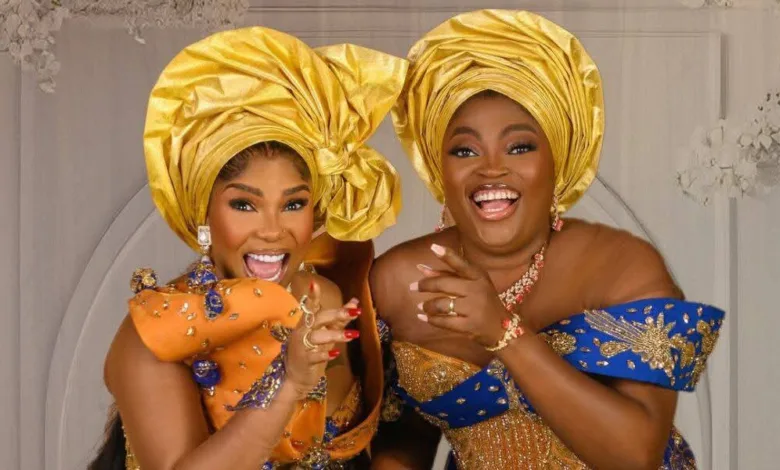
Some Nigerian filmmakers are fighting the law of economics and the battle is as amusing as it’s entertaining. From Niyi Akinmolayan through Toyin Abrahams and Ini Edo, the din has been identical: Cinema Houses are “sabotaging” their efforts with a lethal combination of horrible showtime and poor visibility which, ultimately, makes ticket sales and ROI difficult, if not impossible.
Yet between the lips of these filmmakers and the toxic madhouse that is Twitter trend table, the jeremiads have travelled with a subtle missile: the “Saboteurs”, working in favour of a particular record-breaking filmmaker, are not doing so brazenly in the open, but from, er, behind the scene.
That filmmaker? OluFunke Ayotunde Akindele.
First off, the brutal truth is that like nearly all things in mordern society, the cinema culture feeds into the law of demand and supply. Cinema House owners, like every business owner, play around the law to maximise profit, improve the bottomline and remain in business. In an environment like Nigeria’s where business-friendly infrastructural facilities are broken—-if not totally non-existent—-and operating cost is well over the roof, in addition to neck-breaking overheads, to do otherwise is to tumble into bankruptcy.


So, it’s the economics, stupid.
And to properly contextualise what drives the economics, a quick story.
On Christmas Day, Nadeerah and I were at the Ringroad Cinema to see BehindTheScene, Funke Akindele’s movie. In anticipation of a surge, I had gone there earlier in the day to get tickets for myself and Naddy (a Funke diehard fan). But I was surprised that while other movie producers had promoters on ground to welcome visitors and talk them into seeing their movies, there was none for Funke’s. Yet, at 10am, two hours before the official opening of the Cinema, everyone who was on ground came to get early tickets for Funke’s movie. EVERY SINGLE PERSON.
So yes, there are poor practices in Cinemas that need to be expunged in order to keep the industry sane and encourage investor-producers and drive competition. It’s a win-win for everyone across spectrums in the industry.
But, frankly, what’s working for Funke Akindele goes beyond the efforts of “Saboteurs”. From that skinny young lady who appeared on the T.V sitcom “I Need to Know” on the cusp of the millennium, she has worked hard to position herself as a box office giant with huge, LOYAL(!) fan base. That way, she has transformed from being a mere artiste to an art, an enduring brand, fascinating in her inspirational staying power & longevity.
In other words, people’s reaction to (or reception towards) her movie has since gone far beyond the artistic quality of those movies; it’s an annual vote of solidarity for the brand ‘Funke Akindele’——a vote for the nostalgia brought by her innocence on our black-and-white NTA screen in the late 90s even when she was still wet behind the ears, her promising energy at Odunfa Caucus in Lagos Island, her comical inventiveness in Jenifa, her versatility in Omo Ghetto, her creative aura in A Tribe Called Judah, her relatable marital struggles, her vulnerability inside the turbulent waters of Lagos politics, her ability to reinvent herself across ages, her admirable spirit of resilience and, above all, her persona as a workaholic.
Put matter-of-factly, in this age when artists have become the art, it’s difficult to separate what drives the cinema culture from the personalities (or “brand”, if you will) of those whose works appear at the Cinema.
I have read some interesting suggestions on the need for film houses to maintain “equity” in time allocation, giving everyone a “level playing field”. While I do think that some adjustments could be made in terms of time allocation, it’s almost difficult to achieve that sort of “equity” being championed by Funke’s traducers in a brutally capitalist setting where profit maximisation and the need to stay in business trump all other considerations. Even in pristine economic arguments, debates about equity in a capitalist environment are always polarising.
It is what it is.
One of the most powerful means of communication is silence and no filmmaker seems to have mastered the art of silence like Funke Akindele. Since the din erupted, she has remained silent, like she does, always. The fans have been doing the talking, a testament to the kinda grace that defines the patronage she enjoys.
Now, to be sure, I do not consider BehindTheScene a great movie in terms of plot and storytelling. It’s a good flick, and I did ENJOY it, but I do not think it excels in storytelling. I’d even rate her 2023 flick, ATCJ, above this new one (a verdict that Nadeeroh considers ‘blasphemous’. Yet, in this age when artists have become the art, what drives patronage at Cinemas goes beyond the quality of a movie producer’s output—–just as it plays out in musical concerts—-and Funke seems to have mastered the dynamics so well.
For one, Funke raised the bar in contemporary movie promotions and PR, excels well in human relations with content creators across regional divides, doesn’t appear to force things or do too much to outpace her competitors, and projects a persona of someone at peace with her own artistic decisions, confident in the power of public support/love built by decades of hardwork.
So when the audience demands her movies, it’s only natural for Cinema Houses to feed into that demand.
It’s the economICS, stupid!