Éni tí ó bá mo inú rò á so pé — by Dayo Adedayo

“𝑾𝒉𝒐𝒆𝒗𝒆𝒓 𝑹𝒆𝒇𝒍𝒆𝒄𝒕𝒔 𝑫𝒆𝒆𝒑𝒍𝒚 𝒐𝒏 𝑳𝒊𝒇𝒆’𝒔 𝑱𝒐𝒖𝒓𝒏𝒆𝒚 𝑾𝒊𝒍𝒍 𝑨𝒍𝒘𝒂𝒚𝒔 𝑮𝒊𝒗𝒆 𝑻𝒉𝒂𝒏𝒌𝒔.”
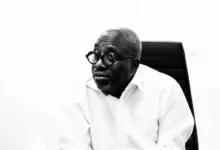
While searching through old files, I stumbled upon this long-forgotten photograph, a quiet reminder of how far we have come as a people and as a nation.
Looking at this image today fills my heart with gratitude and reflection.
The dusty road, the unfinished surroundings, the modest skyline of that era, all now transformed into a smooth modern route connecting to the Lagos–Calabar Expressway, speak silently of progress, perseverance, and hope.



The Yoruba people of Southwest Nigeria have a timeless saying:
“Ẹni tí ó bá mọ inú rò, á sọ pẹ́.” Loosely translated, it means: “Whoever pauses to reflect deeply on life’s journey cannot help but give thanks.”
Sometimes, nations grow so gradually that people fail to notice the miracle unfolding before them. Yet history is often hidden inside old photographs.

This is why I have always believed that Nigeria deserves a National Portrait Gallery and photography museums across the country, where exhibitions can preserve our collective memory and allow younger generations to see where we are coming from, understand our struggles, and appreciate our journey.
The British governed Nigeria for over a century, yet left us with only one university. Today, barely 65 years after independence, Nigeria now boasts well over 300 universities, both public and private.
Imperfect as our nation may be, this alone is evidence that progress, though slow and uneven, is still progress.
I often tell those close to me that I see what many people overlook. Perhaps that is my uniqueness in my little corner of life, to recognise beauty where others see ordinary things, to see tomorrow hidden inside yesterday, and to understand that gratitude is one of the greatest forms of wisdom.
Both the Bible and the Holy Qur’an repeatedly remind humanity that gratitude attracts increase and opens the door to greater blessings.
The Qur’an says in Surah Ibrahim 14:7: “And (remember) when your Lord proclaimed, ‘If you are grateful, I will surely increase you (in favour)…’”
The Bible echoes the same truth in many passages. 1 Thessalonians 5:18 says: “Give thanks in all circumstances.”
Psalm 107:1 declares: “Give thanks to the Lord, for He is good; His love endures forever.”
Even beyond Christianity and Islam, the philosophy of gratitude is universal.
In Buddhism, gratitude is regarded as one of the highest forms of mindfulness and inner peace.
Hindu teachings describe gratitude as a sacred virtue that aligns humanity with divine abundance.
Traditional African spirituality also teaches that a thankful heart remains connected to both the ancestors and the enduring blessings of the Creator.
Gratitude keeps bitterness away. It protects the soul from envy and despair. It teaches us to focus not on what is missing, but on what God, in His mercy, has already done.
A grateful heart sees possibilities where others see limitations.
As I step into a new week with thanksgiving in my heart, I thank God for the journey so far and for the road ahead.
We may not yet be at our destination, but step by step, grace by grace, we shall get there.
And perhaps that is the true meaning of life itself, not merely arriving, but learning to appreciate every stage of the journey.