How and why bread became unhealthy — by Kelechi Deca
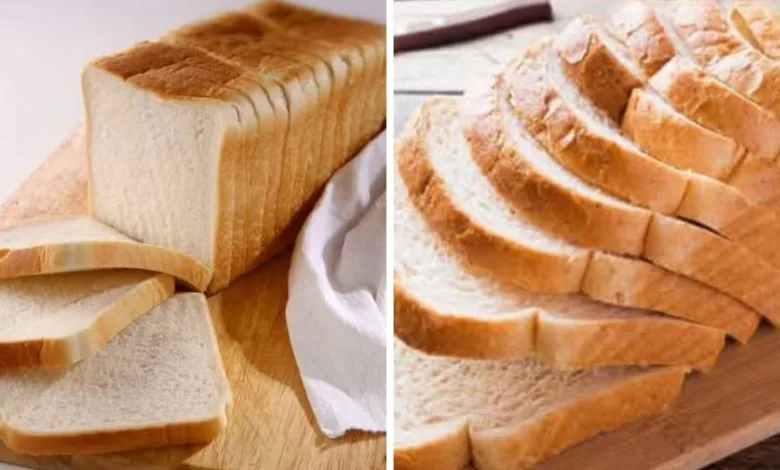
There has been so much controversy over bread in recent years. Not that many are unaware of the said negative health effects but because most people have an unreviewable covenant with bread that they tell themselves to ignore the ‘noises’ out there.
Bread is unarguably the most convenient, easily accessible, and available food out there. Thus, the thought of quitting it has become sisyphean for most people. And this generally drives their pro bread stand.
If the majority of the bakers bake bread with ingredients that are as healthy as they should, they’d run out of business because very few would afford their products.
Whenever my friends ask why I am a harsh critic of bread my response has always been that bread hasn’t become inherently dangerous per se—but modern bread is very different from the bread that many civilisations ate for millennia.




The problem isn’t bread—it’s what the food industry turned bread into. It has become a poisoned chalice with every slice, causing one health havoc or another.
This major shift happened mainly due to changes in agriculture, processing, and additives. But most importantly, the roles of “all for profit” big corporates that’s been in control of global food industry in the last 60 years.
First, the basics.
What did they do to Wheat?
Modern wheat popularly known as the dwarf wheat, which was first modified in the 1960s for high-yield, replaced the traditional varieties.
This semi dwarf wheat has more starch, less protein, and a different gluten structure that boasts of more gliadin, which is linked to gluten sensitivity.On the other hand, ancient wheats like einkorn or emmer have less aggressive gluten.
Then came the ultra-fast industrial milling, which replaced the stone milling. Stone milling preserved the germ and bran, including oils, fiber, and minerals in wheat.
But with the industrial roller mills, the wheat was striped of both germ and bran, which essentially contains 90% of its healthy components, leaving only the starchy endosperm.
Thus, we were left with a finished flour product that is essentially ‘finished’ as the flour is nutritionally barren and spikes blood sugar faster than table sugar.
As if that was not bad enough, they reduced the fermentation time from the 12 to 24 hours down to about two hours.
Elongated fermentation is important because traditional sourdough ferments for 12–24 hours help break down phytic acid, a by-product that blocks mineral absorption and partially degrading gluten.
What we get instead of the bread of life is a fake one that had added yeast plus chemical dough conditioners such as ascorbic acid, and enzymes, monoglycerides in a 1–2 hour process.
This scam that bypasses the natural process results in harder to digest and less nutrient flour that messes up the guts health. But that was not enough. They also add huge quantities sugars and fats through high-fructose corn syrup, or dextrose which gives it the brownish colour.
Moreso, they add soybean or canola oil which turns bread into a processed, hyper-palatable food, not a simple staple.
What they beautifully arrange on the shelves with very appealing packaging have undergone a gluten hybridisation.
A process that makes gluten proteins stickier and more elastic, which helps industrial baking but may trigger immune reactions in predisposed people.
Some research suggests celiac disease rates have risen faster than can be explained by better diagnosis alone.
And this is what some of the bakers and marketers who are basically business people who are interested in their profits defend as food worthy of your consumption.
Having outlined the problems with modern bread, it is imperative to note that the healthiness of bread is country specific. That why before warning anyone about the dangers of eating bread, I always like to know where the person resides.
In some cultures, bread and everything that has to do with it is regarded as a sacred process that must never be tampered with or cut corners as it must abide with customs and baking traditions handed down a thousand years.
Some countries banned all forms of additives ( until proven safe) as part of the precautionary principle while others embrace a risk-based approach by allowing additives unless proven harmful.
I go with the first group.And that’s why such countries still maintain the highest baking standards, and have the healthiest breads globally. And if I have to eat bread, it can only be within the European Union countries.
Aside from bread, they still maintain the global gold standard when it comes to food regulations. Same with their agriculture. There are practices that are not allowed.
When the Finns and other Nordic countries make so much out of their Rye sourdough which was voted Finland’s national food, you won’t understand until you know the high fiber content and very low glycemic index with long fermentation that improves digestibility.
Next is Germany. I don’t know if you have heard stories of Germans traveling outside their country with bread? Their bread is regarded as a national treasure and they have over 3,000 types of bread, all protected by strict purity standards and a strong whole-grain sourdough culture.
Italy, another country that treats food as life itself is renowned for PGI-protected breads like Pane di Matera, made with ancient grains and slow fermentation. France is another stickler for high food quality and they have very strict regulations on ingredients and a “Bread Observatory” to ensure traditional baking methods are preserved. Same with the Greeks.
When it comes to the global benchmark for food safety, the EU is high up there. They were the first to ban the use of potassium bromate and azodicarbonamide (ADA) to strengthen dough. The UK, Canada, and China followed suit due to cancer concerns. But the United States unfortunately, has the worst food regulations amongst the OECD countries.
In Europe, substances linked to cancer or health issues are banned even if risks aren’t 100% proven. Outside the EU, the UK maintains similar standards post-Brexit. While the FDA in the US is reactive, states like California are banning additives like Bromate and Red Dye 3 at the local level.
Whenever you read about European Common Agricultural Policy (CAP) that allocated €386.6 billion for 2021–2027 to support farmer incomes and rural development. The key objective is to have a say in farm practices and to ensure farmers do not cut corners which invariably affects the general health of the citizens.
So when people complain about breads baked and sold in Nigeria, listen to them even where you don’t have the evidence.
So much unknown unknowns go on within the Nigerian food regulatory sector that hardly makes the news and the harsh economic situation has pushed many to engage in unhealthy sharp practices.
Everything is connected to everything.