Is Governor Makinde the man sent to split tinubu’s South-West votes? — by Ayeni Oluwadare
Nigerian politics runs on maths as much as on manifestos. To win the presidency, a candidate needs the highest national vote count, plus at least 25 percent of votes in two-thirds of the states. President Tinubu’s single biggest asset toward that number is the South-West, a region he has dominated for a generation. Any opposition strategy that does not find a way to crack that bloc is, by the numbers, already half-defeated.
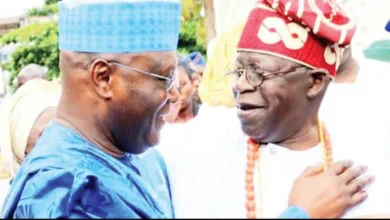
That is the arithmetic behind a claim that has followed Seyi Makinde since February 2026, when former Ekiti governor Ayodele Fayose alleged that a private meeting between Atiku Abubakar and Makinde at Ibrahim Babangida’s Minna residence sealed a pact: Makinde would join Atiku’s camp, deliver South-West delegates, and use his regional standing to peel Yoruba votes away from Tinubu, in exchange for the vice-presidential slot. Atiku’s camp denied it was anything more than a routine consultation. Makinde never confirmed it either.
Whatever was or wasn’t agreed in Minna, the arrangement Fayose described never happened. Atiku’s ADC ticket went instead to Rotimi Amaechi. Makinde did not become anybody’s running mate. He built his own ticket.
By May 2026, Makinde had declared his own presidential ambition, entered the race under the Allied Peoples Movement, and named Ibrahim Adamu Bala, a former SSS official from Bauchi, as his running mate — a Southern-Christian, Northern-Muslim ticket, running independently of Atiku’s ADC and Peter Obi’s NDC altogether.

And yet the spoiler question has not gone away. It has simply changed shape. Political analysts now ask a different version of Fayose’s original claim: not whether Makinde struck a secret pact to split Tinubu’s vote on someone else’s ticket, but whether his own candidacy does exactly that anyway, deliberately or not. A sitting PDP governor of Oyo State, popular, well-funded, and Yoruba, entering a presidential race can only draw votes from somewhere in the South-West. The only real dispute is whose votes he takes.
WHAT THE EVIDENCE ACTUALLY SUPPORTS
Three things are documented. Makinde was a vocal member of the G-5 governors who fought Atiku’s 2023 candidacy and demanded Southern rotation — so any later alliance with Atiku would have been a genuine reversal, not a continuation of an old friendship. Fayose’s pact allegation was never confirmed by either Atiku or Makinde, and the running-mate arrangement it described did not materialise. And Makinde is now, independently, a declared presidential candidate whose home turf is the same region Tinubu cannot afford to lose.
What remains unproven is motive. There is no public evidence that Makinde entered the race as anyone’s instrument, Atiku’s or otherwise. A simpler explanation exists: an ambitious, popular Southern governor nearing the end of his term chose to run for president in his own right, the way ambitious governors before him have done, without needing a Minna meeting to explain it.
A CANDIDACY THAT DOES NOT ADD UP
Strip away the diplomatic language, and a harder question sits underneath all of this: is Seyi Makinde actually running to become President of Nigeria, or is his ambition simply the vehicle someone else is using to do what a direct ADC ticket could never do quietly enough — carve out Tinubu’s South-West bloc?
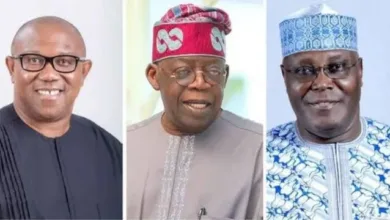
Look at what a serious presidential run requires, and what Makinde’s run conspicuously lacks. A candidate genuinely contesting for Aso Rock builds a national coalition, assembles a running mate with independent political weight, and campaigns as though the North, the South-South, and the South-East all matter as much as his home region. Makinde did none of this in sequence that suggests conviction. He hosted the very Ibadan summit in April 2026 that produced a public declaration calling on the opposition to unite behind a single presidential candidate, stood alongside Atiku, Obi, Kwankwaso, and Amaechi to endorse that principle, and then, within weeks, walked away from it to build his own ticket on the APM, a platform with no national machinery, no history of electoral competitiveness, and a running mate, Ibrahim Adamu Bala, whose own political weight is negligible outside Bauchi. That is not the profile of a man building toward the presidency. It is the profile of a man building toward a particular result in one region.
The timing sharpens the suspicion rather than easing it. Makinde’s declaration followed directly on the heels of the alleged Minna arrangement collapsing and Amaechi taking the ADC slot Makinde was reportedly promised. A man genuinely committed to national government does not, having lost out on a running-mate arrangement, simply improvise a rival ticket in his home region within the same election cycle unless the outcome he actually needs, a fractured South-West, remains achievable either way.
Whether the instrument is a running-mate slot on Atiku’s ticket or an independent Yoruba candidacy of his own, the effect on Tinubu’s numbers is identical: votes that would otherwise consolidate behind the incumbent get pulled toward a Southern alternative instead. A critical watcher of Nigerian politics does not need a confession or a leaked memo to notice that the effect has remained constant even as the vehicle changed. That consistency is itself the evidence.
None of this requires Makinde to be a willing conspirator rather than a convenient instrument. Nigerian political history is full of ambitious men who believed they were building their own thing, only to discover, after the votes were counted, that they had spent an entire campaign season doing someone else’s arithmetic for them.
THE SEQUENCE THAT GIVES THE GAME AWAY
Read the timeline in order, and the most coherent explanation is not that Makinde independently decided, out of nowhere, to mount a national campaign. It is that Fayose’s disclosure destroyed an arrangement that was only ever designed to work in private.
An understanding built quietly between Atiku and Makinde, of the kind Fayose described, depended entirely on staying out of public view. A running-mate slot offered and accepted behind closed doors could be unveiled on Atiku’s own terms, at a moment chosen to minimise the “working for Atiku” framing that would have cost Makinde credibility among Yoruba voters. Once Fayose went public with the details, that option was gone. Atiku’s camp had no choice but to deny it outright and move to a candidate with no such baggage, which is exactly what happened when Amaechi was named. Makinde, for his part, could no longer be quietly installed as anyone’s running mate without confirming Fayose’s account after the fact.
What Makinde could still do, and what he proceeded to do within weeks, was pursue the same strategic outcome by a different route: build an independent Southern candidacy that does precisely what a running-mate slot was meant to do, draw Yoruba votes away from Tinubu, without carrying Atiku’s fingerprints anywhere on the ticket. An independent APM run lets Makinde present himself as his own man to Yoruba voters, while still functioning, in effect, as the instrument that fractures the one bloc Atiku cannot crack on his own. Whether or not the two men still speak, the arithmetic that made Makinde useful to Atiku’s chances in February 2026 has not changed by August, only the vehicle carrying it has. A leaked pact does not disappear when it is exposed; it simply goes looking for a less visible form to survive in, and an independent presidential ticket in the South-West is about as invisible a form as Nigerian politics offers.
This remains an inference from the sequence of events, not a confirmed fact, since neither man has admitted to it and both denied Fayose’s account when it surfaced. But sequences matter in politics precisely because actors rarely confirm what the timeline already makes legible.
THE FAIR READING
Nigerians are entitled to be suspicious of political timing — an opposition figure entering a presidential race just as Tinubu’s stronghold needs cracking invites exactly this kind of theorising. But suspicion is not proof, and a claim that originated from one politician’s account of a private meeting, denied by both principals, should be reported as what it is: an allegation, not an established fact. Whether Makinde’s 2027 run helps the opposition, helps only himself, or inadvertently helps Tinubu by dividing the South-West vote among more candidates is a question the ballot box will answer. Nobody else’s account of a meeting in Minna can settle it in advance.
Oluwadare Ayeni, PhD