Ladoja and the return of the beads, by Oyeyinka Fabowale
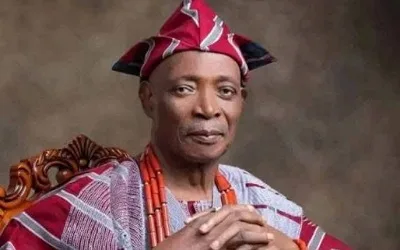
Traditional beads (Ileke) may be making a bold come-back to the fashion scene.
And they are springing off right from Ibadan, Yoruba socio-politico-cultural capital in Oyo State. Thanks to the recent ascendancy of Oba Rashidi Adewolu Ladoja as the 44th Olubadan of Ibadanland.
Since the emergence and enthronement of the former Senator and governor of Oyo State that prides itself as a pace-setter in the federation, many residents of the famous brown roof city have taken to wearing the jewelry pieces either as necklace or bracelets.
While some are loud about it, bedecking their necks and hands with the ornaments of assorted sizes, qualities, colours, shades and texture, others wear them either in threadbare formats or even as luxury wristbands.
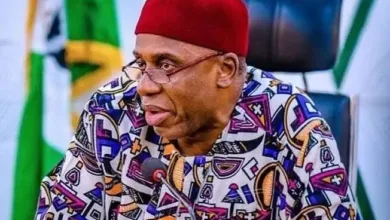
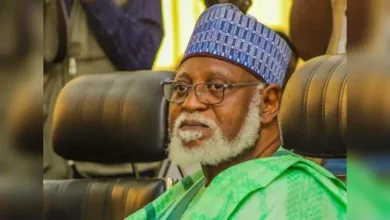
I first noticed the trend as a reporter covering the series of pre-coronation visits by dignitaries and various grades of groups and institutions from diverse segments of the Nigerian Society to the private residence of monarch on Ondo Street, Bodija between the period of his unofficial announcement in August and crowning on September 26. The festive throngs and their reborn choice ornaments have endured till now.
Virtually all members of the monarch’s household and personal staff, from the Personal Assistant, Media aides led by my one-time classmate, Adeola Oloko, protocol officers, drivers, farmhands went to acquire and began to proudly flaunt the neck and hand wears.

Only the king’s uniformed security personnel, perhaps, are exempt.
The fad soon caught on with multitude of guests and well-wishers who daily trooped into the abode to congratulate the man of a rare fortune and destiny.
From high calibre members of the political class, industry, professions, government, religious groups and academia to the poor mass of artisans, artists, traders and his grassroots political supporters, everyone showed up—flashing beads that complemented their either rich or humble attires.
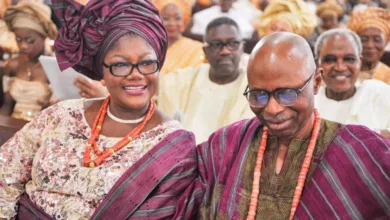
At the various receptions held at the Obafemi Awolowo (former Liberty) Stadium and family compounds all over the city on coronation day and the Royal banquet that followed on Sunday, Sept 28 at the main bowl of the International Conference Centre, University of Ibadan (UI) that closed the weeklong festivities, you could hardly distinguish between the princes, princesses and nobles on the one hand and plebeians on the other. Almost everyone’s necks and limbs were bedecked with beads!
Although it’s a fashion item also worn by commoners on ceremonial occasions such as weddings, child-naming, house-warming and so on, beads are traditionally prescribed as part of the attires of chiefs and royals in Yorubaland.
Good-naturedly, I leaned across and asked some of the guests at the party if they belonged to this class.
“Ah, awa e s’Oloye o! Omo Oba l’awa… Gbogbo wa l’omo Olubadan!” They replied with gutsy pride.
That declaration underscores the love the people of Ibadan have for Oba Ladoja and the joy and pride with which they received news of his elevation to the illustrious throne.
Since he came into the limelight after joining politics, the successful businessman has won the hearts of not only Ibadans but people from other parts of the state, with his charismatic leadership style and development and people-driven mindset and initiatives both when he was in government and outside of it.
He became even more popular among the masses as a courageous, highly principled man, champion of democracy and defender of the rule of law. His role in the struggle to end military rule and restore democratic governance; refusal to be teleguided, controlled and corrupted by his political godfather, the late Chief Lamidi Adedibu which caused him to be temporarily and illegally removed from office as governor in a high-wired plot by powerful enemies within his party, the Peoples Democratic Party (PDP) and forces at the highest level of government in the land attest to this.
So does his one-man battle against former governor, Abiola Ajimobi’s purported reform of the Olubadan Chieftaincy system which Ladoja said was tantamount to the distortion, desecration and bastardization of the unique, historical and time-tested traditional system. His humility, simplicity, generosity, charisma, sense of service and identification with the masses despite his wealth and clout, among other qualities, have also endeared the monarch to the people, even long before he ascended the throne.
Of course, Oba Ladoja suffered political persecution including exile and huge losses in investments for his daring.
But his supporters have consistently rewarded him with goodwill, love and solidarity – affections which manifested overwhelmingly during his hour of glory last month when old and new friends converged on Ibadan for his coronation.
I spotted Tajudeen Kareem, an old colleague and now a branding/PR executive based in Abuja, among the crowd at the gala event at the ICC, UI. He too wore a shimmering exotic iyun (beads) of golden brown colour on his wrists with which he held his phone camera cheerfully taking photographs of the newly installed paramount ruler, seated on the platform he shared with his three queens – Olori Abibat, Olori Bukola and Olori Rashidat; along with other dignitaries including former Osun State Governor, Prince Olagunsoye Oyinlola; daughter of the late Sage and former Premier of the defunct Western Region, Dr. Tokunbo Awolowo-Dosunmu, who chaired the event; Chairman, Ilaji Resort; and Fuji sensation, Fuji Merenge and his band.
Kareem, an old media friend of the monarch and Yoruba from the southern part of Kwara was in Ibadan to pay homage and felicitate Oba Ladoja with whom he has enjoyed a relationship since the early 90s when he was the city editor of The Guardian newspapers.
Although Mapo, venue of the inauguration was cordoned off from public access due to the calibre of VIPs attending including the President of the Federal Republic of Nigeria, Bola Tinubu, bead traders from Ibadan markets and neighbouring towns including Iseyin, Ife, Osogbo poured in, making brisk business at the boundaries of the access routes from last-minute clamour and purchases by guests, visitors and town-folk intent on identifying with Oba Ladoja at the grand ceremony.
Mrs. Dasola Bello, a bead trader at Agbeni market, reported making good sales along with some of her colleagues on D-Day. “We knew a lot of people would want to buy beads but may not come to the market. In any case, the markets were all shut in honour of our Baba (Ladoja) that day. So, we decided to take our wares there. And thank God people bought a lot from us!”
Ever since the coronation ceremony, the fad seems to have caught on with the city folks, I noticed. At social gatherings, in eateries, on the streets, commuting in taxi cabs, mini-buses, tricycles (Keke) and even Keke, you are likely to find men, women and youth wearing wrist beads.
But, a bead trader at the popular Oje market says my observation may not suffice to judge that beads are back in vogue. According to her, sales have remained at the normal even rate in the market, save for occasional upsurge of customers during traditional or ceremonial events such as the recent Olubadan coronation.
Her words: “We normally sell more whenever any Olubadan is being installed. The same thing happened when his (Ladoja) predecessors were crowned. But after that, all we see are our regular customers – those who retail, some who need beads for traditional ceremonies like wedding, chieftaincy and girls who use beads for fashion.”
Another trader in the market blames Nigerians’ obsession with foreign products and disdain for indigenous ones for the situation. Ironically, she says, “Foreign tourists (especially Europeans and Americans) value beads. They come here to patronize us. The question is: if our people have contempt for our own things who is going to promote it for us?”
But for Mr. Akinade Ademola, a trader in the popular Agbeni market, business has been good because, as he says, many Nigerians especially the younger generation are taking to using beads.
Like any normal business, Akinade, says the trade has both its lull and peak seasons, but confesses that it’s generally lucrative.
“All age groups use it, but mostly young ladies. They wear it on their wrists and also as waist beads. Sales usually increase towards the end of the year like this when schools and organizations do their end-of-the-year programmes. Parents come to buy beads as props for the costumes their children will use to take part in entertainment and other socio-cultural activities. So, business always booms during this period. It’s because the business is lucrative that I chose to go into it when I retired as a civil servant five years ago,” Akinade reveals.
Apparently, a survey will be needed to determine if the seeming new popularity of beads in the metropolis and environs is a mere flash in the pan or here to stay.
But how nice it would be if it heralds a renaissance of Yoruba traditional dress mode!
Mr. Akinade is of the view that it may well be, more so if government cares to promote public awareness of the aesthetic, cultural and economic values of traditional beads.
“Let government create the awareness of the economic and cultural benefits and Nigerians will not be able to believe the multiplier effects it will have on national pride and the economy within a short time. For instance, most of the ones in vogue are more or less plastics made from petroleum products in China. The petroleum resources we have in abundance in the country. If government seriously encourages them, people can invest in industries for mass production of beads. Thereby, we will create more jobs – a chain line of factory workers, bead makers, suppliers, wholesale dealers, retailers and so on. For instance, I understand that bead-making is part of the vocational/entrepreneurial skills taught National Youth Corps members now, so they can be financially independent instead of waiting endlessly for jobs which will never come,” he said.
The coming of Oba Ladoja may well catalyze this blueprint for development and expansion of the bead industry, I reckon. With his knowledge of government’s tendency to dither on formulating and executing policies, the seasoned business tycoon, erstwhile governor and culture patron may list this economic sector as one of the priority heritage industries he pledged to revive when he mounted the throne.
With his vast political and business networks, it will not be surprising to see the gemstone mining sites reactivated, cottage industries springing up, competing and even dominating the West African market, at the moment under the control of the Chinese business men.
In that regard, I pledge my services to assisting in promoting the success of such a noble cause. As the reader can see in the photograph, I have taken possession of enough beads to become an ambassador of such glorious initiative.
A favour you can do for me, however, dear reader, is… (if you are so privileged) help whisper this humble request into Kabiyesi’s listening ear – that he graciously package into the deal a chieftaincy title or ‘knight’ me as his ‘son’, Omo Olubadan.
Yes, I know haters would seek to block my chance. They will say: “Lati ibo s’ibo? Omo atohunrinwa? (What? Give a stranger a honorary title?).
They would overlook the fact that Ibadan itself is a settler-city, populated and developed by successive generations of immigrants from various parts of Yorubaland at first and later Nigerians from other parts of the country as well as foreigners!
I know I may not qualify as an indigene, judged by the line my big brother and boss, Chief Lekan Alabi, himself on the Olubadan succession line, ruled on the historical calendar of movements into the conurbation by settlers to enjoy that status.
But here is my CV that makes an eloquent case for why I am long overdue for the sought recognition and honour as a denizen of this beautiful and prosperous land:
I have been associated with Ibadan since the early 70s when I followed my businessman-father to transact business and do some shopping in the now defunct Kingsway and Leventist super stores in the central business district of old Gbagi-Dugbe-Ogunpa.
During the same period, I, and my siblings, used to spend our holidays with my uncle, the late Prof Akin Fafunso, a renowned teacher and Biochemist at the University of Ibadan.
For school, I went to the University of Ibadan, the premier university and pride of the nation.
I have lived and worked in this city for 33 years since first posted to cover Oyo State in 1992 by The Guardian newspaper. Even when my tour of duty extended to coverage of the five states that make up South West, excluding Lagos, Ibadan remained the regional base and headquarters of my operations. My taxes I pay here.
I have also raised a family here, trained and still training my children here.
I have made wonderful friends and acquaintances of many people of Ibadan descent and can speak the salacious tongue with the same sing song and pesky tang, if it won’t be counted an offence of mimicking or mockery.
Amala caressed with golden fluidity of abula remains the favorite food in my household and in my outings.
If all this appears not to be enough, it may interest you, that I am considered so Ibadan-centric that my bosses and colleagues in the newsroom on one or two occasions my career took me to work at the corporate headquarters of the newspapers I worked for in Lagos, dubbed me “Baba Ibadan”. Not necessarily because they thought highly of my journalistic experience and reporting on Ibadan affairs as authoritative, but also because they knew that nothing the capital of the state of aquatic splendour offered could hold me back from hastening back to Ibadan’s quiet and yet cosy embrace on weekends! Not the famed affluence, idle fun or frivolities money could buy. It’s retreat from chaos to a haven of peace.
Should Kabiyesi be inclined to grant my plea but harbour doubt what fitting title there is left to confer on persons of my kind, please help remind him of the eternal words of his never-to-be-forgotten predecessor, Oba Oloyede Asanke to suggestions by his courtiers that there was none left to dignify a candidate he, the Royal Father, favoured. “Oye ti tan, ko s’oruko oye gidi ni’le mo ti yo je” the men had reportedly told the Olubadan with an air of finality and despair.
But, a man of peerless native wisdom and wit, the monarch was said to have retorted:
“Oye tan? E ma wi baun mo. Oye ku. ‘Oye tan’ un, oruko oye niyun na. Se e o mo ni!” Thus, the old fox turned the argument on its head initiating the would-be advisors into the portal of infinite insight, access to which is denied mere mortals but granted only to companions of the gods!
To assuage the sensibility of jealous hearts who may feel affronted still by or see in the title, “Baba ‘Badan”, a presumptuous haughtiness that suggested rivalry with His Imperial Majesty’s preeminence as the “Father of all Ibadans, home and abroad”, Kabiyesi may consider “Omo ‘Badan” a more suitable substitute.
Hmmmn. Omo ‘Badan; Omo Olubadan”
Only he who dines and drinks with the gods can crack the lexico-semantic code and unravel the dual honour apparelled in this knot of apparent dimunition.
But let those given the secret knowledge of words, their power and meaning, of elision and literary devices mock the ignorant with their silence. Let them keep their toast of me out of the public glare as we await the gracious proclamation from the throne.
Then shall we drench ourselves in frothy palm wine, on the bill of… oh, yes, the Prince-Chief!
And for the envious and the hecklers waiting to mock the just title as “asunkun gba” (solicited or extorted), well, their malice cuts no ice. It only confirms my pedigree and the fact that I am no bastard at all.
You see, I am a pure bred OWU. The proud cognomen of Olowu, the progenitor of OWU, a distinctive stock of Yoruba people I hailed from, is “Asunkungbade” (One who earned himself the crown with cries).
A grandson of Oduduwa, he was the first to be handed a crown and the right to rule over a kingdom among the legendary Yoruba patriarch’s offspring.
On a visit to his grandfather in Ile Ife, Olowu was said to have cried his way into the king’s heart that he conceded that the child keep his (Oduduwa’s) crown he had playfully placed on the child’s head after several attempts to retrieve the royal headwear from him met with persistent shrill wailings.