Lagos Assembly passes ₦4.4trn 2026 ‘Budget of Shared Prosperity’
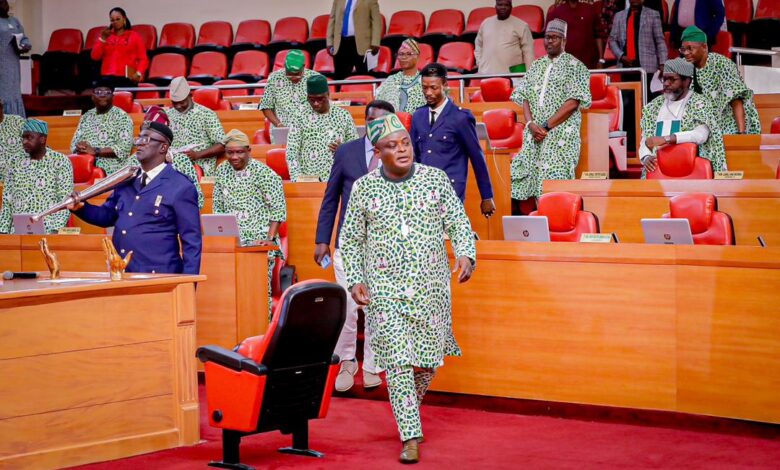
The Lagos State House of Assembly has passed a ₦4.4 trillion budget for the 2026 fiscal year following the adoption of the report of the House Committee on Economic Planning and Budget.
Presenting the report during plenary on Thursday, the committee chairman, Hon. Sa’ad Olumoh, outlined the assumptions, projections and structure of the 2026 Appropriation Bill, tagged the “Budget of Shared Prosperity.”
According to the report, the 2026 budget marks the third budget cycle of the current administration and represents the final new-cycle budget of Governor Babajide Sanwo-Olu’s second term.
The budget is aligned with the administration’s development agenda and is anchored on four strategic pillars: human-centric development; modern and adaptive infrastructure; a thriving 21st-century megacity economy; and effective governance that exceeds citizens’ expectations.
Olumoh said the budget framework was guided by key macroeconomic assumptions, including an exchange rate benchmark of ₦1,512 to the dollar, an inflation rate of 14.7 per cent, oil production of 2.06 million barrels per day, and a benchmark oil price of $64 per barrel.
The committee also reviewed the 2025 budget performance, reporting a cumulative performance of 79 per cent as of November 2025. Capital expenditure recorded a performance of 75 per cent, recurrent expenditure stood at 87 per cent, while overall revenue performance was also put at 79 per cent.
For the 2026 fiscal year, the approved budget size stands at about ₦4.4 trillion, comprising ₦2.052 trillion for recurrent expenditure and ₦2.185 trillion for capital expenditure. The sizeable capital component underscores the state government’s commitment to infrastructure development.
The budget makes provisions for personnel costs, overheads, debt servicing and debt repayment, with a projected deficit of about ₦243 billion to be financed through approved deficit financing options.
During deliberations, lawmakers commended the budget, describing it as realistic and growth-oriented.
Hon. Aro Moshood disclosed that an additional ₦171 billion was added to the budget during the review process.
Hon. Femi Saheed said the size and structure of the budget showed that Lagos State remained on a strong economic footing, provided all stakeholders played their roles.
Similarly, Hon. Gbolahan Yishawu, representing Eti-Osa Constituency II, emphasised the importance of revenue reforms and prudent loan repayment structures, noting that effective implementation would further strengthen the state’s fiscal position.