Nigeria and the New World Order: Why Africa’s giant cannot stand still, by Kayode Adebiyi
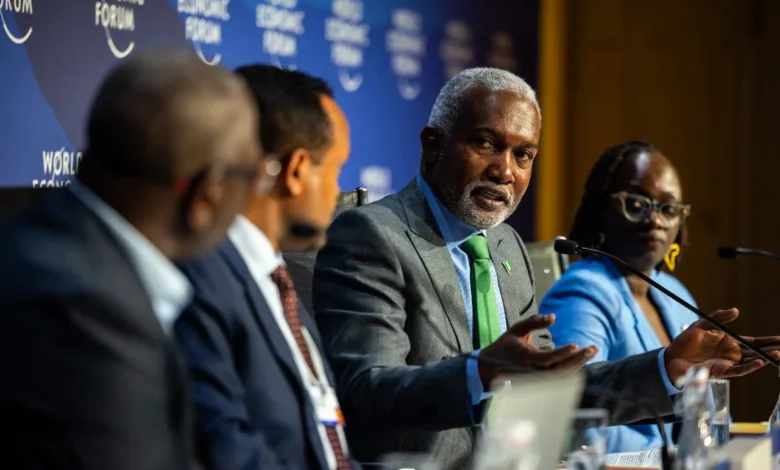
The warnings coming out of Davos this year were unusually clear. In different tones but with striking convergence, Canada’s Prime Minister and France’s President described a world that has crossed a line. Not one drifting gently into transition, but one fractured by raw power politics, shrinking patience for rules, and a return to coercion as a normal tool of statecraft.
Hovering over this shift is the disruptive presence of US President, Donald Trump whose approach to global affairs has stripped away polite illusions. Tariffs are no longer economic instruments but political weapons. Alliances are transactional. Multilateral institutions are tolerated only when they serve immediate national interest. What was once quietly practiced is now openly embraced.
This moment demands serious reflection far beyond Europe and North America. For Africa, and especially for Nigeria, the implications are profound. This is not a time for spectatorship. It is a moment that will define whether Nigeria becomes a shaping force in the new order or a large but marginal actor within it.
Carney’s speech at the forum was striking not because it was radical, but because it was honest. The so-called rules-based international order, he argued, no longer operates as advertised. The strongest bend rules when convenient. Integration is increasingly weaponized. Institutions designed for cooperation are weakened by rivalry.
For decades, many countries, including Nigeria, navigated global affairs under the assumption that size, goodwill, and participation were enough to secure relevance. That assumption is no longer safe.
In today’s environment, access is conditional. Influence must be earned continuously. And countries that wait to be invited into conversations about trade, security, technology, or energy will discover that decisions are made without them.
Nigeria enters this moment with undeniable assets. It is Africa’s largest economy by scale. It has the continent’s largest population, a demographic force that will shape labor markets, consumption, and innovation for generations. It occupies a pivotal geographic and economic position in West Africa and beyond.
What is at issue is not Nigeria’s importance, but how deliberately it uses it. In a world of great power rivalry, middle and emerging powers cannot rely on symbolism or history. They must convert scale into leverage. Population into productivity. Geography into connectivity. Resources into resilience.
Nigeria is not starting from zero. The country has demonstrated, in pockets, that it can execute complex projects, mobilize capital, and think long-term.
The lesson from Carney’s argument is not that every country must build fortresses, but that sovereignty now rests on the capacity to absorb shocks, diversify options, and reduce vulnerability to external pressure.
Macron’s warning about standing up to bullying speaks directly to Africa’s predicament. Silence and accommodation do not buy safety in a coercive world. They invite further pressure.
Africa’s collective weakness has never been about lack of resources or people. It has been about fragmentation. When African states negotiate separately with global powers, they compete against each other for access and favor. When they act together, even selectively, they change the balance.
Nigeria’s role here is central. Not as a hegemon, but as a convener. A country of Nigeria’s size cannot afford the comfort of neutrality disguised as caution. Leadership in this era does not require confrontation, but it does require clarity.
Carney invoked the idea of “living in truth” rather than performing belief in a system that no longer functions. For Nigeria, this means acknowledging that the old guarantees are gone.
It means accepting that economic resilience is now foreign policy. Food security, energy capacity, industrial depth, digital infrastructure, and financial stability are no longer domestic concerns alone. They define how much pressure a country can withstand before it must concede.
Nigeria has begun to make progress in some of these areas. Ending long-standing structural weaknesses, such as dependence on imported refined fuel, signals movement in the right direction. But the larger task is to understand that progress must be systemic, not episodic.
More importantly, Nigeria must translate domestic strength into external strategy. Diversifying trade relationships. Deepening regional markets. Investing in corridors that connect Africa to itself, not just to external consumers. Building coalitions around specific interests rather than abstract alignment.
The emerging world order that Carney described leaves little room for passive giants. Countries that matter but hesitate will find themselves shaped by decisions made elsewhere. Countries that understand the moment and act deliberately can still carve out influence, even without hegemonic power.
Nigeria belongs firmly in the second category, if it chooses to be there.
This is not a call for confrontation or grandstanding. It is a call for intentionality. For Nigeria to recognize that its size imposes responsibility. That Africa’s future bargaining power will depend in part on whether its largest country shows strategic confidence.
The old order may not be coming back, but this does not mean chaos is inevitable. It means the terms of relevance have changed.
Nigeria’s challenge now is simple, but not easy: to move from being affected by global shifts to helping shape them. In a world that is reorganizing itself in real time, standing still is no longer a neutral act.