Nigeria’s capital market is on fire — And the next explosion is yet to come — by Michael Chibuzo
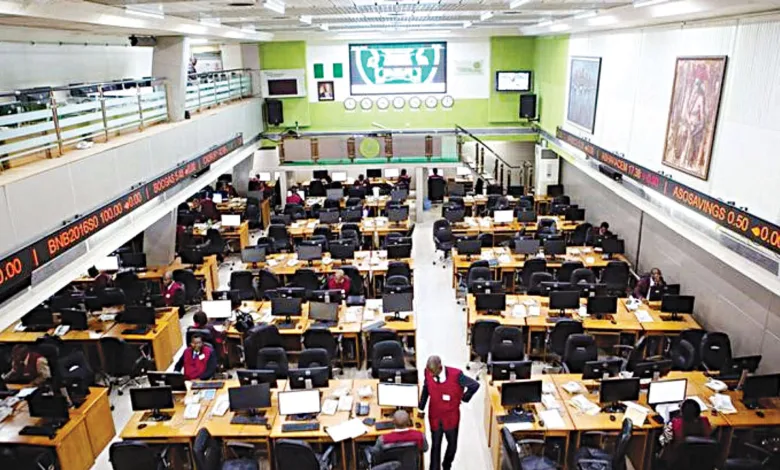
On May 29, 2023 when President Bola Tinubu climbed the famous podium in Eagle Square to kick start a bold and ambitious economic reform journey, which triggered a wave of macroeconomic turbulence, few people ever imagined that less than three years later, that the Nigerian stock will be literally on fire.
But that is the reality today. Nigeria’s capital market is experiencing one of the most spectacular and sustained rallies in its history, a rally so profound that even seasoned analysts admit they have never seen anything like it. What began in 2023 as a cautious turnaround story has transformed into a full-blown bull run, rewriting the narrative of Africa’s most populous nation as a powerhouse for capital formation.
When President Bola Tinubu assumed office on May 29, 2023, the total market capitalization of the Nigerian Exchange (NGX) was approximately N28.845 trillion, with the All-Share Index at 55,769.28 points. As of the close of business on December 31, 2023, the Nigerian stock market (NGX) achieved a significant milestone, market capitalisation rising to N40.92 trillion and All-Share Index rising to 74,773.77 points, representing a stellar 45.9% gain in the All-Share Index for the year 2023.
The bullish charge continued into 2024. As at 31st December, 2024, the ASI had climbed to around 102,926.4 points, while the total market capitalization stood at N62.763 trillion – a whooping N22 trillion increase from the 2023 figures. 2024 was a watershed that signaled sustained demand for Nigerian equities thanks to the many monetary reforms by the Yemi Cardoso-led CBN that brought increased macroeconomic stability and strengthened investor confidence.



In 2025, the momentum exploded with total market cap galloping to N99.4 trillion representing a massive expansion of over N36.6 trillion for the year. The NGX All-Share Index (ASI) closed the year at 155,613.03 basis points, representing a 51.19% return for the year 2025, driven by bank recapitalization and strong corporate earnings. This is historic on many levels and represents one of the biggest endorsement of Nigeria’s economic direction.
This powerful trend did not fade with the 2025 calendar. It actually accelerated in 2026. As of May 2026, Nigeria’s market capitalisation has surged past N155.9 trillion, an unbelievable N56 trillion increase in four months! The NGX ASI on its part is topping over 240,000 points – a 54% increase within four months. This is one of the most sustained rallies seen in emerging markets.
No abstract metric can capture this shift better than the raw numbers. The sizes of the NGX market cap and ASI have more than quadrupled from the May 2023 levels and total equity value now stands firmly in six-figure trillions — a testament both to Nigeria’s economic narrative and its growing attraction to capital. While some people are amplifying gloom and negativity, smart investors are silently milking the capital market.
In fact in the last week alone, market capitalisation increased by more than 7% with many shares appreciating significantly. UAC Nigeria’s share for instance gained N39.50, as it grew from N142 to N181.50. BUA Cement closed trading at N418 per share, rising by N83, from N335 per share while Chemical and Allied Products’ share price rose by N26.70 during the week, from N118.50 to N145.20.
What’s driving this Surge?
Let us take a little dive into the sectoral specifics beyond the headline figures, which though impressive, but does not tell the whole story. The real story lies in which stocks and sectors have powered this run and why this rally is more than just a short-term speculative bounce considering this bullish run has been fairly consistent since 2023. Below are the key drivers of NGX unprecedented rally:
- Tech, Telecom and the Real Sector Behemoths led by Dangote
At the heart of the market’s recent expansion are a small number of blue-chip behemoths.
25 top firms alone account for nearly 90% of NGX’s total market cap, with MTN Nigeria Communications Plc consistently leading the pack. As of April 30, 2026, these top stocks contributed about N140.3 trillion out of the N155.99 trillion total. MTN’s sheer weight, which is one of the exchange’s largest by valuation, has buoyed the overall ASI and market capitalisation, reflecting strong subscriber growth, rising data revenue, and improved profitability.
Industrial heavyweights, especially Dangote Cement Plc, have also been catalysts for sustained capital formation. These stocks routinely lead gains during broad market rallies, lifting both the price indices and market capitalisation. In recent trading, gains by Dangote Cement and other industrial equities helped push market capitalisation higher by over N1.7 trillion in a single session! The ongoing concrete road revolution in Nigeria triggered by President Bola Tinubu is making cement stocks a hot cake.
- Mid-sized Quoted Companies
While blue chip companies carry the market’s bulk, many middle sized companies have also delivered some of the most explosive returns. For example, Julius Berger Nigeria Plc has delivered year-to-date returns above 100%, reflecting renewed investor interest in the construction and infrastructure sector, which continues to receive unprecedented attention under President Tinubu.
Also, stocks like Zichis, The Initiates, UACN, Livestock Feeds, Aradel, and Beta Glass are all delivering strong double- and triple-digit surges and week-on-week gains. These mid-cap companies, which spread across consumer, industrial, and the services sectors, have underlined a diversification of the stock market rally beyond the financial and telecom heavyweights.
- Structural Tailwinds
In 2026 particularly, the NGX has also been buoyed by technical and structural tailwinds. For example, the FTSE Russell reclassification of Nigeria back to frontier-market status has unlocked passive and active inflows into the market, pushing the NGX to top performance rankings across Africa with year-to-date returns above 45%. Enhanced market infrastructure and reforms have further deepened liquidity and transparency.
In fact, recently, NGX announced it is transitioning its settlement cycle from T+2 to T+1 (i.e. Trade Date + 1 business day) effective May 29, 2026. The NGX only moved to the T+2 settlement cycle in December 2025 and is now making the step up to T+1 six months later. This move from the current T+2 system means trades will settle one business day after execution instead of two, significantly increasing speed and efficiency for investors.
The Next Big Bang in the NGX – Dangote Refinery and NNPCL
What is most extraordinary in all these is that the Nigerian stock market, which is already above ₦155 trillion (or $111 billion) in value, has not yet welcome the two most monumental listings in the nation’s economic future namely the Dangote Petroleum Refinery and the Nigerian National Petroleum Company Ltd (NNPCL).
- The Future Listing of Dangote Petroleum Refinery
Dangote Refinery is already of the largest oil refineries in the world and planning further expansions. This mega-asset is poised to become a valuation superpower. When it eventually lists on the NGX, it could add tens of trillions of naira to the market capitalisation and it would instantly rank among the top-three most valuable companies on the exchange and attract global institutional investment at a scale Nigeria has never seen!
- The Eventual Listing of NNPCL
As Nigeria’s national oil champion, with expansive upstream and downstream holdings, its listing would be transformative. When NNPLC lists on the NGX, it would become one of the biggest listings in African history. Apart from deepening liquidity across all market segments, the NNPCL’s listing will push Nigeria even closer to emerging-market reclassification from our present Frontier market status.
So basically, these two listings could propel the NGX’s total market capitalisation well beyond N200 trillion and possibly into the N250 trillion range, establishing NGX as Africa’s unrivalled capital-market leader second only to the $1 trillion Johannesburg stock exchange.
Conclusion
What Nigeria is witnessing today in the capital market is not a coincidence or a product of rhetoric. It is actually the inevitable outcome of deliberate, difficult and visionary reforms. The monetary reset undertaken by the Yemi Cardoso-led Central Bank of Nigeria, including FX liberalisation, bank recapitalisation, liquidity tightening and market-confidence rebuilding, has restored credibility to Nigeria’s macro framework.
Simultaneously, the fiscal authorities have enforced discipline, expanded revenue windows, cleared inherited obligations, and pursued long-overdue structural reforms including modern tax laws that now serve as the foundation for sustainable growth. But the spark that ignited this transformation remains the bold, unflinching decisions taken by President Bola Ahmed Tinubu on May 29, 2023 – the reforms many criticised, the reforms that triggered short-term pain, the reforms that are today unlocking historic revenues for subnationals to invest in infrastructure and other developmental needs of their people.
Nigeria’s capital market boom is only but a symptom of a deeper national resurgence. With rising investor confidence, expanding industrial output, accelerating infrastructure delivery, renewed global interest, and the imminent listing of our prized national assets (NNPCL and Dangote Refinery) that will redraw the African financial map, Nigeria is just getting started.
Like I mentioned elsewhere, despite our present challenges that obscures the vision of many, Nigeria is actually stepping into a golden era of unprecedented expansion across energy, technology, finance, manufacturing, infrastructure, agriculture, and the creative economy. The signs are there, and steadily crystallizing in visible economic metrics. The stock market boom is merely the opening chapter of a much bigger story. Under the watchful and firm guidance of President Bola Tinubu, Nigeria is rising, and this time, the ascent is unstoppable!