Olaopa lists strategies to transform public service
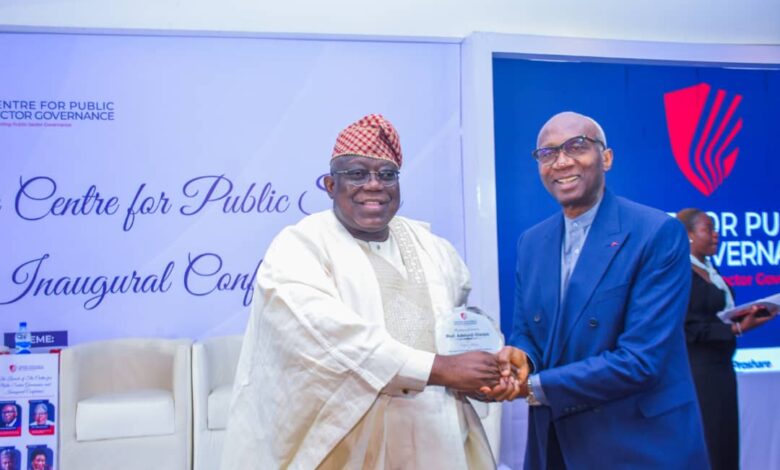
The Chairman of the Federal Civil Service Commission, Prof. Tunji Olaopa, has outlined strategies for transforming Nigeria’s public service into a productive and efficient institution.
Olaopa shared these insights on Tuesday in Abuja during the inaugural conference and launch of the Centre for Public Sector Governance (CPSG).
Speaking on the theme “Strengthening Leadership and Ethics in Public Institutions,” he commended Dr. Ernest Ndukwe, former Executive Vice Chairman of the Nigerian Communications Commission (NCC), for establishing the CPSG, describing it as a patriotic initiative by seasoned professionals.
He praised the CPSG as a vital addition to Nigeria’s institutional and managerial framework, designed to address the structural constraints impeding the nation’s development and to unlock its potential.




Olaopa lamented the declining perception of public service in Nigeria, which he said has been plagued by inefficiency and poor work ethics. He noted:
“To say you work in a public institution often translates to arriving late, conducting personal business during office hours, and being unproductive. As a result, the public service is no longer regarded as the employer of choice.”
Public Service as a Calling
Describing public service as a sacred duty akin to the Levitical priesthood of the Old Testament, Olaopa outlined measures to make it more effective. He emphasized the need for a modern, dynamic public service that is:
Fast-moving, professional, and adaptable
Entrepreneurial and performance-focused
Information-rich and accountable
Committed to creating a conducive policy environment for private sector growth
Capable of fostering a new productivity paradigm for national economic transformation
Transformational Leadership
Olaopa argued that an efficient public service requires transformational managers, not mere administrators. Such leaders should possess 21st-century skills, including strategic foresight, entrepreneurial acumen, moral rectitude, and a commitment to public accountability. He listed professional attributes essential for public managers:
Proactive orientation and strategic foresight
Innovativeness and risk-taking
Merit-based decision-making
Result-oriented and impact-driven approaches
Political neutrality and public-spiritedness
Addressing Complex Challenges
Olaopa highlighted the complexities of leading in a volatile, uncertain, complex, and ambiguous (VUCA) environment, compounded by the effects of the COVID-19 pandemic and interconnected global crises, termed “polycrises.”
He said:
“The transformational administrative leader must oversee the creation of a value-driven public service institution while managing challenges like funding constraints, evolving policy dynamics, and changing citizen expectations.”
To achieve this, Olaopa recommended change management strategies, including:
- Implementing a cultural adjustment program that promotes excellence, meritocracy, and accountability.
- Combining traditional administrative roles—policy advisory, regulatory oversight, and public engagement—with new competencies to anticipate and mitigate emerging challenges.
Core Competencies for Public Managers
He highlighted the importance of skills such as:
Interpersonal skills: Facilitation, empathy, and conflict resolution.
Analytical skills: Evidence sorting, critical thinking, and creativity.
Organizational skills: Teamwork, collaboration, and systematic problem-solving.
Communication skills: Effective use of multimedia resources and modern tools.
Technical skills: Expertise in methods, procedures, and technologies for specific tasks.
Olaopa concluded by stressing the need for a well-trained, competent workforce and leaders capable of driving transformative changes in Nigeria’s public service.