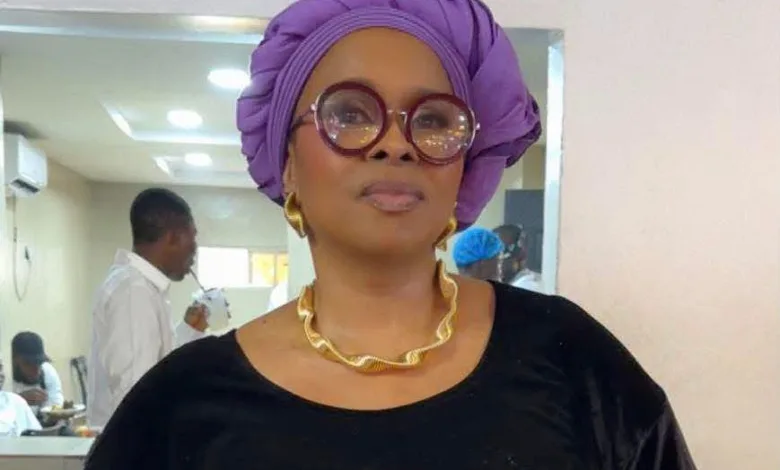
On the Yoruba concept of Dalemosu — by Olubunmi Ajai
Dear my fellow Yoruba people,
Please come around for some Omoluabi talk.
One thing we should remember is that traditional Yoruba society was, and still is, in many respects, more of a gerontocracy than a patriarchy. Age, seniority, lineage, and achievement often carried as much weight as gender. In my view, ours has historically been one of the more woman-friendly cultures in Africa.
The arrival of British colonial rule, with its deeply Victorian and quite misogynistic attitudes towards women, eroded many aspects of our indigenous culture and institutions.

Take, for example, the concept of the Dalemosu.
A Dalemosu is a woman who has left her marriage and chosen to live independently, often returning to her father’s family compound. Or may decide to live alone. She was not traditionally regarded as an object of shame, ridicule, or stigma. Rather, she remained a respected member of her family and community – a strong, independent woman who continued to work, trade, and contribute to society.
A beautiful visual representation of this concept can be seen in the character of Awarun, played by Sola Sobowale in Aníkúlápó. Although she is a fictional character, she reflects a very real aspect of Yoruba social history: a woman’s worth was not traditionally defined solely by her marital status.
Awarun was a woman of wealth, influence, confidence, and power. She was not portrayed as a failure because her marriage had ended. On the contrary, she was successful in her own right – more prosperous and influential than many of the men around her. Her story reminds us of an important truth in Yoruba culture : a woman who leaves a marriage does not lose her dignity, value, or place in society.
Kindly stop the stigmatisation of divorced women. It is not our culture to shame divorced people – whether male or female. Traditionally, both retained their dignity and place within the family.
Much of the stigma surrounding divorced women reflects Victorian British values introduced during colonial rule. In nineteenth-century Britain, women had very limited economic opportunities and were often expected to depend financially on their husbands. If they had no husband, a lot of these women resorted to prostitution. Yoruba society was markedly different. Women were economically active and influential in their own right – whether single or married.
Among the Yoruba, women traded extensively, accumulated wealth and owned property. Economic independence for women was not an exception; it was woven into the fabric of Yoruba society.
From the marketplace to the royal palace, women occupied positions of authority. We had the Ìyálọ́jà, the powerful leader of the markets and commerce. In many royal courts, women also held important chieftaincy titles such as the Ìyálóde, Ìyá Oba, Erelú, and Lọ́bùn, serving as influential chiefs and advisers alongside their male counterparts. Even within the Ogboni institution, women held recognised authority through offices such as the Ìyá Àbíyè
I was born in my paternal grandfather’s house in Idumota. Several of my father’s sisters were Dalemosu. When their marriages ceased to be happy, they returned to their father’s home. My grandfather welcomed every one of his daughters with love and dignity. None of them was stigmatised or treated as ‘less than’ because their marriages had ended.
That is the Yoruba culture I know.
A Dalemosu was not considered ‘cheap,’ immoral, or a prostitute. She was simply a woman whose marriage had ended and who continued to live her life with dignity.
Our culture has always recognised the strength, resilience, and economic power of women. We should honour that legacy instead of embracing attitudes that were imported during colonial rule.
Stop discriminating against divorced women in Yorubaland.
–Ajai wrote from London