Politicians use corruption as campaign tool 65 years after independence- Adebayo laments
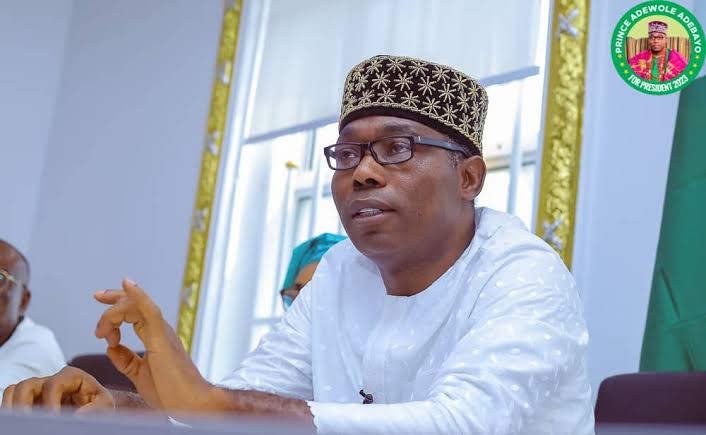
The presidential candidate of the Social Democratic Party (SDP) in the 2023 general election, Prince Adewole Adebayo, has lamented that politicians continue to use corruption as a campaign slogan 65 years after independence, saying everybody knows corruption is bad and unacceptable.
He dismissed reports suggesting that the party is covertly working for the ruling All Progressives Congress (APC).
In a statement issued on Saturday, Adebayo described the claims as baseless and untrue, saying he was unaware of any such arrangement. He maintained that the party remains focused on its internal strategies and preparations ahead of the 2027 general elections.

“I don’t know about the rumours or the talk, but what I know is what the SDP is doing officially. I only participate in what the party is doing,” he said.
The SDP chieftain, however, acknowledged that some individuals within the party might have personal loyalties outside its structure — a challenge the leadership is working to address.
“People in political parties often tend to have loyalty outside their own parties. It’s one of the problems we are trying to solve by bringing in more ethical leaders. All my politics — 100 percent — is done inside the SDP.
“In this day and age, there’s no way you can have relationships with people without evidence. Either you’ll be seen with them, take photos, or have financial or activity links that can be traced. So, if you really want to know where someone belongs, you will know. As for members with sympathies for other parties, once we identify them, we will relegate or expel them,” Adebayo stated.
Speaking on Nigeria’s 65th Independence anniversary, Adebayo lamented that successive governments have failed to live up to the vision of the country’s founding fathers.
He decried the persistent prevalence of corruption and the disregard for the rule of law, noting that these issues have remained recurring themes in political campaigns since independence.
Adebayo further attributed many of Nigeria’s challenges to its historical foundation, explaining that the country’s creation was rooted in trade rather than a collective national vision.
“Nigeria began as a trade zone, much like today’s free trade or export processing zones. It was a commercial territory of the Royal Niger Company, made up of different kingdoms and communities,” he added.