Politisation of war against Boko Haram and the Nigerian multiculturalism, by Oluwadare Ayeni
The Boko Haram insurgency, which began in 2009, has evolved from a religiously motivated rebellion into a complex web of political, economic, and ethnic interests that reflect the contradictions of Nigeria’s multicultural society. While the group’s violent campaign against the state has claimed thousands of lives and displaced millions, the response of the Nigerian state, both politically and militarily, has become deeply politicised. The war has turned into a lucrative enterprise that benefits a select few within the political and military elite, at the expense of national unity, peace, and development.
From a sociological standpoint, Nigeria’s multiculturalism, the coexistence of diverse ethnic, religious, and cultural groups, provides both strength and tension. According to Functionalist Theory, society functions through the interdependence of its parts, and multiculturalism, if properly managed, strengthens national cohesion by encouraging cooperation, cultural exchange, and shared identity. Nigerians benefit from multiculturalism through economic diversity, cultural tolerance, and innovation arising from interaction among different ethnicities and religions. It also promotes social learning, inter-ethnic marriages, and a sense of unity in diversity.
However, Conflict Theory, as propounded by Karl Marx, helps to explain how inequality and elite manipulation undermine this multicultural potential. Nigeria’s political elite often exploit ethnic and religious divisions to maintain control over resources and power. The war against Boko Haram, instead of being a collective effort to protect national integrity, has become an avenue for rent-seeking and wealth accumulation. The allocation of defense budgets, procurement of military hardware, and management of internally displaced persons’ funds have been riddled with corruption and lack of accountability. What ought to be a war for national survival has become a source of private enrichment for those at the top.
Credible international agencies, including the United Nations and European intelligence networks, have reportedly identified individuals and institutions within Nigeria that sponsor Boko Haram financially and logistically. Yet, the Nigerian political leadership has done little or nothing to bring these sponsors to justice. The failure to act on such revelations reflects not just institutional weakness, but deliberate political complicity. The silence of leadership suggests that those benefiting from the war’s continuation may be the same people responsible for sabotaging peace efforts.

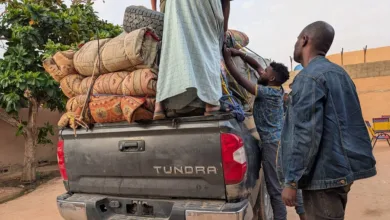
Furthermore, the Boko Haram conflict has fostered a shadow economy in the North East. The region’s gold deposits, once hidden from national attention, have become a major source of illicit trade. Reports indicate that insurgents, local collaborators, and sections of the military elite are deeply involved in illegal gold mining and smuggling. This “war economy” thrives on instability. As long as the conflict continues, the illicit trade in gold, arms, and humanitarian aid will remain profitable for those who control it. This explains why many within the system prefer a prolonged insurgency to genuine peace.
The economic network sustaining Boko Haram is both local and transnational. The insurgents are not isolated actors, they are plugged into global black markets for arms, minerals, and logistics. Their access to sophisticated ammunition and drones suggests heavy financial backing from external sources, possibly through informal trade routes and cryptocurrency channels. Economically disconnecting Boko Haram is difficult because their financiers and benefactors are embedded within the same system meant to defeat them. The porous borders, corrupt customs networks, and weak financial intelligence infrastructure make it nearly impossible to cut off their funding completely.
From the perspective of Weber’s Theory of Bureaucratic Power, the Nigerian state’s response is further compromised by the misuse of authority and the politicisation of institutions. The security agencies, instead of being neutral enforcers of state power, have become tools of patronage. Command appointments, budget approvals, and counterterrorism operations are often influenced by political loyalty rather than competence. This bureaucratic capture sustains inefficiency and prolongs the war, ensuring that the “business of insecurity” continues to generate profits for the powerful few.
To resolve this, Nigeria must reframe its multicultural advantage as a source of unity rather than division. Symbolic Interactionism offers an important insight here, it suggests that meaning is created through social interaction. Therefore, Nigeria’s leaders must create a new national narrative that transcends ethnic and religious labels, and foster dialogue, inclusion, and justice. The people must see themselves first as Nigerians before identifying as Hausa, Yoruba, Igbo, or Kanuri. Only then can the collective will to end the insurgency overpower the selfish interests that profit from it.
The Nigerian government must also act decisively against identified sponsors of terrorism, regardless of their political or economic status. Anti-corruption agencies, the Central Bank, and international partners must collaborate to trace, freeze, and prosecute illicit financial flows that sustain insurgent networks. The military should be reformed to restore professionalism, transparency, and accountability.
In conclusion, the politicisation of the war against Boko Haram is a reflection of Nigeria’s deeper governance crisis. A war that should have united the nation against a common enemy has instead exposed the greed and divisions within its ruling class. Until Nigeria confronts the vested interests profiting from the conflict, and harnesses the strength of its multiculturalism for peacebuilding and inclusive development, the war will remain less about defeating Boko Haram and more about maintaining the status quo of elite exploitation.
Oluwadare Ayeni, PhD
Associate Professor of African Democracy and Public Governance, Department of Public Administration, Obafemi Awolowo University, Ile