Sanwo-Olu unveils Lagos History Puzzle Book, reaffirms support for civic learning
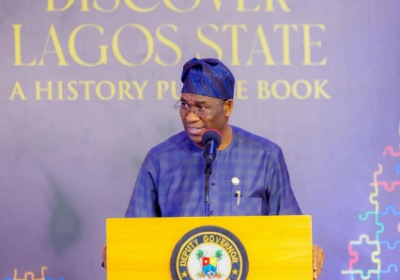
Lagos State Governor, Mr. Babajide Sanwo-Olu, on Tuesday unveiled “Discover Lagos State: A History Puzzle Book”, a first-of-its-kind educational tool designed to promote civic pride, creativity, and historical awareness among young residents.
At the event held at the Civic Centre, Victoria Island, Governor Sanwo-Olu, represented by Deputy Governor Dr. Kadri Obafemi Hamzat, urged teachers, parents, and school administrators to adopt the book as a tool to reinforce learning both inside and outside the classroom.
He described the book as a creative blend of education and cultural preservation, saying it will stimulate curiosity and deepen the understanding of Lagos’ heritage. “To build a truly informed generation of Lagosians is to ensure they understand their origins and values. This book informs while it entertains,” he said.
The Governor also commended former Governor Babatunde Raji Fashola, SAN, for establishing the Lagos State Records and Archives Bureau (LASRAB) in 2008. He said LASRAB laid the foundation for preserving and documenting the Lagos story for future generations.


In his keynote address, Fashola described the puzzle book as a successful fusion of history and creativity. He called on the state to adequately fund LASRAB and expand its capacity to serve as a digital, well-resourced hub for students, scholars, and policymakers.

Commissioner for Information and Strategy, Mr. Gbenga Omotoso, said the initiative reflects the state’s effort to connect people, especially the youth, with Lagos’ historical narrative through modern, engaging formats. He described the book as a bridge between past and present that prepares young people for the future.
Professor Olawale Lawal of LASU, in his review, said the 220-page book is divided into two parts, with the first 37 chapters covering culture and lifestyle, and the rest focusing on significant historical milestones. He praised its use of puzzles and illustrations as a powerful learning strategy.
Lawal added that the book highlights the IBILE divisions—Ikorodu, Badagry, Ikeja, Lagos, and Epe—emphasizing its role in transmitting knowledge in a manner that is both informative and entertaining. He noted that the publication would be a valuable resource for schools, libraries, and families across the state.