The weight of influence, by Folorunso Fatai Adisa
“We are what we pretend to be, so we must be careful about what we pretend to be.” — Kurt Vonnegut
I have long believed that older siblings, cousins, and family members carry a mysterious power over the younger ones: a quiet shaping, for better or for worse. Influence rarely announces itself. It arrives disguised in admiration, hidden in the stories we tell and the voices we revere. And sometimes, friends too share in this conspiracy of influence, guiding our choices without lifting a finger.
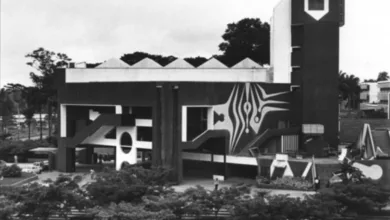
If you had met me as a boy, you would have found a lad utterly convinced that his destiny began and ended in Akoka, the fabled home of the University of Lagos. I could have sworn it with the last drop of my blood. Why? Because my eldest cousin, my hero in spectacles and syntax, had walked those same halls.
He studied English there, earned both his degrees there, and wore brilliance like a second skin. Wherever I went, his reputation arrived before me. Strangers who discovered I was his cousin would smile knowingly, as though I had inherited genius by bloodline. My young mind, naïve yet eager, mistook the source of his brilliance for geography rather than discipline.




Imitation, wrote Oscar Wilde, the Irish playwright and wit, is not just the sincerest form of flattery; it is the first act of creation. However, out of admiration, I would later learn, comes the first draft of ambition. I thought that if I could study where he studied, I would shine as he did. He spoke of UNILAG with such glowing affection that the name itself became sacred. To me, it was almost heresy to imagine another university.
Then came my bosom friend, a year ahead of me, who too secured admission into UNILAG. That sealed my fate. The deal was done. Influence, I was learning, is contagious, one admirer births another. In my heart, there was no other university in Nigeria.
But life, ever the trickster, delights in reshuffling our neat expectations. Twice I sat for the entrance exams. Twice I passed. Twice the admission slipped through my fingers. The disappointment was bitter, but not without its quiet education.
Obafemi Awolowo University never appealed to me. The University of Ibadan seemed tolerable, though distant. Ironically, years later, I would find myself in UI’s hallowed Department of Communication and Language Arts for a Master’s degree that I didn’t complete. And that is a proof that fate rarely travels in straight lines.
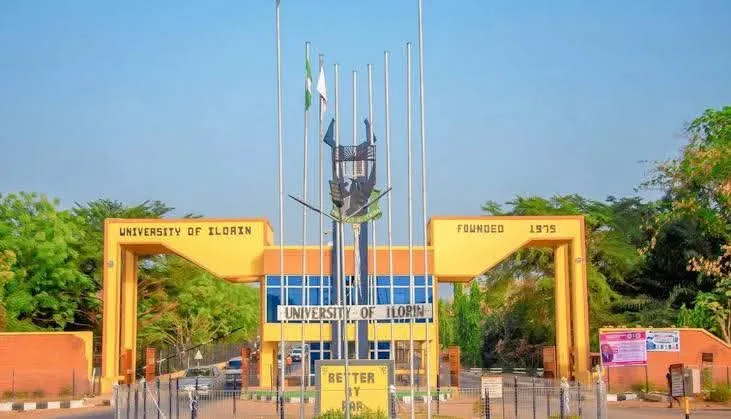
The University of Ilorin,? That name never even crossed my lips. If someone had told me I’d one day bear its banner, I would have laughed them out of the room. Yet, somehow, that was where destiny led me. I remember my second attempt: 282 in UTME, 80% in post-JAMB. This time, the gate opened. And from the moment I arrived in Ilorin, something stirred within me. I didn’t just study there, I belonged there. The place remade me.
Soon, I became known across campus as #ThatUnilorinBoy, a name I wore with pride, a badge of unexpected belonging. It was under that nickname I campaigned and won the student presidency.
Years later, in one of life’s curious reversals, both my cousin and my old friend, the very apostles of Akoka, grew fond of Ilorin, singing its praises with the same fervour they once reserved for UNILAG. My cousin’s son now attends the University of Ilorin. How tables turn, how swiftly the admired becomes the model.
In the end, influence remains the invisible architect of our becoming. It shapes us quietly, often without our consent. But growth demands vigilance, for whatever we behold too long, we become.
Perhaps this is the true weight of influence: our heroes were once apprentices of ambition, and the forms we admire may one day mirror us. I settled for the University of Ilorin, daring to be better by far, and in that daring, I discovered a life richer than I ever imagined.